
Finding mold in your home can make the whole room feel questionable. A couch, a stack of boxes, a rug, a bookshelf, a mattress, family photos, drywall, and clothing all start to feel unsafe at once. That is when people make fast decisions. They either throw away too much because they are scared, or they try to save too much because they cannot stand the idea of losing it.
At MasterTech, we do not view a mold-affected room as a single trash pile. We look at what was affected, what each item is made from, how long moisture was present, and whether the affected material is realistic to clean and dry. For homeowners looking for Mold Inspection Charlotte NC guidance, this is the point of a careful inspection. Mold does not automatically mean everything is lost. The material, the moisture history, and the inspection findings should guide what stays, what goes, and what needs a closer look.
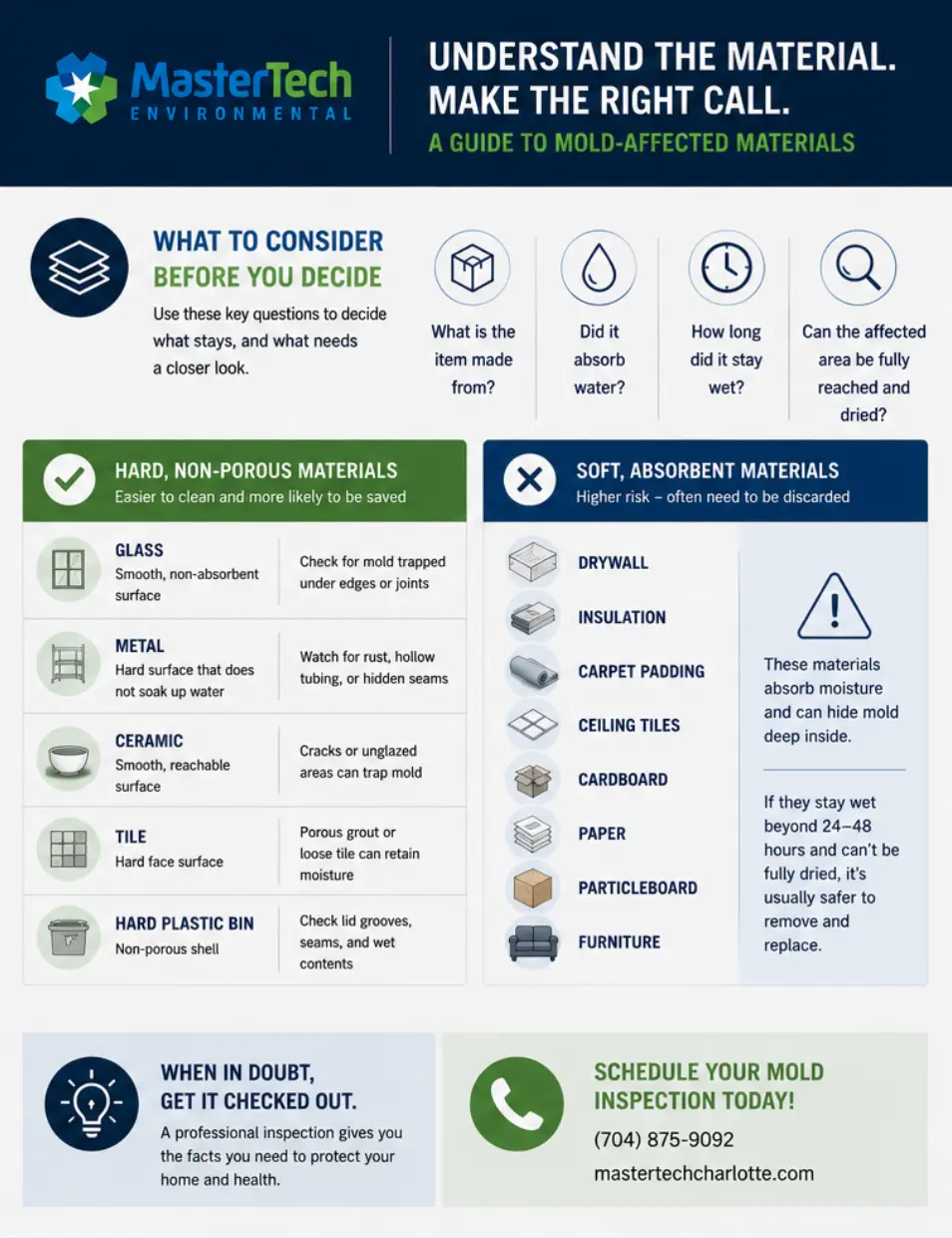
Once mold is found, the first useful question is not only “where the mold is visible.” The better question is what got wet and what that material does with moisture. A hard plastic storage bin and a cardboard box sitting in the same damp closet need two different decisions. A ceramic dish and a couch cushion exposed to the same moisture do not behave the same way.
Public health guidance uses this same basic logic. Moisture comes first, then the question becomes whether the affected material can be thoroughly cleaned and dried. That matters because mold is not only a surface issue on every item. Some materials keep the problem mostly on the outside. Others pull moisture inward.
Those questions slow the decision down. They also help separate fear from facts. The goal is not to save everything. The goal is to avoid treating a glass table, a wet cardboard box, a mattress, and a family photo like they all deserve the same answer.
Hard, non-porous items are usually the easiest group to evaluate because they do not soak up water the way paper, padding, drywall, or fabric does. Glass, metal, ceramic, tile, hard plastic, sealed stone, and many finished hard surfaces often have one main surface to inspect. If that surface is intact, visible, and reachable, the item often belongs in the review-and-clean category instead of the automatic-disposal category.
This is where many homeowners can slow down.
EPA guidance treats hard surfaces differently from absorbent materials because hard surfaces are more accessible and less likely to retain moisture beneath the surface. Hard does not mean automatic saving. The item still needs a closer look when there are seams, cracks, loose parts, damaged finishes, trapped moisture, or wet contents.
| Item | Why it can be saved | What changes the decision |
| Glass table | Smooth, non-absorbent surface | Mold trapped under frame edges or joints |
| Metal shelf | Hard surface that does not soak up water | Rust, hollow tubing, hidden seams |
| Ceramic dish | Smooth, reachable surface | Cracks or unglazed areas |
| Tile | Hard face surface | Porous grout or loose tile |
| Hard plastic bin | Non-porous shell | Wet contents, lid grooves, hidden moisture |
Mold remediation Charlotte, NC is vital for these materials once mold has crept in. The table does not mean every item in this group stays. It means these items often provide a clearer path because the affected surface is visible and accessible. The more hidden the moisture becomes, the less simple the decision gets.
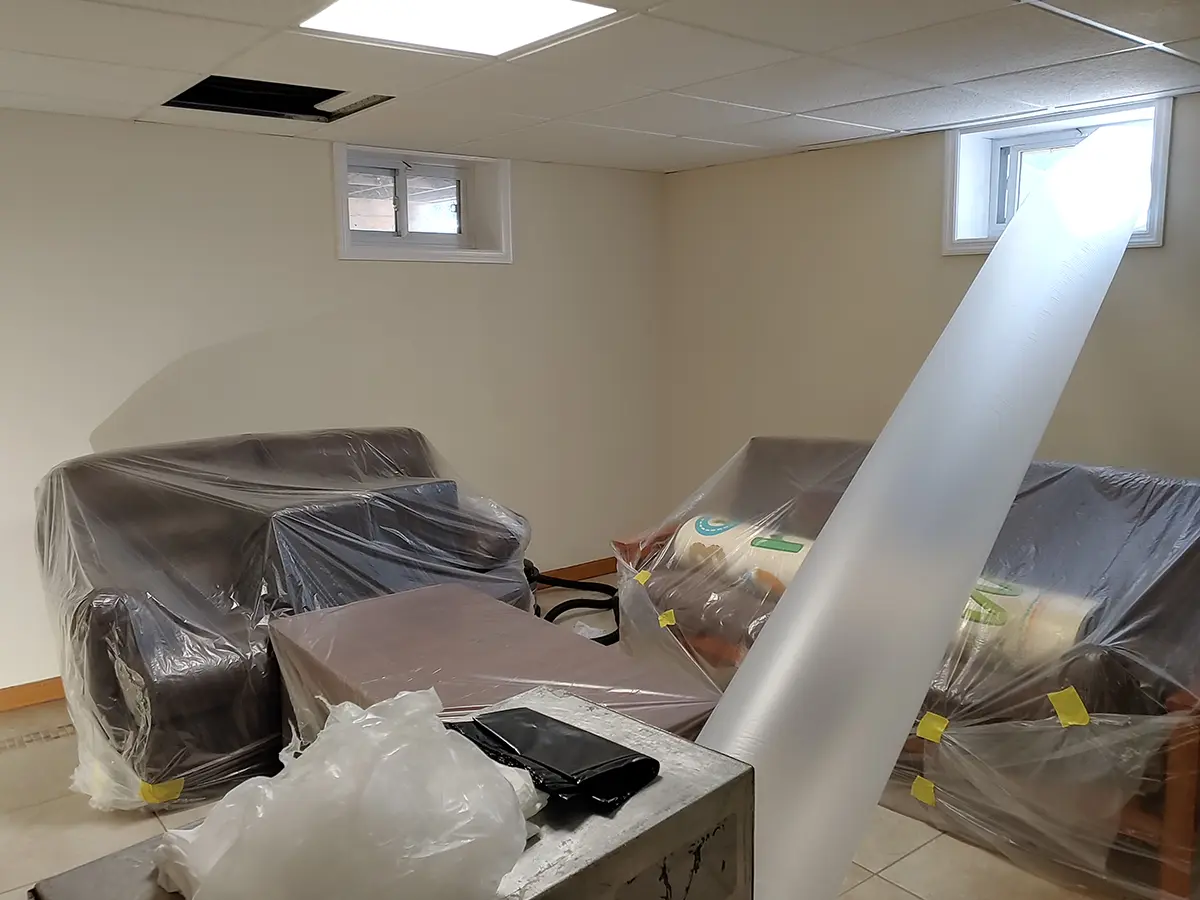
Soft, absorbent materials are harder to trust because they absorb moisture. The biggest problems are often found in soft materials, unlike glass or metal.
These materials often have paper layers, fibers, compressed material, padding, glue, or internal spaces that hold water.
This is where surface appearance can mislead a homeowner. A carpet may feel dry on top while the padding below it is still damp. A wall may show a small stain while the paper backing or hidden side is affected. A cardboard box may look spotted on one side, even though the whole panel has absorbed moisture. A pressed-wood cabinet may look normal from the front, while the bottom edge swells because water has seeped inside.
EPA and North Carolina public health guidance treat absorbent materials more strictly because the concern is not only visible mold. The concern is whether moisture and growth moved into areas that are not easy to reach. CDC’s 24- to 48-hour drying window gives homeowners a useful way to think about time. When absorbent materials stay wet beyond that window and are not fully dried, saving them becomes harder to justify.
Drywall, insulation, carpet padding, and ceiling tiles often need the most caution because they are part of the home and can hide moisture behind finished surfaces. Drywall has paper on both sides. Insulation is designed to hold air, and it can hold moisture too. Carpet padding sits beneath the carpet and often stays wet longer than the surface does. Ceiling tiles are light and absorbent, so staining often means water moved into the material.
Cardboard, paper, particleboard, and pressed wood often fail faster. Cardboard absorbs moisture quickly, loses strength, and retains odors. Paper absorbs water through the whole sheet. Particleboard and pressed wood swell when moisture moves into the core, not because the surface got slightly dirty.
The safer question is not, “Can I make the outside look better?” The safer question is, “Can this material be fully dried and trusted again?”
Some items do not fit cleanly into hard surface or absorbent material. These are usually the hardest decisions in a mold-affected room. They have more than one material, more than one surface, or more than one kind of value. That is why this group needs a slower review.
A solid wood chair is porous, but it is different from cardboard. A rug is soft, but a thin washable rug is different from a thick wool rug with backing. A sofa has fabric on the outside, foam inside, seams, a frame, and an underside. A leather item may have a finished surface, but the lining, stitching, and backing may hold moisture.
| Item | Why the answer is not automatic | What matters most |
| Solid wood | Porous, but more durable than cardboard | Finish, odor, staining, swelling |
| Framing lumber | Porous but structural | Moisture level, growth depth, wood condition |
| Upholstered chair | Fabric outside, padding inside | Cushion, seams, backing, frame |
| Rug | Surface and backing can differ | Thickness, fiber, backing, odor |
| Clothing | Some fabrics clean better than others | Fabric type, exposure time, smell |
| Leather | Surface and lining may differ | Finish, stitching, backing, padding |
| Books | Porous but sometimes valuable | Wet pages, odor, personal value |
| Framed photos | Mixed materials in one item | Frame, glass, trapped moisture, image condition |
This is where inspection findings matter most. Was the item sitting directly on a wet floor, or was it across the room? Did it stay damp for hours or days? Is there an odor? Is the item swollen, stained, warped, or separating at the seams? Can the affected parts be reached, or are they hidden inside padding, backing, seams, or framing?
EPA guidance supports specialist input when an item is expensive or sentimental. That fits this group because the decision is not only about material. It is about material plus value. A cheap, moldy paperback and a family Bible are both books, but they do not warrant the same decision-making process. A damaged dining chair and a custom-upholstered chair are both furniture, but one may warrant more review than the other.
Mattresses and Pillows Are Different from Other Soft Items
Mattresses, pillows, and thick, soft furniture deserve separate attention because homeowners often want to save them, but they are among the hardest items to verify. They are thick, absorbent, and layered. The outside can look better before the inside is truly dry.
A mattress has fabric, foam, batting, seams, internal layers, and often a base that holds moisture differently from the top. A pillow has fill that cannot be inspected from the outside. A sofa has fabric, cushions, foam, some wood or metal frame, backing, a dust cover, and an underside. These are not simple surface items.
For many moldy or water-damaged mattresses and pillows, the answer points toward disposal. That does not mean every soft item in the room is ruined. A washable blanket with brief exposure is a different decision from a mattress that stayed damp. A removable chair cushion with limited exposure is different from a sofa that sat in water. The reason for caution is not fear. It is hidden moisture and limited access.
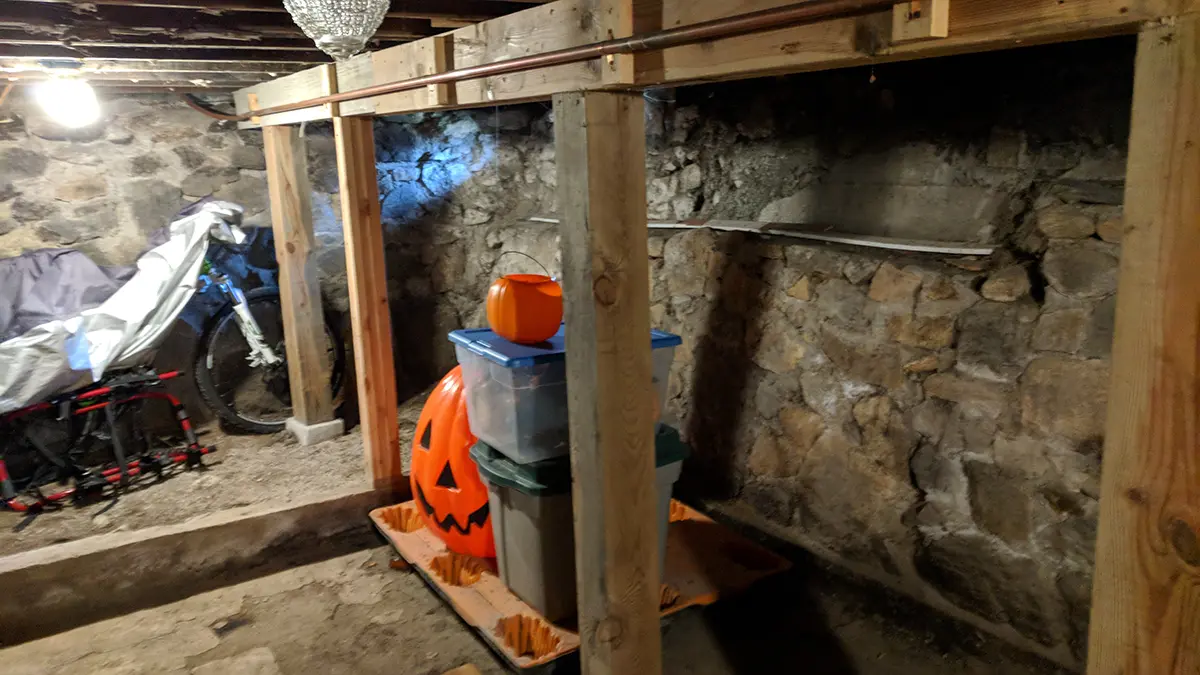
Sentimental items should not get swept into the first trash pile. Photos, family papers, letters, children’s drawings, old books, framed documents, heirlooms, and keepsakes carry a different kind of value. Some may be too damaged to save, but that decision should not happen while the room still feels overwhelming.
A moldy cardboard box may need to go. The photos inside deserve their own decision. A damp frame may be replaceable, but the image inside may not be. A stack of old letters may look fragile, but handling them too much can worsen the damage. A family Bible, adoption paper, wedding photo, military document, or child’s artwork should not be treated like ordinary clutter.
National Archives preservation guidance provides a practical rule for this part of the decision. For moldy family papers and photographs, the first step is not to dispose of them. It is separation, dry storage, limited handling, and specialist review when the item has personal or historic value.
This does not promise every sentimental item can be saved. It protects you from making the wrong decision too early. In a mold-affected room, replaceable items and irreplaceable items should not be sorted the same way.
A Practical Way to Decide What Happens Next
By this point, the pattern should be clear. The decision is not based on fear. It is based on what the item is made from, how wet it got, how long it stayed wet, and whether the affected area can be reached and dried.
| Decision | What it usually means | Common examples |
| More likely to review for cleaning | Hard, intact, reachable, non-porous | Glass, metal, ceramic, tile, hard plastic |
| More likely to remove | Absorbent, wet, damaged, hard to dry | Carpet padding, insulation, cardboard, swollen pressed wood |
| Needs closer inspection | Layered, valuable, sentimental, or unclear | Solid wood, upholstery, rugs, leather, books, photos |
| Needs extra caution | Thick, absorbent, hard to inspect inside | Mattresses, pillows, sofas, stuffed furniture |
A mold inspection should help support this kind of decision. The goal is not to scare you into throwing everything away. The goal is to separate items that are salvageable from those that are risky or warrant a slower review.
Mold does not mean every item in the home has to be thrown away. A hard plastic bin is different from a cardboard box. A glass table is different from a mattress. A washable shirt is different from a thick rug with a wet backing. A moldy storage box is different from the family photos inside it.
Hard, non-porous items are often more salvageable when the affected surface is intact and reachable. Soft, absorbent, water-damaged materials are harder to trust because moisture and mold can move below the surface. Layered items need more judgment because the visible surface may not show the full problem. Mattresses, pillows, and thick, soft furniture deserve extra caution. Sentimental items deserve patience before disposal.
The goal is not to save everything. The goal is to avoid fear-based decisions. Some items are cleanable. Some are not worth the risk. Some need a closer look before anyone decides they are gone for good.
Call MasterTech Environmental Charlotte for more information, or to schedule your mold inspection.