
If something in your Charlotte rental smells damp, looks stained, or keeps coming back after cleaning, the issue may involve more than mold. A dark ring around an HVAC vent, a musty bedroom closet, a soft cabinet floor under a sink, or a ceiling stain after rain can point to a repair issue, a code issue, a health concern, or a mold and moisture concern.
When renters call us for Mold Inspection Charlotte NC, our role is to assess the mold and moisture conditions. We look at visible growth, damp materials, water staining, odor patterns, damaged surfaces, and source clues. We do not decide legal responsibility, interpret leases, advise on rent withholding, determine insurance coverage, or diagnose health symptoms.
That boundary matters because rental mold concerns can get confusing fast. A renter may see mold first, but the real issue may be a leaking pipe, a failed bathroom ventilation system, HVAC condensation, roof water intrusion, or damp material that never dried. Our job is to inspect the condition and explain what the building is showing.
A rental mold concern often starts with a building condition that the property owner or manager controls. The mold may be what the renter sees first, but the source may be plumbing, roof water, HVAC condensation, poor ventilation, or damp materials that were never dried. That matters because a mold concern in a rental is rarely only about the visible surface.
North Carolina General Statutes § 42-42, “Landlord to provide fit premises,” says landlords must make repairs and do what is necessary to keep a rental home fit and habitable. It also says landlords must maintain supplied plumbing, heating, ventilating, air conditioning, and other listed systems in good and safe working order, and repair them after written notice from the tenant, except in emergencies. The same statute lists excessive standing water, sewage, or flooding caused by plumbing leaks or poor drainage that contributes to mold as an “imminently dangerous condition.”
We are not lawyers, and we do not decide how this law applies to a specific rental situation. From our side, the practical point is that visible mold often needs to be connected back to the building condition that may be feeding it.
| What The Renter Notices | Possible Building Condition Behind It | Why This May Involve The Property Manager | Where Mold Inspection Fits |
| Dark staining under a kitchen or bathroom sink | Plumbing leak, old pipe drip, wet cabinet material, failed caulk, or past repair that did not dry fully | Plumbing and damaged cabinet materials are part of the rental property condition | We look for visible growth, damp material, staining patterns, and whether moisture is still present |
| Ceiling stain that gets darker after rain | Roof leak, flashing issue, exterior water entry, attic moisture, or wet ceiling material | Roof, ceiling, and exterior water-entry issues usually require property access and repair | We check whether the affected material appears damp, stained, or consistent with a moisture path |
| Dark spotting around an HVAC vent | Condensation, air leakage, high indoor humidity, dirty vent surfaces, or HVAC performance issue | Supplied HVAC systems and moisture around vents may require property maintenance review | We inspect the visible area, moisture conditions, surrounding material, and whether testing would help |
| Bathroom ceiling spots near the fan | Poor exhaust, steam buildup, fan failure, blocked ducting, or moisture trapped in ceiling paint or drywall | Bathroom ventilation can be part of the supplied building system | We look at the visible growth pattern, nearby moisture, fan area, and whether the condition keeps returning |
| Musty odor in a closet or bedroom | Damp wall, poor airflow, shared bathroom wall, exterior wall moisture, past leak, or crawl space/attic influence | Hidden moisture or building-envelope issues usually require property-level evaluation | We inspect odor patterns, visible clues, moisture readings, and likely source areas |
| Soft baseboard, swollen trim, or peeling paint | Moisture inside the wall, repeated wetting, leak history, or condensation | Damaged building materials can indicate a repair issue beyond surface cleaning | We check whether the material is damp, whether growth is visible, and whether remediation may be needed |
| Water on the floor, standing water, or repeated flooding | Plumbing leak, drainage issue, appliance leak, or active water intrusion | North Carolina law specifically references certain standing water, sewage, or flooding conditions that contribute to mold | We do not interpret the law, but we can inspect the mold and moisture condition after or alongside repair review |
This table is not a legal responsibility chart. It is a building-condition guide. If the issue involves lease terms, liability, rent, or legal rights, renters should speak with the right legal or tenant resource. Our role is narrower: we inspect mold, moisture, visible damage, and source clues to clarify the physical condition.
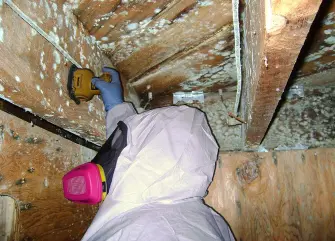
Charlotte’s local guidance makes an important distinction. The City of Charlotte says its Minimum Housing Code covers baseline health and safety issues, including heat, water, electricity, smoke and carbon monoxide detectors, structural safety, plumbing, heating, and unsafe conditions. The city also says mold itself is not covered, but underlying causes, such as leaks or moisture intrusion, are.
That does not mean mold should be ignored. It means the moisture condition behind the mold matters. A renter may notice the dark surface first, but the building issue may be a leak, moisture intrusion, poor ventilation, a damp material, or an HVAC problem. Those are the conditions that explain why the mold or staining appeared.
The City of Charlotte also tells renters to contact the landlord or property manager first, keep records such as texts, emails, and written requests, and call 311 to request a housing inspection if the issue is not resolved. The city adds that renters should not withhold rent while repairs are being addressed.
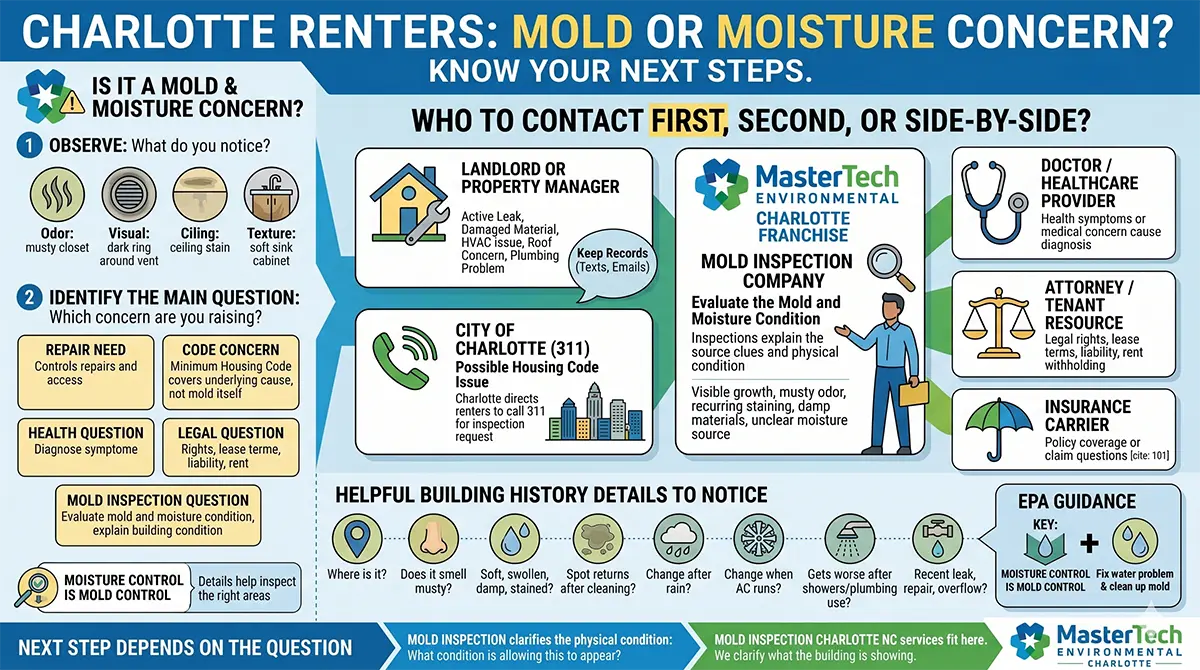
A rental mold concern can involve several different questions. The same visible stain may raise a repair question, a city-code question, a health question, and a mold inspection question. A mold inspector should not pretend to answer all of them.
| Concern | Better Contact | Why |
| Active leak, damaged material, HVAC issue, roof concern, plumbing problem | Landlord Or Property Manager | They control repairs and access to the property. |
| Possible unresolved housing code issue | City Of Charlotte 311 | Charlotte directs renters who believe minimum housing code violations exist to call 311 for an inspection request. |
| Visible growth, musty odor, recurring staining, damp materials, unclear moisture source | Mold Inspection Company | Inspection can evaluate the mold and moisture condition. |
| Health symptoms or medical concerns | Doctor Or Qualified Healthcare Provider | Mold inspectors do not diagnose symptoms or medical cause. |
| Legal rights, lease terms, liability, rent withholding, or damages | Attorney Or Tenant Legal Resource | Mold inspectors do not give legal advice. |
| Insurance coverage or claim questions | Insurance Carrier Or Adjuster | Mold inspectors do not decide policy coverage. |
This separation keeps the process clearer. We can explain what we see in the building. Other professionals handle legal, medical, insurance, repair, or code decisions.
A mold inspection is appropriate when the renter needs the building condition explained clearly. The concern may start with a stain, smell, or visible growth, but the inspection should look beyond the surface. The important question is not only “Is this mold?” It is “What condition is allowing this to appear?”
EPA guidance states that the key to mold control is moisture control. EPA also says mold should be cleaned up and the water problem fixed, and that mold will not grow without water or moisture. For a rental concern, that means an inspection should focus on moisture, affected materials, visible growth, odor patterns, and likely source areas.
When we inspect a rental mold concern, we may examine the visible area, nearby materials, moisture readings, water staining, HVAC clues, bathroom ventilation, plumbing areas, and exterior water-entry points.
A renter does not need to prepare a legal file before calling for a mold inspection. The useful information is the building history. These details help us understand where to look and which source may be involved.
Those details do not assign responsibility. They help us inspect the right areas. A dark ring around a vent raises questions about condensation and air movement. A damp sink cabinet raises questions about plumbing and damaged material. A ceiling stain after rain raises questions about water intrusion. A closed closet with a musty smell raises questions about airflow, stored materials, shared wet walls, or exterior wall moisture.
If a Charlotte renter sees visible growth, smells a musty odor, notices recurring stains, or has damp material that does not dry, the next step depends on the question.
The property manager handles repair access and maintenance. Charlotte handles possible minimum housing code concerns through 311. Doctors handle health questions. Lawyers handle legal rights. Insurance carriers handle coverage. Our role is to address mold and moisture conditions.
A mold inspection helps when the question is physical: what is happening in this rental, where is the moisture coming from, and does the condition suggest testing, remediation, or another building repair? That is where Mold Inspection Charlotte NC services fit. We inspect the condition, explain the source clues, and help clarify what the building is showing without stepping outside our lane.