
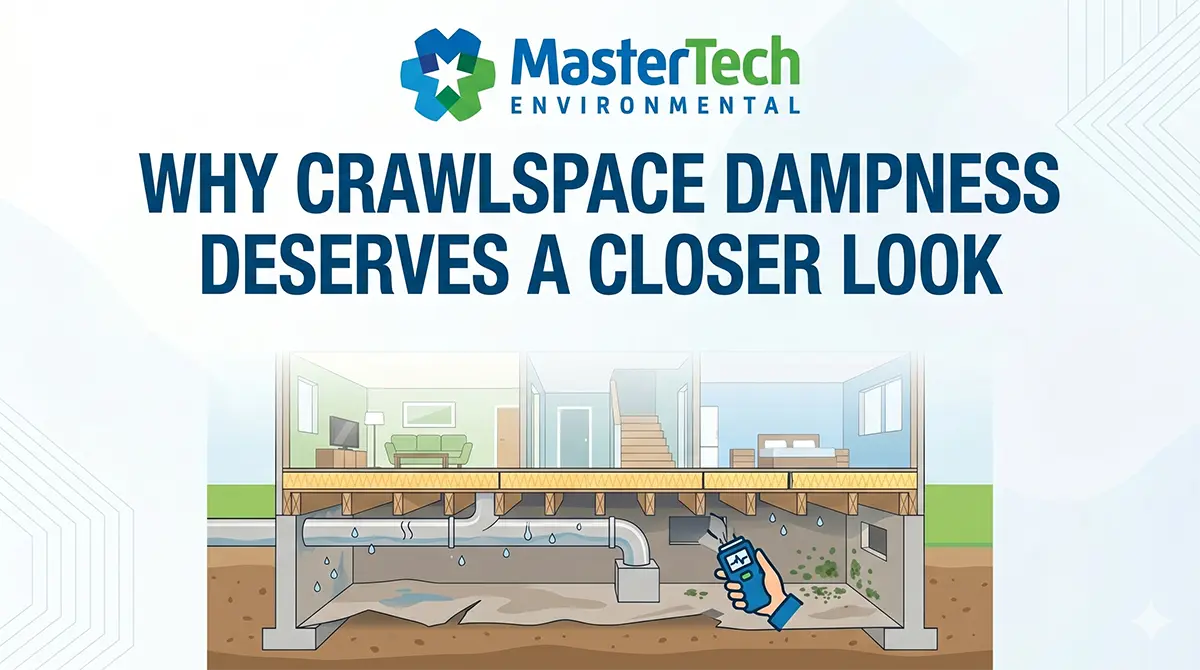
Crawlspace mold concerns do not always begin with visible mold under the house. We often hear about a musty smell on the first floor, a damp bedroom, soft flooring near a doorway, or humidity that keeps returning after the air conditioning runs. By the time those symptoms appear in the living space, moisture below the floor may already be affecting insulation, wood framing, ductwork, or the subfloor.
At MasterTech Environmental Charlotte, we treat crawlspace mold concerns as moisture investigations, not surface checks. Homeowners searching for Mold Inspectors Charlotte NC need someone who looks past the visible spot and explains whether the lower part of the home is still damp, what materials are affected, and whether the rooms above the crawlspace show related symptoms. Crawlspace inspections matter because visible growth is only a symptom, while active moisture in the lower house determines whether the problem can return after cleanup.
Crawlspaces create a different mold problem because they sit outside normal living patterns. Homeowners walk through bedrooms, kitchens, bathrooms, and hallways every day. Still, they rarely inspect the underside of the home unless there is already an odor, a repair issue, or a real estate concern. That delay gives moisture time to affect insulation, floor framing, ductwork, and exposed wood before anyone connects the problem to indoor air or first-floor comfort.
In Charlotte, crawlspace dampness often comes from several conditions working together below the living space. Rainwater near the foundation, damp soil, damaged vapor barriers, humid outdoor air, and cold ductwork can all affect the same enclosed area. NOAA’s Charlotte climate summary supports the moisture-pressure side of this concern because Charlotte has long, warm seasons, summer thunderstorms, and rainfall spread throughout the year, which means crawlspaces can experience repeated dampness even though the city is not coastal.
That does not mean every Charlotte crawlspace has the same problem. It means the inspection should identify the moisture pattern instead of treating one stained surface as the entire issue. Mecklenburg County Air Quality clearly states the controlling principle: when mold is a problem, the moisture source must be eliminated before cleanup has lasting value.
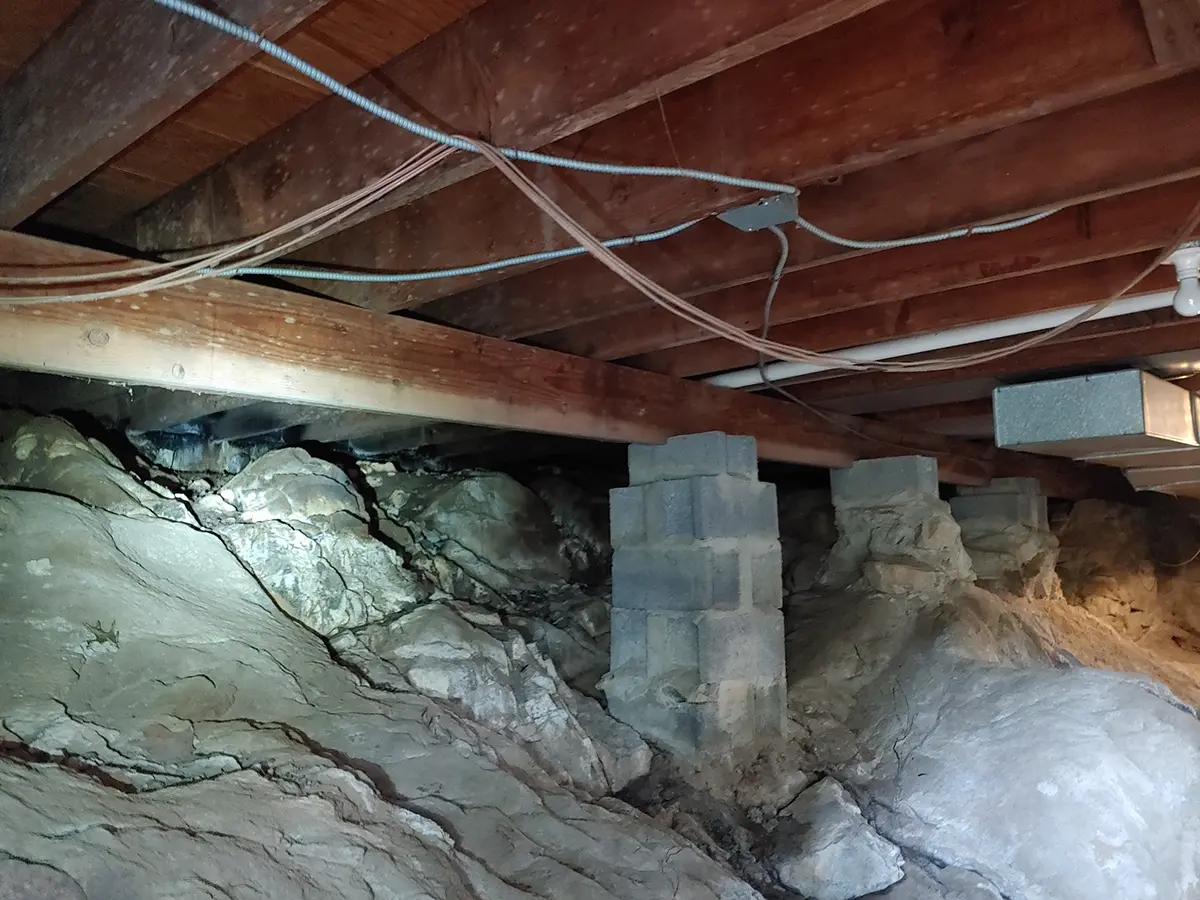
A crawlspace is not sealed away from the house above it. Air can move upward through gaps around plumbing, wiring, duct chases, floor openings, and unsealed penetrations. When the crawlspace holds damp air, wet insulation, or stained framing, the living space may show musty odors, humidity, floor movement, or staining before anyone sees mold directly.
That is why we connect the crawlspace to the rest of the home during inspection. A musty first-floor hallway means something different when the crawlspace below has exposed soil, sweating ductwork, and fallen insulation than when the crawlspace is dry and clean. The symptom inside the home matters, but the inspection must prove whether it is connected to active moisture below the floor.
NC State Extension’s mold and moisture checklist supports this approach by directing attention to leaks, condensation, wet materials, and drainage problems. Those are crawlspace inspection issues, not background mold facts. They point directly to the conditions that keep lower-house materials sufficiently damp to support growth.
A crawlspace inspection should focus on materials, not just open air. Wet soil, stained joists, loose insulation, condensation on ducts, and damaged vapor barriers all show how moisture behaves below the home. These details help separate a small past issue from an active dampness pattern that still needs correction.
| What We See Below The Home | What It Helps Explain Inside The Home |
| Damp or exposed soil | Musty air and persistent crawlspace humidity |
| Torn or missing vapor barrier | Moisture moving from the ground into the crawlspace |
| Wet or fallen insulation | Damp materials held against the subfloor |
| Stained joists or subflooring | Wood that has stayed damp long enough to discolor |
| Sweating ductwork | Humid air contacting cold HVAC surfaces |
| Standing water near low spots | Drainage, grading, or stormwater problems near the foundation |
These conditions matter because mold growth depends on moisture that stays active long enough to affect building materials. North Carolina health guidance identifies moisture and high humidity as conditions that promote mold growth, which is why damp soil, fallen insulation, sweating ducts, and stained joists deserve attention during inspection. Those findings are not random details because they help show whether the crawlspace is still feeding the problem.
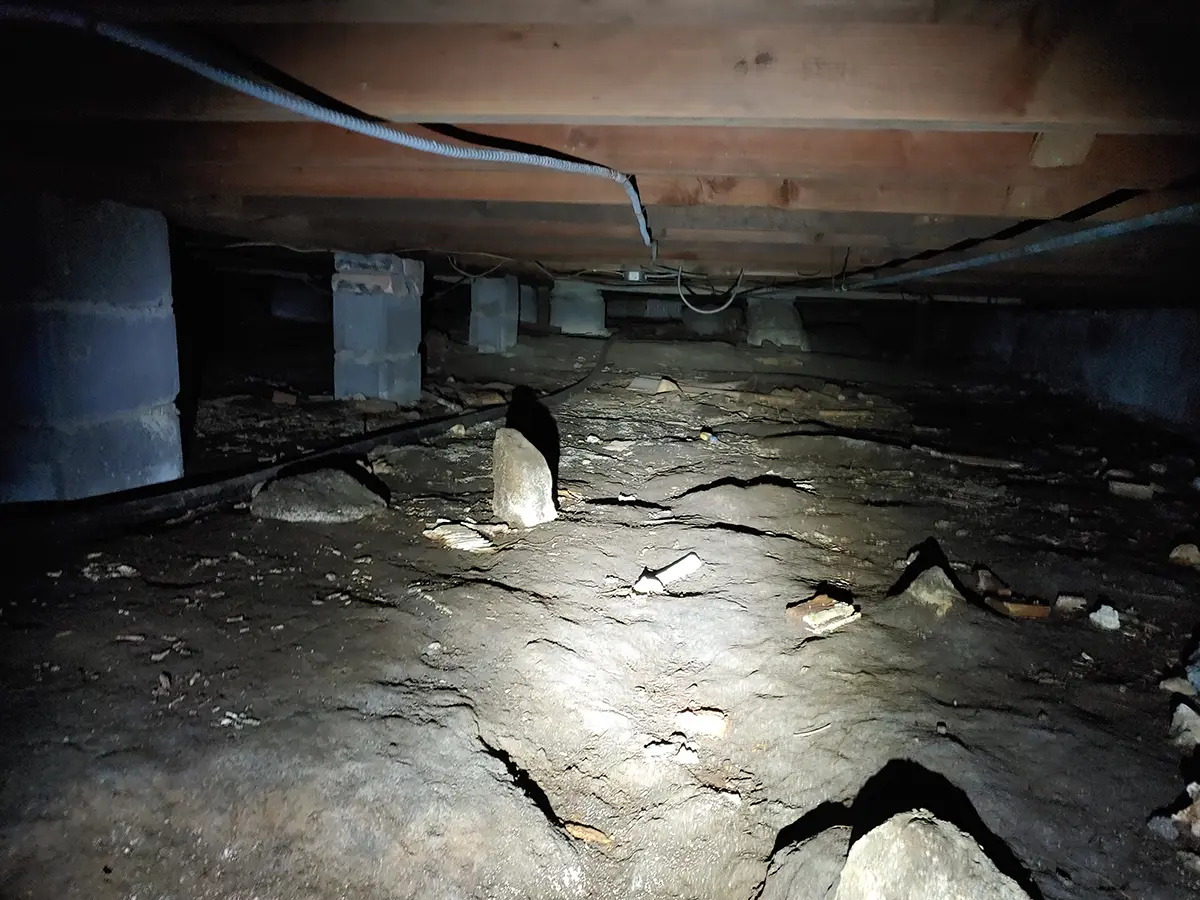
Cold ductwork in a damp crawlspace deserves close attention because it can add moisture even when there is no plumbing leak or roof leak. UNC Charlotte’s housing guidance provides a local building example of the same principle, explaining that many mold and mildew cases occur when humid outdoor air meets cold HVAC air, creating condensation. That source does not study private crawlspaces, but it supports the building-science connection between humid air, cold HVAC surfaces, and moisture formation.
This matters below a home because crawl spaces often contain ductwork, insulation, wood framing, and humid air in a confined space. Condensation can dampen nearby insulation, raise moisture levels around framing, and contribute to musty odors that reach the living space. When cold HVAC surfaces, humid crawlspace air, and absorbent materials sit together, the inspection needs to determine whether moisture is forming repeatedly or whether the condition was limited to a past event.
That difference changes the recommendation. A dry, historical stain may not require the same response as active duct condensation with wet insulation and musty air. The homeowner needs that distinction because both conditions can look similar during a quick visual check.
A crawlspace inspection should not stop at the question, “Is there mold?” That question matters, but it does not guide the homeowner well enough on its own. The stronger question is whether the crawlspace has an active moisture condition that still affects materials below the home or air inside the living space.
An old stain on one joist does not carry the same meaning as damp soil, wet insulation, musty air, and condensation on ducts. One condition points to history. The other points to an active environment that still supports mold growth, odors, and material damage.
This is where MasterTech’s inspection process matters. We use visual inspection, moisture detection, and mold testing when testing helps answer a real question. Sampling should support the findings, not replace the inspection, because a lab result alone does not explain why the crawlspace became damp or whether the moisture condition is still active.
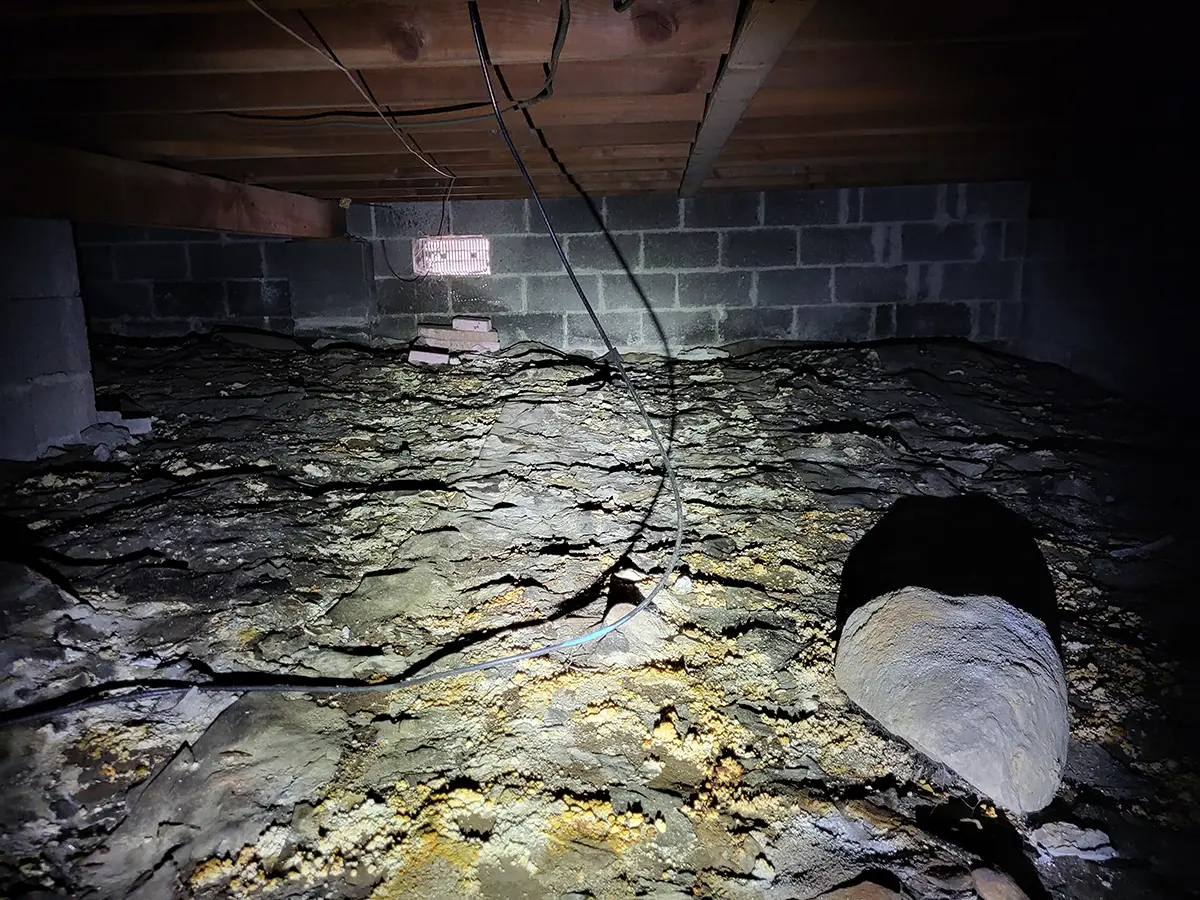
Cleaning visible crawlspace mold without correcting the moisture source treats the symptom while leaving the condition in place. If the crawlspace stays damp, the same lower-house moisture may return to the same materials after cleanup. That risk is higher when soil moisture, drainage problems, wet insulation, damaged vapor barriers, or duct condensation remain unresolved.
That is why mold remediation should start with a clear explanation of moisture. Mecklenburg County’s indoor air guidance supports that sequence by prioritizing moisture-source elimination before cleanup, and MasterTech’s remediation approach focuses on inspection, controlled removal, careful restoration, and identifying the moisture source to prevent recurrence. The homeowner needs more than removal; they need to know why the growth happened and what condition needs to change.
A crawlspace inspection provides the homeowner with a standard for evaluating the problem. The important question is not only whether growth is visible below the house. The important question is whether the crawlspace is still damp enough to affect insulation, framing, ductwork, odors, and the rooms above it.