

A ceiling stain, soft wall, or swollen cabinet base should be treated as evidence rather than a cosmetic mark. The stain shows where water finally became visible. It does not show where the water started, what it touched, or how long drywall paper, insulation, cabinet backing, or subflooring stayed damp before the surface changed. That is why leak-related mold concerns should start with the water path, not the paint stain.
Mold testing becomes useful when that water path leaves a real question behind finished surfaces. Did a roof leak wet insulation above the ceiling? Did a bathroom leak reach the back side of drywall? Did a sink leak leave the cabinet base damp after the plumbing repair? For homeowners searching for Mold Testing Charlotte NC after a roof, ceiling, plumbing, or fixture leak, the answer should come from what got wet, what dried, and whether hidden material still needs attention before repair.
A repaired leak does not prove the building materials dried. A plumber can replace a supply line, a roofer can correct flashing, or a contractor can patch a ceiling while drywall paper, insulation, cabinet backing, or subflooring still holds moisture. A ceiling below an upstairs bathroom, for example, can stain after water leaks from a toilet seal, a tub overflow, a drain line, or a supply valve. The stain shows where water became visible, not every material it touched, so the inspector must still check whether drywall, insulation, or nearby framing remained damp after the repair.
Mold growth is tied to damp material, not the repair itself or the appearance of a clean surface. That is why a leak can look handled from the room side while the material behind the surface still needs to be checked. Mecklenburg County’s indoor air guidance places moisture-source correction before cleanup, which matches the practical order here: find the leak source, check what stayed wet, then decide whether testing is needed. For mold testing, the point is not to test every stain. It is to test when the leak path suggests hidden material stayed damp long enough to raise a mold question.
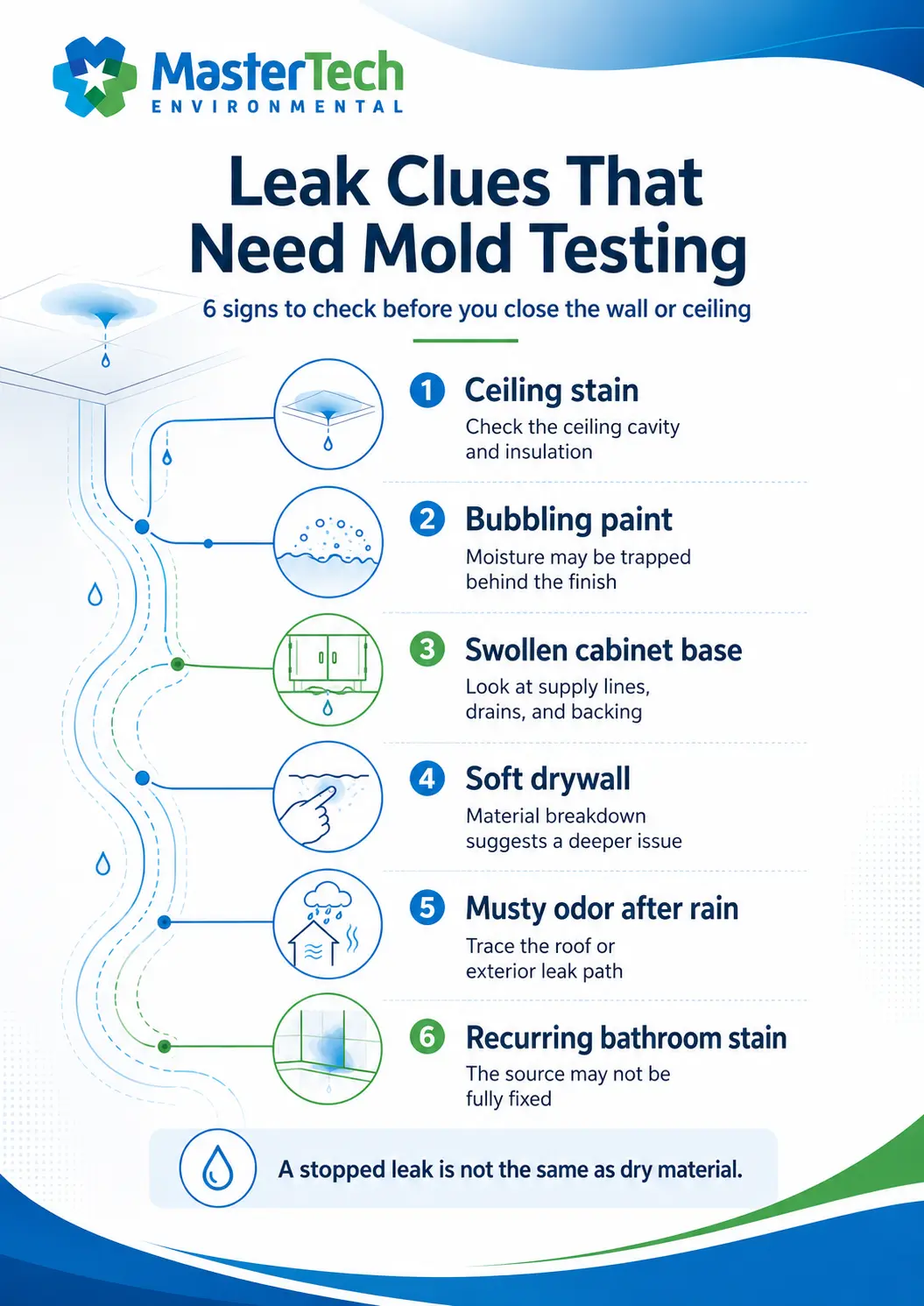
A leak does not create the same mold risk in every part of a home. The risk varies depending on where the water starts, how it travels, and which materials remain damp after the visible leak stops. A ceiling stain, soft wall, swollen cabinet base, and lifted floor edge can all result from water movement, but they do not indicate the same underlying cause. The leak path matters because mold grows where moisture remains long enough on materials that support growth.
Ceiling stains often show up late in the leak. Water can collect above the drywall, soak the insulation, follow the framing, and then reach the painted surface after the material above it has already become wet. That is why a ceiling stain below a bathroom or in a roof area deserves more than just paint repair. The mold risk is higher when the back side of the drywall, insulation, or nearby framing remains damp after the roof, pipe, drain, or fixture has been fixed.
A wall leak can appear limited from the room side because paint covers the underlying material. Water can move down studs, around pipe openings, behind baseboard trim, or along the paper face of drywall before a stain appears. The visible mark may be small while the damp paper, trim edge, or lower wall section tells a larger story. Mold becomes more likely when the wall cavity or drywall paper stays damp, even if the painted surface looks dry.
Cabinet leaks often pose a mold risk because water sits in materials that do not dry quickly. A sink drain, supply line, disposal, dishwasher line, or slow drip can wet cabinet backing, the base panel, the toe-kick, and the floor edge underneath. The plumbing repair can stop the drip, but the particleboard may remain swollen, the staining may persist, or a musty smell may remain. That trapped moisture is the concern because cabinet bases and backing can retain moisture even after the visible water is gone.
Floor leaks are easy to underestimate because the top layer can look dry while water has moved underneath. Bathroom water can travel under tile edges, vinyl, laminate, or around a toilet flange before reaching underlayment or subflooring. Kitchen and laundry leaks can move along seams, under cabinets, or beneath appliances. Mold risk increases when water remains under the finished floor, especially where subflooring, underlayment, or floor edges cannot dry to the open air.
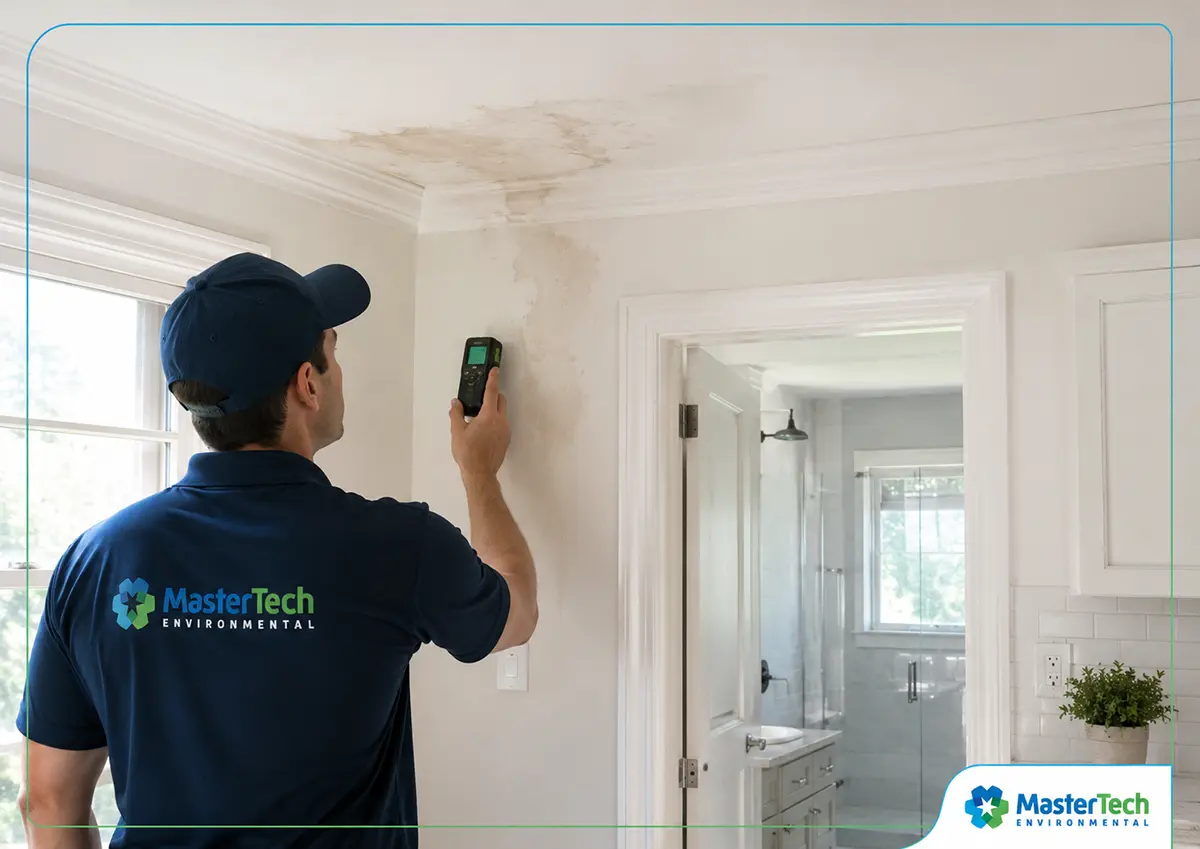
Mold testing helps most when the leak history points to material the homeowner cannot fully see. A repaired pipe, roof detail, toilet seal, or drain connection tells only part of the story. The better question is whether drywall paper, insulation, cabinet backing, trim, underlayment, or subflooring stayed damp after the source was corrected. Testing has a purpose when it helps confirm whether hidden material was affected before repair, repainting, or reconstruction moves forward.
Testing should not be used as a shortcut around inspection. A sample cannot show the route water took through a ceiling cavity, behind a wall, under a cabinet, or below a finished floor. The inspection still must examine the source, moisture pattern, material condition, and whether the same stain, odor, or softness is associated with the leak path. When those details are documented first, testing can help answer a narrower question rather than producing a vague result with no clear next step.
These signs do not prove a mold problem by themselves. They show why testing may help confirm what the inspection already suspects. If the leak has been corrected, the materials are dry, and the damage is confined to a cleanable surface, testing may play a smaller role. If the leak path points to hidden damp material, testing can help the homeowner make a better decision before covering the area again.
A leak repair should not end with paint, patching, or new trim until the water path has been understood. The stain indicates where water became visible, but the risk of mold depends on what the water touched and how long those materials remained damp. Ceiling drywall, wall cavities, cabinet bases, and floor layers each hold moisture differently, so they should not be treated as the same problem. Mold testing is valuable when it helps confirm whether a leak from a repaired roof, pipe, drain, fixture, or appliance has left affected material behind. The goal is not to test every stain or turn every leak into a large remediation project. The goal is to identify the source of the leak, assess the materials in the water path, and make the repair decision based on evidence rather than guesswork.