
Buying a home in the Greater Charlotte real estate market is an exciting milestone, but North Carolina’s unique contract structure leaves zero margin for diagnostic error. When scheduling a Mold Inspection Charlotte NC, many prospective buyers assume their standard general home inspection already covers environmental hazards like toxic mold. In reality, relying solely on a general home inspector’s checklist is one of the most expensive mistakes a homebuyer can make. Under North Carolina licensing statutes, general home inspectors are explicitly not required to identify mold, test indoor air quality, or investigate concealed moisture behind walls, beneath floors, or inside HVAC ductwork.
Under the standard North Carolina Offer to Purchase and Contract (Form 2-T), buyers pay a non-refundable ‘due diligence fee’ directly to the seller for the exclusive right to inspect the property within a strictly negotiated timeframe. If you discover a concealed $15,000 mold infestation in the crawlspace or behind newly tiled shower walls after that period expires, you face an agonizing dilemma: walk away and forfeit your substantial due diligence deposit, or close on a biologically contaminated property out of your own pocket.
General home inspectors provide a valuable overview of a property, assessing the operational condition of the roof, plumbing lines, electrical panel, and structural foundation. However, their legal scope of practice is strictly visual and non-invasive.
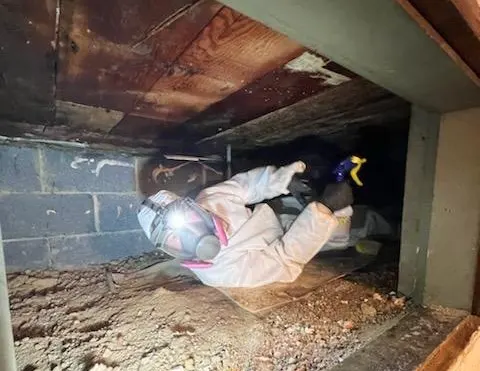
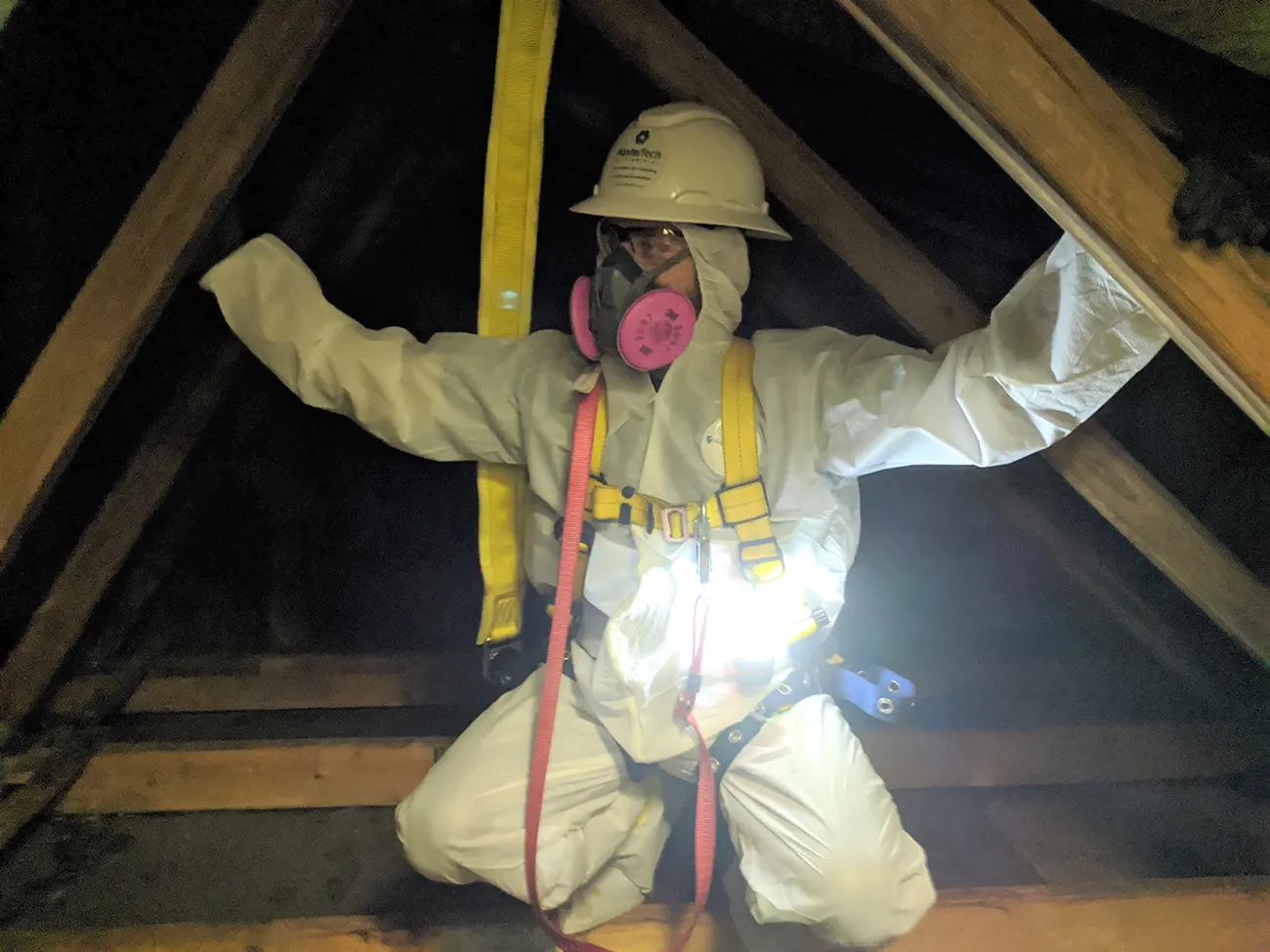
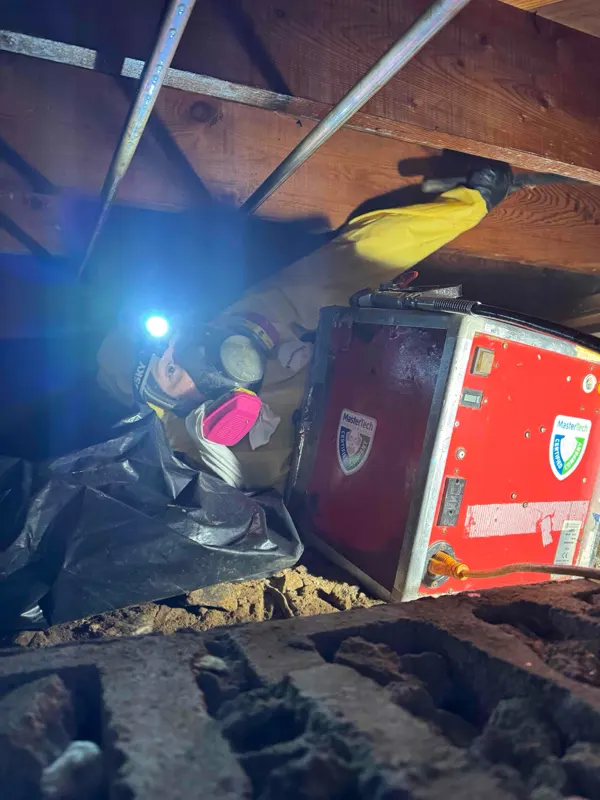
Fungi thrive in enclosed, dark cavities—behind basement finished drywall, beneath sunken bathroom tubs, inside unconditioned crawlspaces, and within attic insulation. Unless an inspector carries specialized diagnostic equipment and holds professional certifications in microbial assessment, these hazardous conditions can go undetected until after closing.
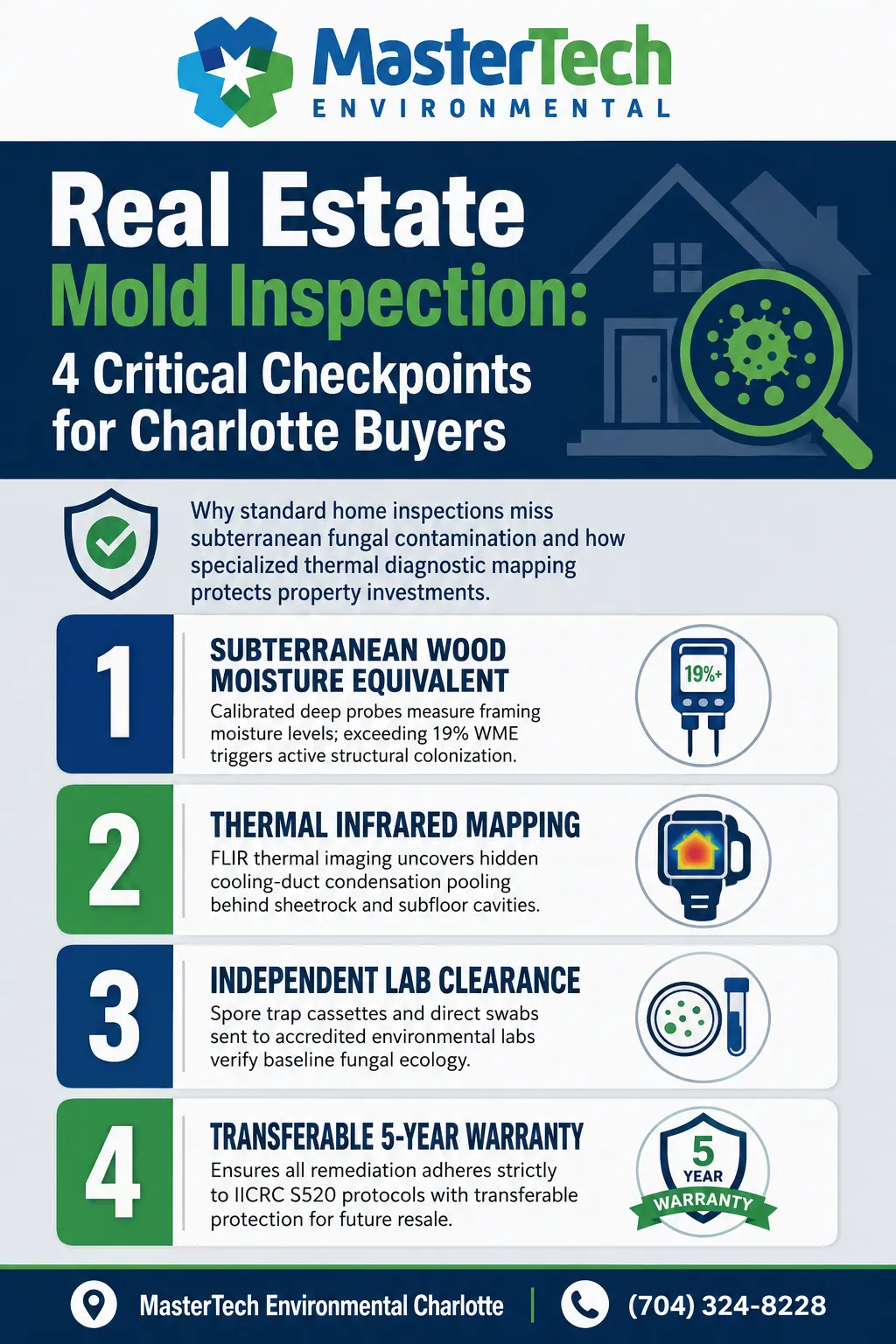
A dedicated environmental assessment uses scientific instrumentation to uncover what the human eye cannot see. Certified inspectors follow a multi-stage forensic protocol.
| Diagnostic Capability | Standard NC General Home Inspection | Dedicated Certified Mold & Moisture Assessment |
| Inspection Standard | NCHILB General Visual Standards of Practice | IICRC S520 and Environmental Laboratory Protocols |
| Moisture Detection | Visual checks for active water drips or obvious stains | FLIR Infrared Thermography and Deep Pinless Moisture Mapping |
| Laboratory Air Sampling | Explicitly excluded from standard scope of work | Calibrated Spore Trap Air & Surface Lift Samples analyzed by AIHA Labs |
| Concealed Cavity Checks | Non-invasive visual observation only | Non-destructive cavity scoping in high-risk moisture zones |
| Contractual Leverage | Provides general repair requests, easily dismissed by sellers | Provides indisputable scientific laboratory evidence for price concessions |
| Remediation Protocol | Cannot provide protocol or scope of remediation work | Generates formal IICRC S520 scope of remediation for contractor bidding |
A core component of an environmental inspection is calibrated spore trap sampling. Using high-volume air pumps and Zefon Air-O-Cell cassettes, inspectors draw exactly 75 liters of air to measure airborne fungal ecology. Crucially, inspectors collect outdoor baseline samples concurrently to compare natural atmospheric spore levels with interior living spaces.
When an accredited environmental microbiology laboratory analyzes these cassettes, they report both raw spore counts and specific fungal genera. Elevated indoor levels of Aspergillus or Penicillium indicate active colony amplification within HVAC systems or wall cavities. Even more concerning is finding indicator molds like Stachybotrys chartarum (toxic black mold) or Chaetomium. Because these toxigenic molds produce heavy, sticky spores that don’t easily become airborne unless actively disturbed, even small indoor concentrations confirm severe, hidden water damage.
Certain architectural styles and regional construction practices across Mecklenburg, Union, and Cabarrus counties are particularly susceptible to hidden moisture accumulation.
When you commission a dedicated mold assessment during your due diligence window, you receive far more than a subjective visual opinion; you receive certified analytical data detailing exact spore counts and fungal species. Sellers and listing agents cannot dismiss certified laboratory data as cosmetic wear or routine aging.
Armed with these findings, your real estate attorney can negotiate from a position of absolute strength—demanding that the seller pay for certified professional remediation before closing, negotiating a substantial cash credit at settlement, or allowing you to walk away from a dangerous financial liability with your capital protected.
Purchasing a home is likely the largest single investment your family will ever make. While standard home inspections are an essential first step in evaluating physical systems, assuming a general inspector will uncover microscopic, concealed fungal growth in our humid Carolina climate is an unnecessary gamble.
Scheduling a dedicated mold and moisture assessment alongside your general inspection provides complete, uncompromising clarity. By examining crawlspaces, attics, wall cavities, and indoor air with precision thermal imaging and lab testing, you protect your family’s respiratory health, safeguard your financial equity, and ensure your new Charlotte home is a truly healthy, secure sanctuary.