
Mold removal should not start with the assumption that every stained surface needs the same response. A dark spot on drywall, staining near trim, growth on a cabinet panel, or discoloration around a vent may come from different moisture conditions. One area may need controlled removal, while another may need cleaning, drying, repair, or a closer look before anything gets disturbed. The right next step depends on what caused the growth, what the mold is attached to, and whether the area is still wet.
At MasterTech Environmental Charlotte, mold remediation starts with inspection because the stain is only one part of the story. Homeowners searching for Mold Inspector Charlotte are usually trying to answer one practical question: is this a surface issue, or is there a moisture problem behind it? The inspection should identify the moisture source, the affected material, and the size of the area before removal is recommended. Removal matters, but removing material too early can hide the real problem if the leak, humidity issue, or damp wall cavity has not been addressed.
Visible mold makes the problem feel obvious, but the stain alone does not explain the source. A small spot near the baseboard trim may indicate a past leak, an active plumbing issue, wet flooring, or moisture trapped behind finished material. Growth around a vent may involve condensation, dust, airflow, or humidity. The inspection must connect what is visible to what is happening in the material and around the area.
That is why remediation should not begin with a one-size answer. Mold on painted trim does not behave the same way as mold on drywall paper, cabinet backing, insulation, carpet padding, or stored contents. A dry mark on a sealed surface may stay limited. Soft drywall, swollen trim, or a musty cabinet base tells a different story, as the material itself may have retained moisture.
The first question should not be, “Is mold visible?” The better question is, “What made this area wet enough for growth, and is that moisture still present?” If the answer is unclear, removal becomes guesswork. That is how homeowners end up paying for work that cleans the face of a wall while the damp area behind it remains untouched.
Moisture control also must come before cleanup. If a basement wall, cabinet base, or drywall section is still damp, removing the visible mold does not solve the problem. Mecklenburg County’s indoor air guidance makes the same point by prioritizing moisture-source correction before cleaning. That order matters in a home because a cleaned or replaced surface can become a problem again if the leak, humidity, or condensation path remains active.
A remediation plan from a mold inspector Charlotte should be based on inspection findings, not on the stain alone. The inspector needs to know where the water came from, what the mold is growing on, and whether nearby materials also show signs of dampness or damage. A small spot on the face of drywall can be the edge of a larger wet area behind it. That is why the plan should come from a full area check, not just the most visible mark.
The table below shows how inspection findings change the next step. These are not abstract questions. They affect whether the job stays limited, expands, pauses for drying, or requires controlled removal before repair.
| Inspection Finding | How It Changes the Remediation Plan |
| The material is still damp | Drying or moisture correction may be necessary before repair or removal |
| Growth is on drywall paper, insulation, or cabinet backing | Cleaning may not be enough because porous materials hold moisture and growth below the surface. |
| Growth is on a hard, cleanable surface | Removal may not be needed if the source is corrected and nearby materials are dry. |
| Staining follows a plumbing line, window, roof area, or HVAC path | The repair must follow the water path, not only the stained area. |
| Nearby materials show elevated moisture | The affected area may be larger than the visible spot. |
| The area is dry, isolated, and not spreading | The plan may remain limited rather than become a larger removal project |
These findings keep the work tied to what is happening inside the home. They also help prevent two common mistakes. One mistake is removing more material than the inspection supports. The other is cleaning a visible spot while nearby wet or damaged material remains untouched.
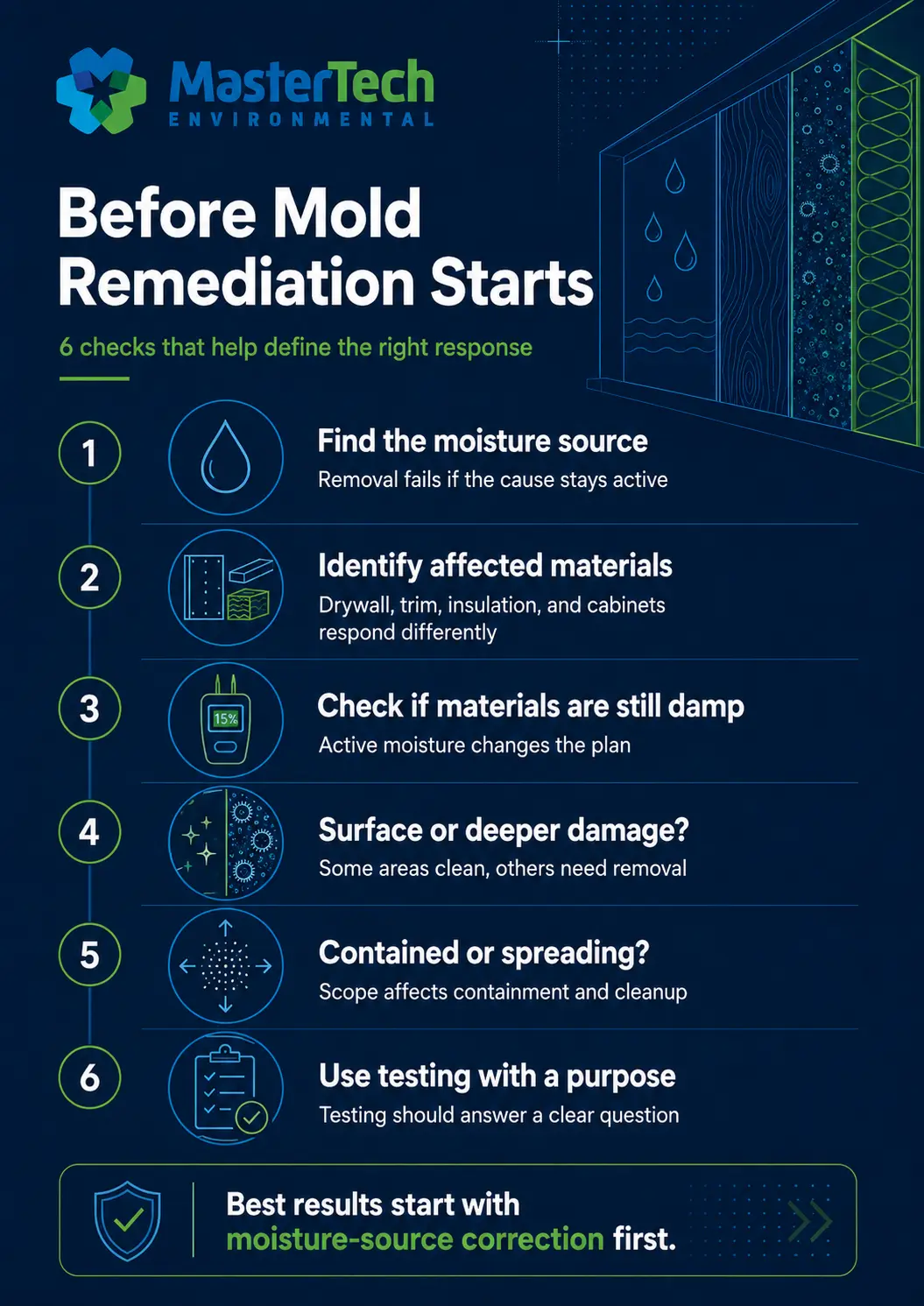
Material matters because mold growth does not sit on every surface the same way.
Smooth, nonporous surfaces may be cleaned when the source has been corrected, and the surrounding area is dry.
Drywall paper, insulation, carpet padding, cabinet backing, and some wood products need closer evaluation because they hold moisture differently.
Once moisture gets into those materials, the visible surface may not show the full extent of the problem.
A cabinet base that feels soft tells a different story than a dry stain on painted trim. The first one may mean moisture sitting in the material long enough to affect the backing or base. The second may be an old mark from a corrected issue. North Carolina health guidance connects mold growth to moisture and high humidity, which supports this practical inspection point: the material and moisture condition must be read together before removal decisions are made.
This is where vague remediation language fails the homeowner. Saying “there is mold” does not explain whether the mold is sitting on a cleanable surface, attached to a porous material, connected to dampness, or tied to hidden damage. A useful inspection explains what the mold is growing on, whether the material is still damp, and whether removal is recommended. That is what turns mold removal from a fear-based decision into a scope of work the homeowner understands.
Remediation becomes the right next step when the inspection shows that cleaning or monitoring would not address the affected material. The decision should come from the source, the material, and the area’s current condition. It should not come from the word “mold” by itself. A homeowner should know what evidence supports removal before disturbing walls, flooring, cabinets, or contents.
Remediation is more likely to make sense when:
This list should not make the job bigger by default. It should help the homeowner understand why removal is being recommended. If those signs are not present, the next step may be cleaning, drying, monitoring, or further inspection instead of full remediation. The point is to match the work to what the inspection shows, not to treat every mold concern the same way.
Why The Moisture Explanation Matters After Removal
Mold remediation should leave the homeowner with more than a cleaner surface. It should leave them with a clear explanation of what allowed growth, which materials were affected, what was removed or cleaned, and which condition must stay corrected. Without that explanation, the homeowner has no perfect way to know whether the work solved the problem. They only know that the area looks different.
That is the difference between removal and remediation. Removal addresses affected material. Remediation should address the moisture source, the affected area, the material condition, and the reason for the growth. When those points are clear, the homeowner does not have to judge the project by fear or guesswork.
The strongest remediation decisions start before removal begins. If the inspection shows what got wet, what grew, what stayed dry, and what needs correction, the scope becomes easier to understand. That is how a Mold Inspector Charlotte search should lead to a better process: inspection first, removal only when the findings support it, and a plan tied to the actual condition inside the home.
Please reach out for help if you think you have a mold problem. Mold only grows with time, so the quicker you act, the better you’ll be.