
If you searched for mold inspection Charlotte NC and already have a report, the report should do more than confirm a mold concern. It should tell you what kind of property problem the finding points to. The owner should know whether the issue involves active moisture, an affected material, a repair need, a remediation need, or a condition that needs follow-up.
That matters in Charlotte because mold findings often connect to building systems, not just to a single visible stain. Crawlspaces, basements, attics, HVAC condensation, roof leaks, plumbing leaks, and humid areas near Lake Norman and Lake Wylie all change how a report should be read. A report that lists samples, photos, or lab numbers without direction gives the owner data, but not a usable decision.
A useful mold inspection report should categorize the findings clearly. It should not stop at “mold found” or “elevated result.” Those phrases confirm a concern, but they do not explain whether the next step is repair, drying, cleanup, remediation, or more inspection.
Picture the difference between staining inside a cabinet under a sink and growth on crawlspace framing below the home. Both might appear in a report. They do not lead to the same next step. The report should separate a limited surface concern from an active moisture condition or a material that needs removal.
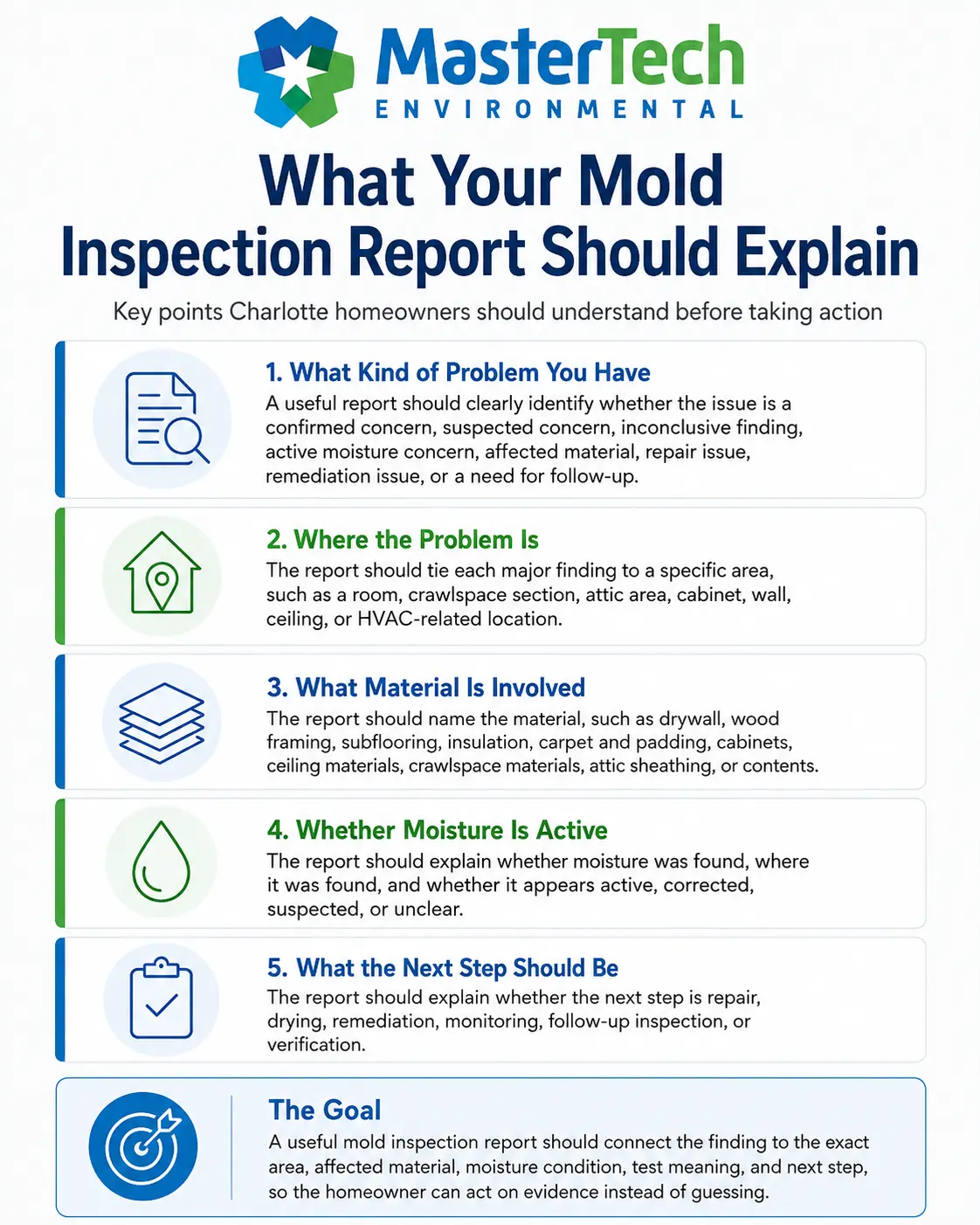
A report should translate findings into plain language before it recommends action. The owner should not have to guess whether a photo, sample, or moisture reading changes the scope. The table below shows what a useful report should explain.
| Report Finding | What the Report Should Explain | Why It Matters |
| Visible growth observed | Where it was seen and what material is involved | The owner needs to know whether cleaning, removal, or further inspection fits |
| Elevated moisture found | Where moisture was measured and whether it appears active | Moisture changes the next step and recurrence risk |
| Air sample concern | What the result suggests in relation to the property | Lab numbers need context before action |
| Surface sample concern | What surface was sampled and why | The sample matters only when tied to a location and material |
| Inconclusive result | What information is missing | The owner needs to know whether more access, testing, or monitoring is needed |
This is the core issue after an inspection. The owner already has a report. The value comes from knowing whether the report explains the finding well enough to approve the next step.
A useful report should connect every major finding to an exact area. It should name the room, crawlspace section, attic area, HVAC-adjacent area, ceiling, wall, cabinet, floor, or other location tied to the concern. A broad phrase like “mold found in home” does not give enough detail for pricing or repair planning.
This is where thin reports create problems. A photo of staining means more when the report says “under kitchen sink cabinet,” “north crawlspace joist bay,” or “attic sheathing near roof penetration.” The location helps the owner determine whether the finding is isolated or part of a larger pattern.
A useful mold inspection report should name the material involved in the finding. Mold on a hard surface is a different decision from mold on drywall, insulation, wood framing, subflooring, cabinets, or carpet. The material affects whether the next step is cleaning, removal, drying, repair, or remediation planning.
The owner should not have to guess from photos alone. A picture might show discoloration on a wall, but the report should say whether the material is painted drywall, ceiling material, wood framing, cabinet base, or insulation. That detail matters because the material drives the next work decision.
Material detail turns a general finding into a work decision. A report that says “growth observed” without naming the material leaves too much unresolved. The table below shows what the report should clarify before anyone approves cleanup or repair work.
| Material in Report | What the Report Should Clarify | Possible Next Step |
| Drywall | Whether staining, growth, or moisture appears surface-level or deeper | Clean, remove, dry, or inspect further |
| Wood framing | Whether the finding appears surface-level, moisture-related, or structural | Clean, dry, remediate, or request repair review |
| Insulation | Whether it is wet, contaminated, fallen, or affected by crawlspace moisture | Remove, replace, dry area, or inspect source |
| Cabinets | Whether moisture is active under or behind the cabinet | Repair leak, remove affected material, or remediate |
| Carpet or padding | Whether moisture or contamination reached absorbent layers | Remove, dry, or evaluate adjacent materials |
| Crawlspace materials | Whether joists, subflooring, insulation, or ground moisture are involved | Remediate, dry, improve moisture control, or inspect further |
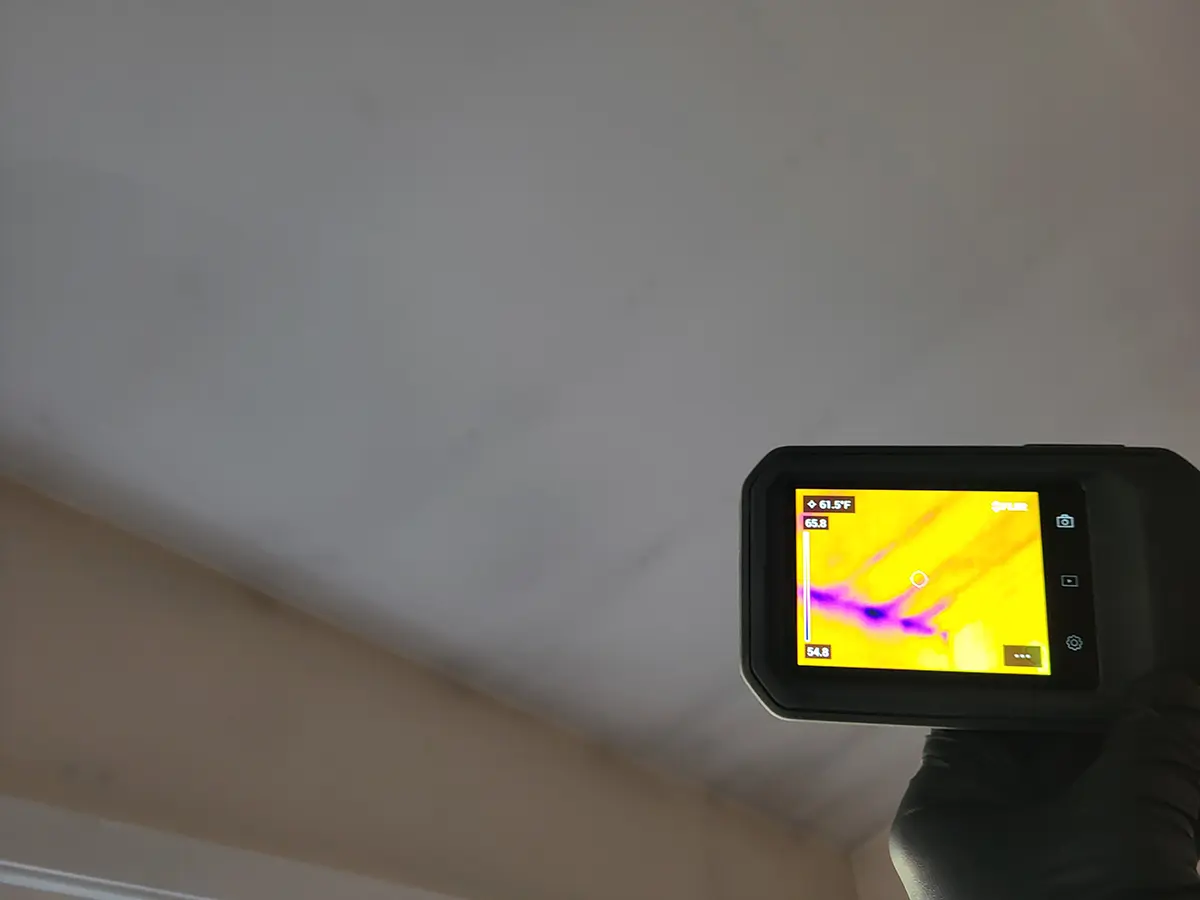
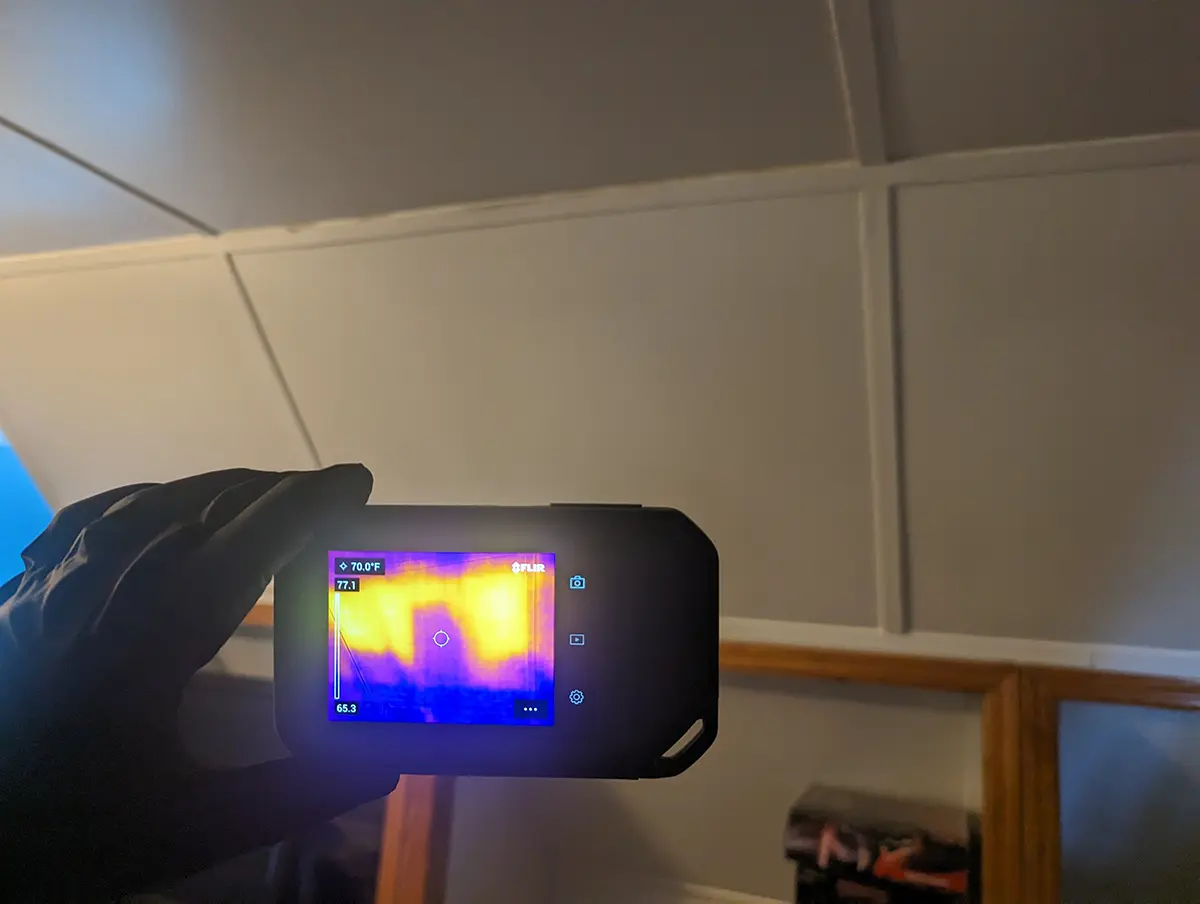
A useful mold inspection report should explain moisture findings in plain language. If the report includes moisture readings, humidity readings, thermal imaging notes, or visible water damage, it should say what those findings mean. The owner needs to know whether moisture appears active, suspected, corrected, or unclear.
This is the strongest Charlotte-specific point. Crawlspaces, basements, attics, HVAC systems, roof leaks, plumbing leaks, and nearby lake-area humidity all change how mold findings should be read. A report that mentions mold but does not explain moisture leaves out the condition that often decides whether the issue returns.
Mold testing has value when the report explains what the results mean. Air samples, surface samples, and lab analysis should connect to a specific inspection question. The report should not expect the owner to interpret a lab table without guidance.
For example, a surface sample from a crawlspace joist should connect to the observed area and material. An air sample from a finished room should explain whether it supports a concern inside that space or whether follow-up is needed. Testing should lead to a recommendation, not more confusion.
A useful mold inspection report should clearly outline the next steps. It should say whether the owner needs repair, drying, remediation, monitoring, follow-up inspection, or verification. It should not leave the owner with a concern and no path forward.
The next step should match the finding. A limited surface concern might need a different response than active moisture in a crawlspace. A moisture concern behind drywall may require repair access before the full remediation scope is finalized.
| If the Report Shows | The Next Step Should Explain |
| Limited surface concern | Whether cleaning or monitoring is enough |
| Active moisture | What source needs correction before cleanup |
| Affected porous material | Whether removal or further inspection is needed |
| Crawlspace concern | Whether moisture control, insulation removal, or remediation is recommended |
| Attic concern | Whether roof, ventilation, condensation, or surface remediation issues are involved |
| Inconclusive finding | What access, testing, or monitoring is needed next |
| Post-remediation review | Whether the area meets follow-up expectations |
A mold inspection report should not only prove mold was found. It should explain what kind of property problem the finding points to. For Charlotte homeowners, that means connecting the report to the exact area, affected material, moisture condition, test interpretation, and next step.
If you need mold inspection Charlotte NC, look for a report that helps you take action. The report should tell you whether the finding is limited, moisture-related, material-related, repair-related, or ready for remediation planning. When the report gives you that level of clarity, you are working from evidence instead of guessing.