
A drywall opening shows where damaged material was removed, but it does not establish where moisture damage or mold growth ended. Water may affect materials immediately beyond the cut line, including drywall hidden behind ceiling trim. That difference matters when a contractor determines how far removal should extend and which surrounding materials can remain in place. For Charlotte mold remediation projects involving a previously damaged ceiling, the removal boundary needs to reflect the actual condition of the materials, not simply the dimensions of the first opening.
Our MasterTech Environmental team documented an inspection that illustrates this problem. An attic HVAC condensate line had caused water damage, and the landlord had already removed portions of the ceiling drywall as part of earlier remediation. Crown molding remained attached, leaving sections of drywall concealed along the perimeter of the affected area. When we examined those sections, we found growth consistent with mold and additional growth extending into the adjacent joist bay. The discovery called into question whether the original removal boundary had captured the full affected area.
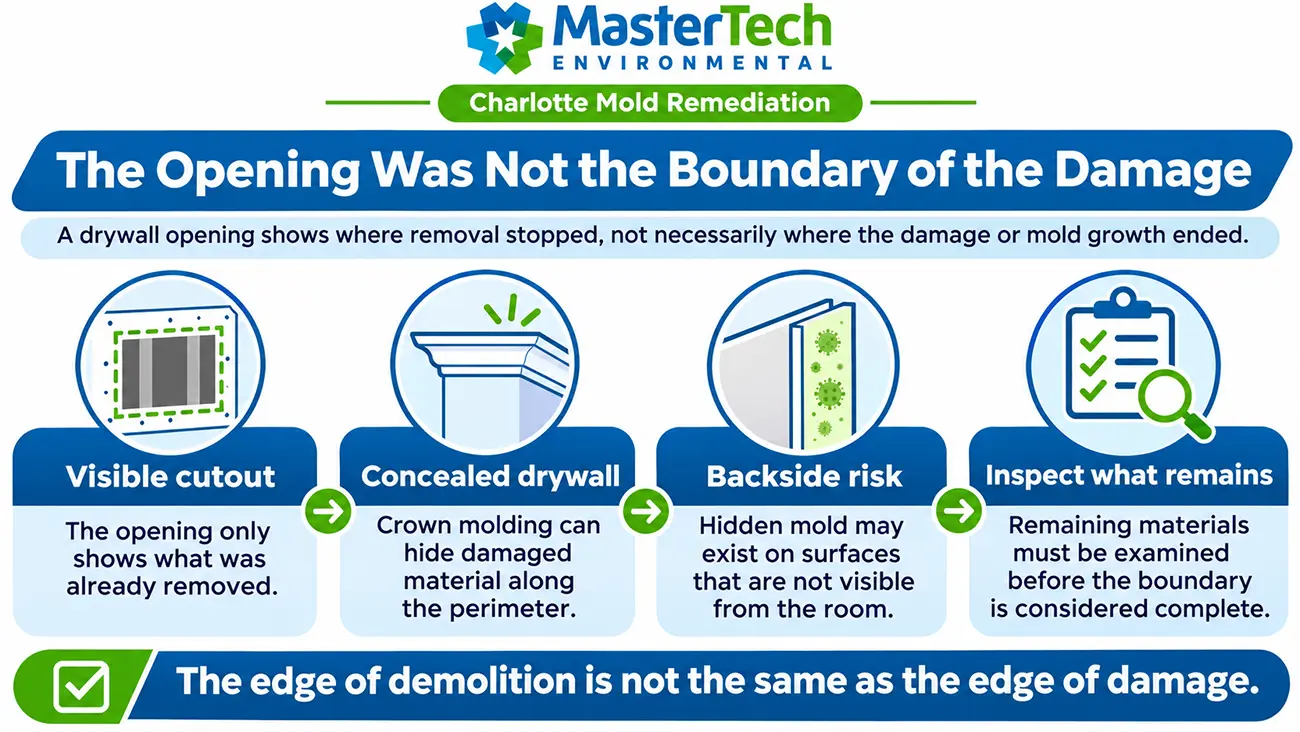
The existing ceiling cutouts made it easy to see where the previous drywall removal had stopped. We also observed remaining signs of water damage and staining that appeared consistent with bleach use. The crown molding had not been removed, so the adjacent drywall behind it was still concealed from view. That mattered because nothing about the cut line, by itself, showed that the retained drywall had escaped the original moisture exposure. We needed to examine the remaining material to understand whether the previous removal had reached far enough.
The boundary of a cutout and the boundary of damage answer different questions. EPA guidance identifies the backside of drywall as a common location for concealed mold, so a visible opening cannot rule out growth on material hidden along its edges. In this inspection, the unfinished question was not whether the contractor had removed some drywall; that was clear. It was whether the remaining ceiling materials were affected by the same moisture event. Looking behind the molding provided the evidence needed to evaluate that possibility.
Our examination behind the crown molding revealed substantial growth consistent with mold on material left behind after the earlier work. When we moved to the next ceiling opening, we saw additional growth extending into the neighboring joist bay, the space between adjacent framing members. The second location mattered because it suggested the original affected area was not limited to the first concealed patch. A single drywall opening had not captured the full pattern of visible growth. The next question was therefore how far the remaining affected material extended, rather than how neatly the original cutout had been made.
New findings can change a remediation scope, especially when they appear outside an area already opened for cleanup. EPA remediation guidance calls for revisiting the plan if hidden mold is discovered so that the total affected area can be evaluated. This principle directly applies to growth identified in a neighboring bay because the original cut line no longer provides an adequate explanation of what was affected. Our inspection established the presence of additional suspected growth in the areas examined, not the condition of every unopened section of ceiling. The appropriate boundary would require further findings rather than an assumption that all surrounding material was contaminated.
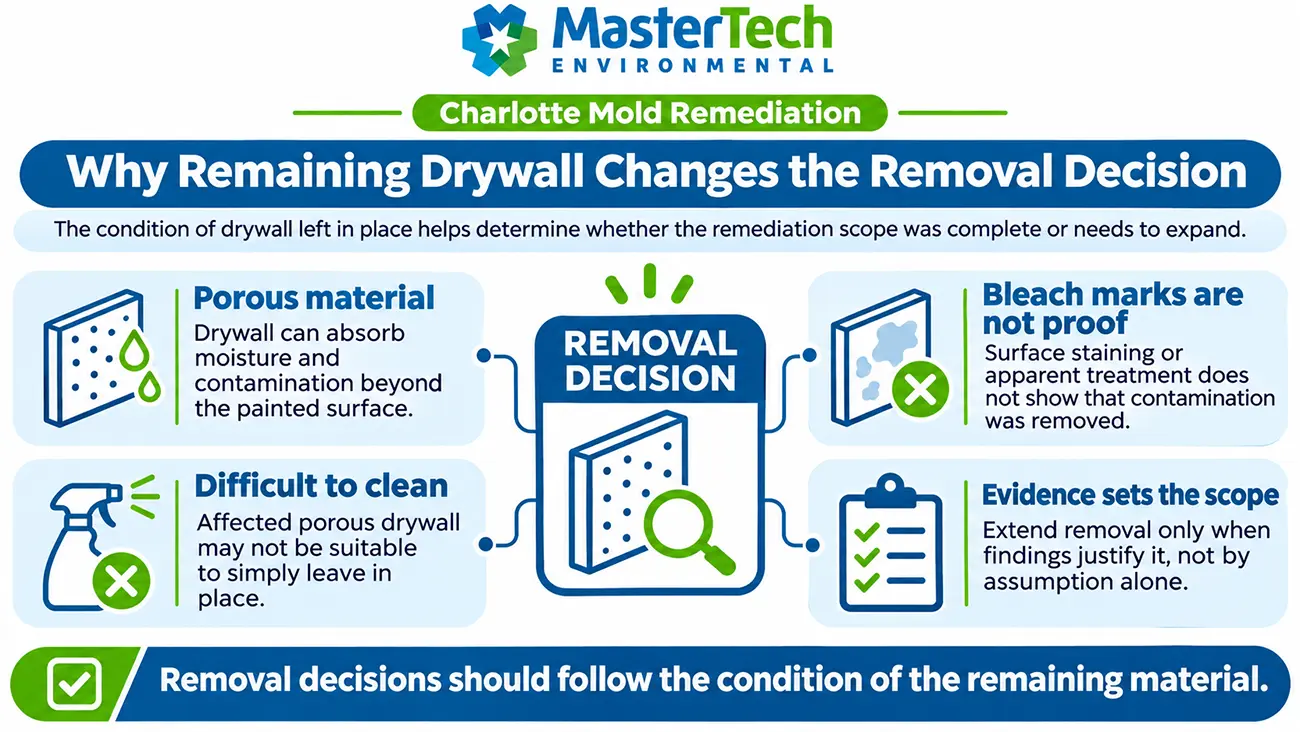
Whether surrounding drywall can remain in place depends partly on the condition and characteristics of the material. Drywall is porous, which means moisture and contamination can affect more than the visible painted face. The North Carolina Department of Health and Human Services notes that porous materials such as gypsum wallboard can be difficult to clean after significant mold growth, supporting the need to evaluate whether affected sections require removal. That information matters in our inspection because the original cleanup left porous drywall hidden behind the molding. Growth on that material could not be resolved merely by pointing to the exposed area that had already been treated.
The apparent bleach staining did not resolve that uncertainty either. A mark suggesting chemical treatment does not establish what was used, whether the product reached concealed surfaces, or whether contamination was removed. EPA guidance distinguishes killing mold from removing mold contamination, which is why a treated surface is not a substitute for assessing the drywall that remains behind it. Our concern was therefore specific: growth was present on retained material that the previous cleanup had not addressed. That finding matters independently of the appearance of adjacent surfaces.
A careful assessment also avoids the opposite mistake of removing surrounding materials without evidence. Finding growth behind one section of crown molding does not prove that every joist bay or wall cavity is affected. The affected area should be determined through examination of relevant materials and the pattern of water damage, extending the scope when new findings justify it. In this case, the neighboring growth created a clear reason to assess beyond the first opening. The objective is to avoid stopping too early without replacing that error with unsupported assumptions about the rest of the ceiling.
A defensible removal boundary is supported by findings about the affected materials, not by how much drywall happened to be removed during the first visit. In the ceiling we inspected, that meant accounting for growth concealed behind the crown molding and observed in the neighboring bay. EPA cleanup guidance also emphasizes correcting the original moisture problem and confirming that mold contamination has been addressed, connecting the removal decision to the conditions that could cause growth to recur. The attic condensate line was identified as the water source, but our inspection did not establish whether it had already been repaired. We can therefore describe the remaining growth without inventing a conclusion about the status of that repair.
For a property owner reviewing similar work, the practical question is how the contractor justified the point where removal stopped. An explanation based only on the appearance of the exposed opening would not address what might remain behind the trim. The stronger approach is to establish which concealed surfaces were evaluated, what those examinations found, and whether any additional affected material required attention. Where those questions remain unanswered, a targeted professional assessment can clarify the condition of the remaining drywall before the ceiling is closed again. Our Charlotte mold remediation services can help property owners work through that specific uncertainty.
The significant finding in this inspection was not an imperfect cutout; it was the growth that remained outside the earlier removal area. The drywall concealed by crown molding and the additional growth in the neighboring bay demonstrated why the extent of a problem cannot be defined by the edge of demolition alone. A reliable next decision follows the condition of the remaining materials and the evidence of how far the water damage and contamination extended. Before closing a previously damaged ceiling, establish that the overlooked materials have been assessed and that any additional work reflects what was actually found.