
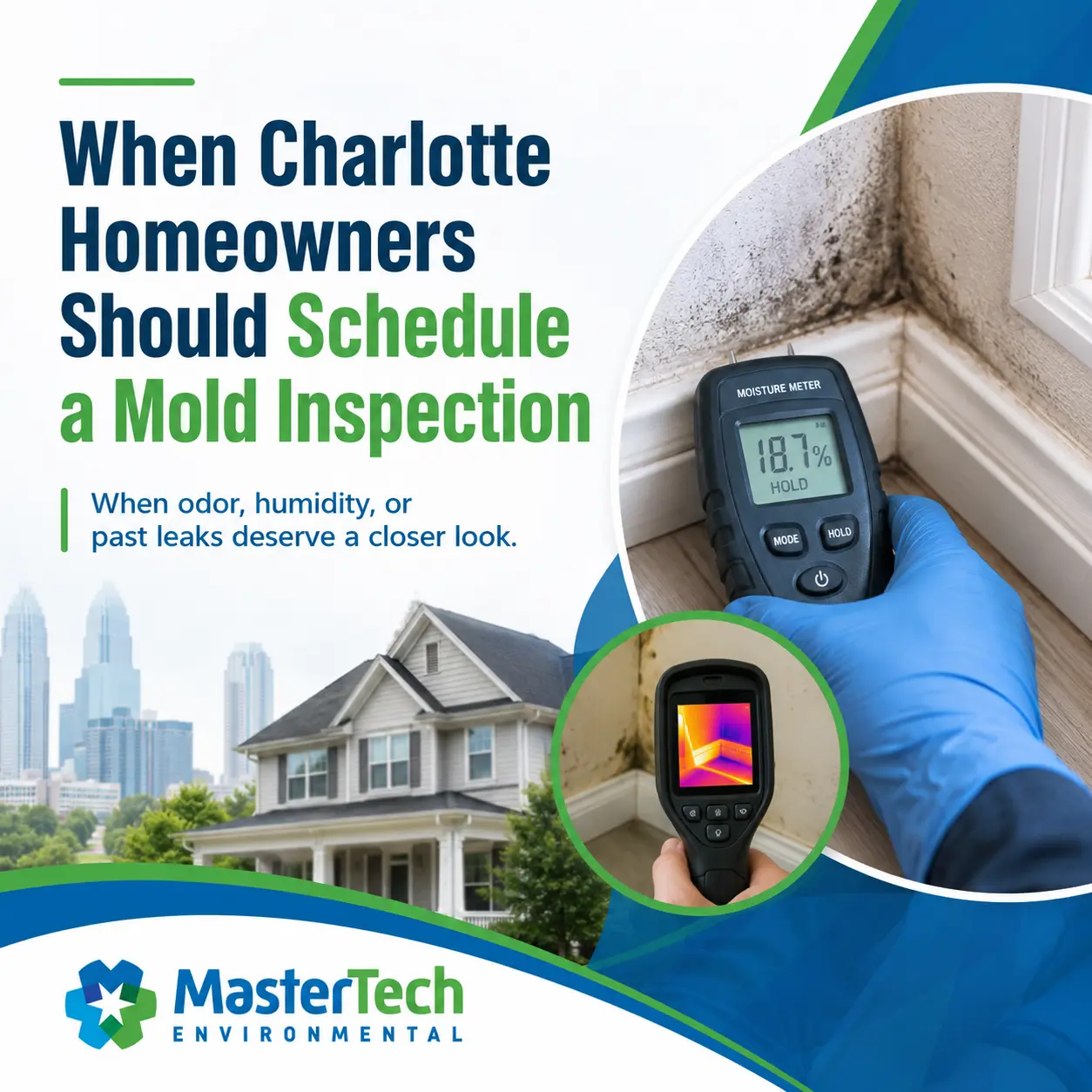
A musty odor in a Charlotte home is easy to dismiss when there is no obvious staining, fuzzy growth, or active leak. In a humid local climate, however, crawl space moisture, stormwater, roof leaks, plumbing issues, and HVAC condensation can overlap in ways that are not immediately visible. If you are searching for Mold Inspection Charlotte NC, the real question is whether your home has warning signs that justify a professional evaluation.
The concern may begin after a single water event or build slowly over several weeks. A homebuyer may notice an odor during a showing, a seller may find old moisture stains before listing, or a property manager may receive repeated indoor air quality complaints from tenants. In many cases, a professional mold inspection for Charlotte, NC homeowners is not about panic; it is about getting a clear, documented answer before the situation becomes harder to manage.
A mold inspection helps identify where moisture may be coming from and whether conditions exist that could support mold growth. Depending on what the inspector finds, testing may or may not be the right next step. The goal is not to guess, overspend, or ignore warning signs; it is to understand what is happening inside the property and decide what should happen next with confidence.
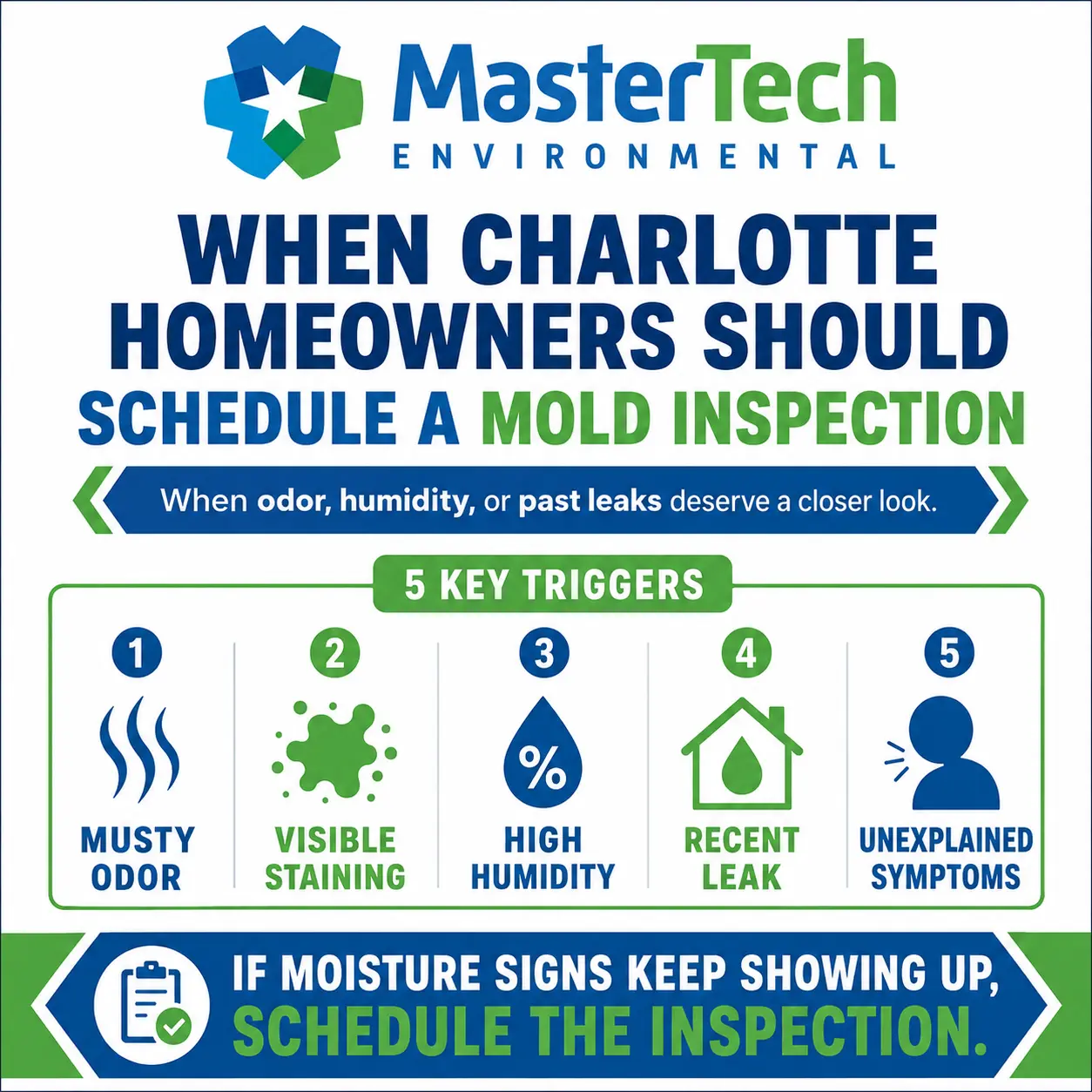
A musty smell that keeps coming back is one of the clearest reasons to schedule a mold inspection in Charlotte, NC. Odors can linger behind walls, under flooring, in attic spaces, around HVAC components, or near crawl space openings long before obvious spotting appears. If air fresheners, cleaning, or ventilation only mask the smell for a short time, the issue may be moisture-related rather than surface-level.
Water history matters just as much as what you can see today. A roof leak, an overflowing appliance, a plumbing drip, or a damp crawl space can create conditions that warrant a professional evaluation, even after the area looks dry. Staining on ceilings, bubbling paint, warped trim, or soft drywall may indicate hidden moisture that needs further evaluation.
HVAC moisture concerns are also a common trigger for Charlotte property owners. If supply vents smell musty, rooms feel damp when the system runs, or condensation appears around registers, the source may not be obvious without a closer look. Crawl space dampness can also influence air movement through the home, especially in houses with uneven temperatures, cupping floors, or recurring odors near lower levels.
It is often safer and sometimes more cost-effective to reach out for Mold Inspection Charlotte NC sooner rather than later. By the time mold is easy to see, the moisture problem may already be affecting materials behind the surface. In Charlotte homes, humidity, storm-driven rain, plumbing leaks, and poorly ventilated spaces can allow damp conditions to build quietly before stains or growth appear. A professional mold inspection helps determine whether the issue appears isolated or connected to a larger moisture pathway.
Hidden moisture often starts in places homeowners do not check every day. It may collect behind drywall after a small pipe leak, under flooring after an appliance overflow, in attic sheathing after ventilation problems, or near HVAC components where condensation forms. Without an inspection, the first obvious signs may be odor, warped materials, or discoloration that indicate a problem is already spreading.
Waiting can also make decisions more expensive because the question changes over time. Early on, an inspector may be able to help confirm the moisture source, document affected areas, and determine whether mold testing is necessary. Later, the same situation may involve removing finished materials, evaluating structural components, or coordinating multiple contractors before the home feels normal again.
A mold inspection and mold testing are related, but they are not the same service. The inspection focuses on identifying visible concerns, moisture sources, building conditions, and areas that may need further evaluation. Testing is typically used when sampling can answer a specific question, such as whether suspect growth is mold or whether airborne conditions need documentation.
For many Charlotte homeowners, the inspection should come first because testing without context can create confusion. A sample result may be useful, but it does not automatically explain where moisture is coming from or what area needs attention. A qualified inspector can determine whether testing adds value based on odors, stains, humidity patterns, HVAC concerns, real estate needs, or prior water damage.
| Situation | Inspection Focus | Testing May Help When |
| Musty odor with no visible growth | Locate moisture patterns, HVAC concerns, crawl space influence, or hidden water history | Documentation is needed or the source is unclear after inspection |
| Past leak that appears dry | Check affected materials and surrounding areas for lingering moisture concerns | There is staining, odor, or a real estate documentation need |
| Home sale or purchase | Evaluate warning signs before closing, listing, or negotiating repairs | Buyers, sellers, agents, or property managers need clearer records |
| HVAC or indoor air quality complaint | Review condensation, vents, ducts, humidity, and related moisture clues | Air-related concerns need targeted sampling after the inspection |
A professional mold inspection for Charlotte, NC homeowners should help narrow the decision, not add unnecessary steps. If there is visible suspect growth, moisture staining, or a strong odor, the inspector may be able to explain the concern without immediately recommending broad testing. If the situation involves a real estate transaction, repeated complaints, or unclear indoor air quality concerns, targeted testing may support the findings and provide useful documentation.
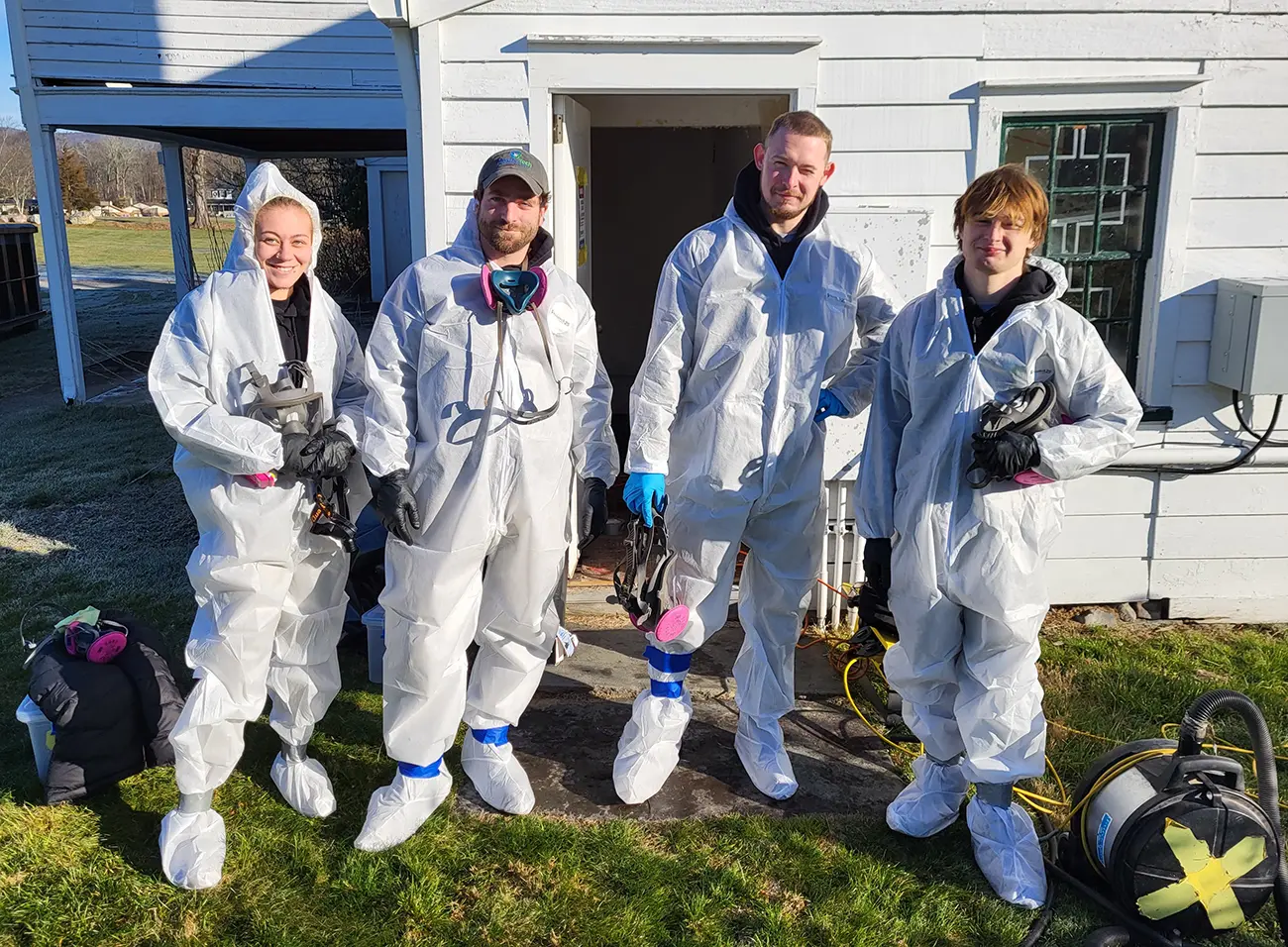
You should call MasterTech Charlotte when a moisture concern is persistent, unexplained, or tied to a property decision. A small stain, recurring odor, or damp room may not look urgent, but those clues can matter when they appear after rain, HVAC use, plumbing work, or a crawl space issue. A professional inspection gives homeowners, buyers, sellers, property owners, and property managers a practical way to understand what is happening before choosing the next step.
The timing is especially important when documentation matters. Real estate deadlines, tenant concerns, insurance conversations, and repair planning all become more difficult without a clear assessment of the affected area. MasterTech Charlotte can inspect the property, identify conditions conducive to mold growth, and explain whether mold testing is appropriate based on the findings.
A good time to schedule an inspection is before the issue becomes a larger repair conversation. That does not mean every odor or stain will lead to a major problem, nor does it mean every inspection requires testing. It does mean that a trained inspector can help separate surface concerns from conditions that deserve closer attention.