
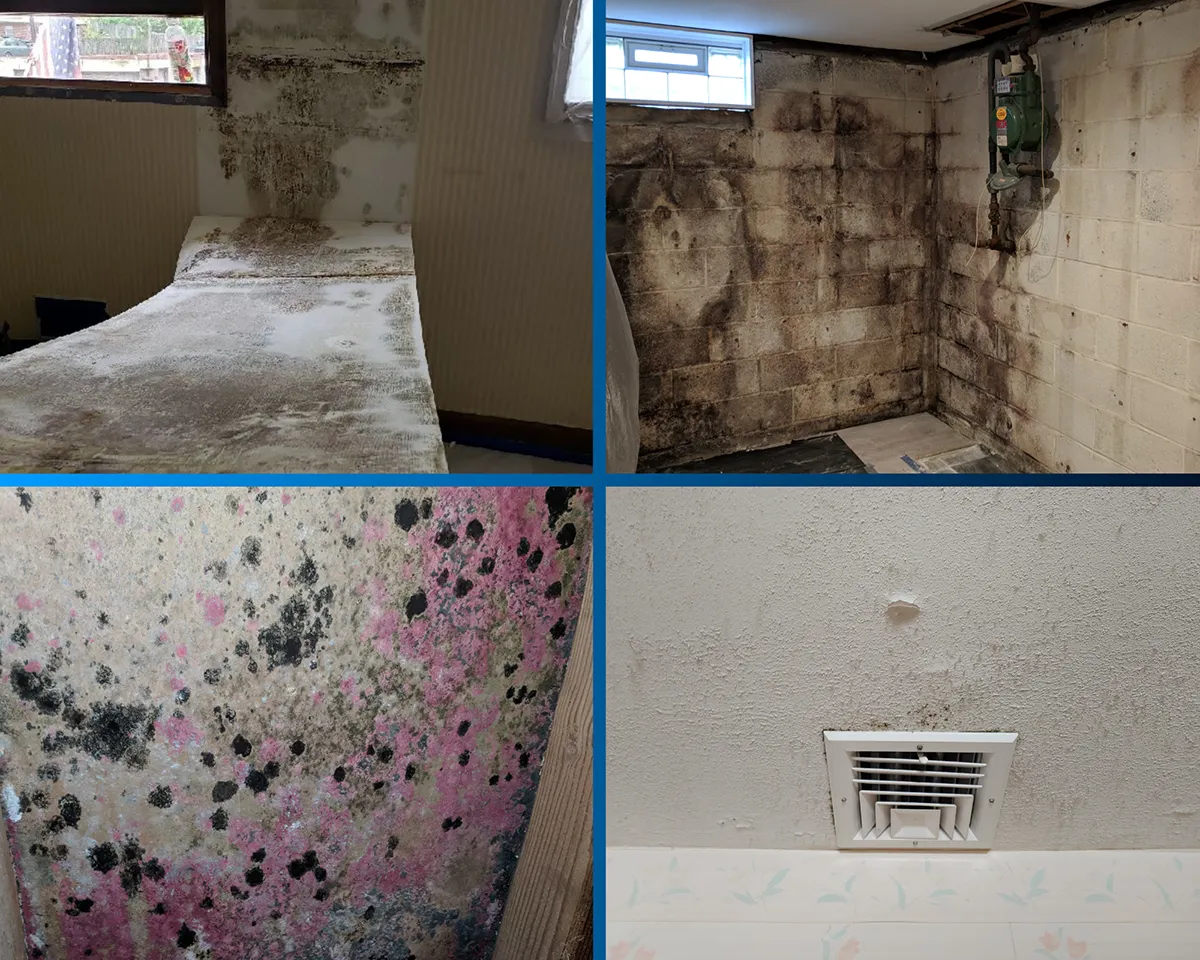
A dark mark on a ceiling, wall, or subfloor does not exist on its own. Moisture interacted with a material and left that mark behind. In Charlotte, humidity, crawlspaces, and ventilation failures drive consistent patterns of hidden moisture movement. By the time a stain appears, moisture has already moved through parts of the structure you cannot see. You should not ask what it looks like. You should ask whether the material beneath it stays dry or still holds moisture.
Homeowners make the same mistake again and again. They rely on visual similarity and assume a black mark equals mildew. That shortcut ignores how different materials behave when water enters the system. Correct identification depends on three things you can verify: the surface, the moisture, and whether the problem returns. Use those three, and you stop guessing.
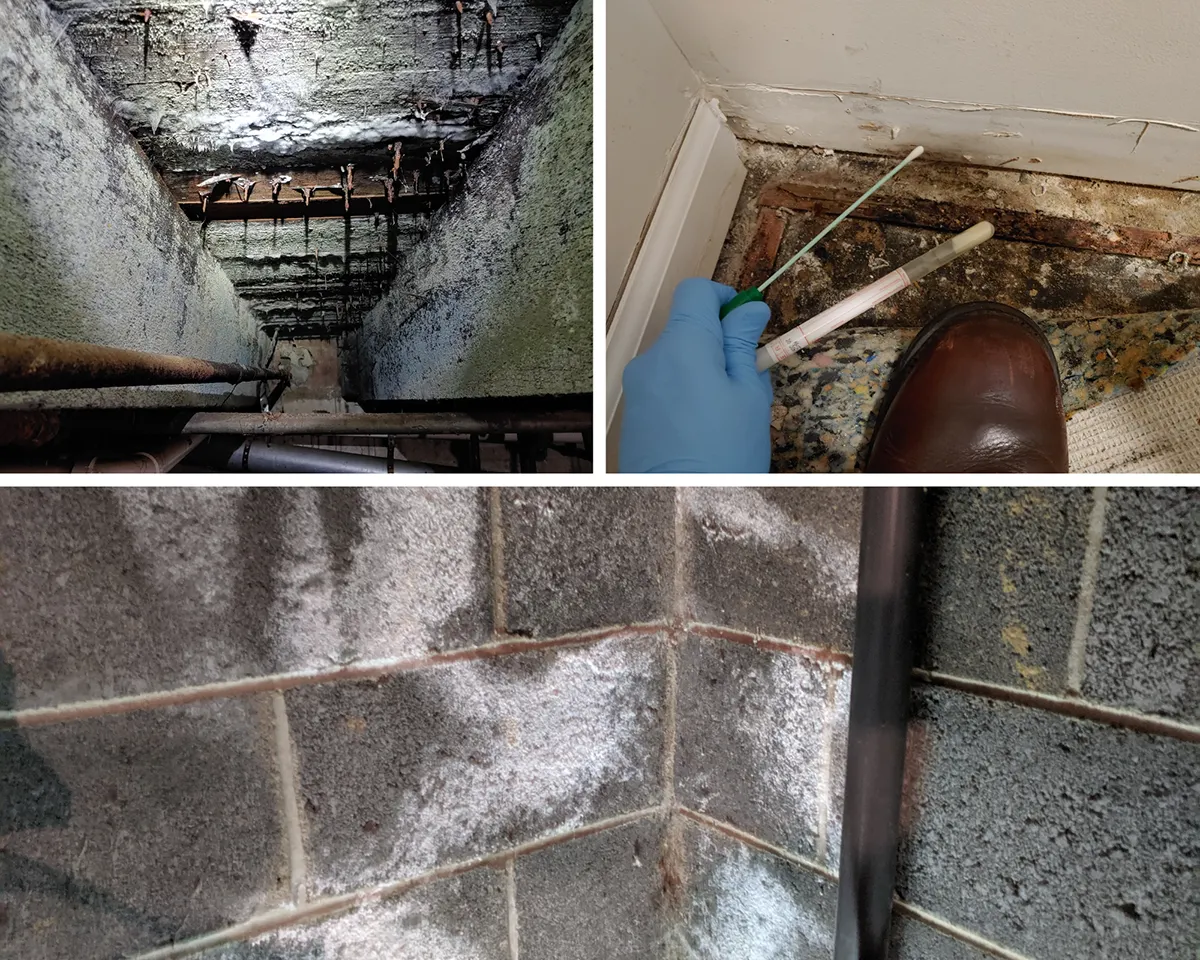
You cannot classify mold, mildew, or staining by color or shape. You must evaluate the surface, confirm moisture status, and check recurrence. These three factors work together and point you to the correct conclusion. Ignore one, and you will treat the symptom and miss the cause.
Surface type tells you whether the material absorbs moisture or forces it to stay on top. That single distinction changes how the stain behaves and what you should do next. Non-porous materials do not store water internally, so any growth remains at the surface. Porous materials absorb water and allow conditions to develop inside the material itself.
Read the surface first, then decide your next step. You can clean the tile and remove what you see, as the material does not hold water. You cannot clean drywall and expect the same result because the material may stay wet beneath the surface. When moisture enters a porous material, the visible mark becomes a symptom, not the problem.
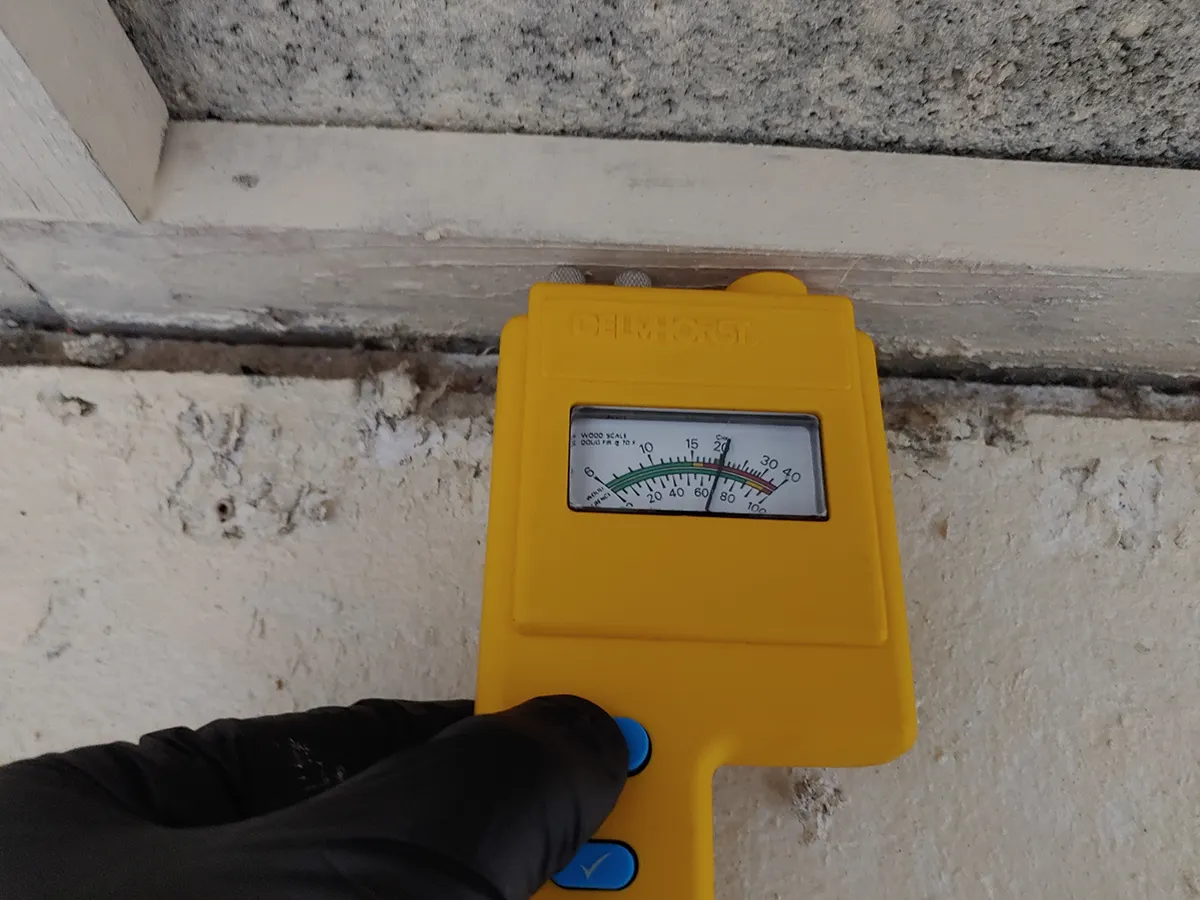
Moisture status indicates whether the condition persists or has already stopped. A stain can persist after a leak ends, but the material must fully dry for the problem to resolve. Do not assume dryness because the surface looks stable. Charlotte homes often trap moisture in ceilings, subfloors, and wall cavities, even after the visible surface appears dry.
Do not rely on appearance. A ceiling can look normal while moisture sits above it. A subfloor can hold humidity from a crawlspace even when no water shows at the surface. If you do not measure the material, you cannot confirm whether the condition continues. Active moisture will continue to cause damage, no matter how many times you clean or paint the surface.
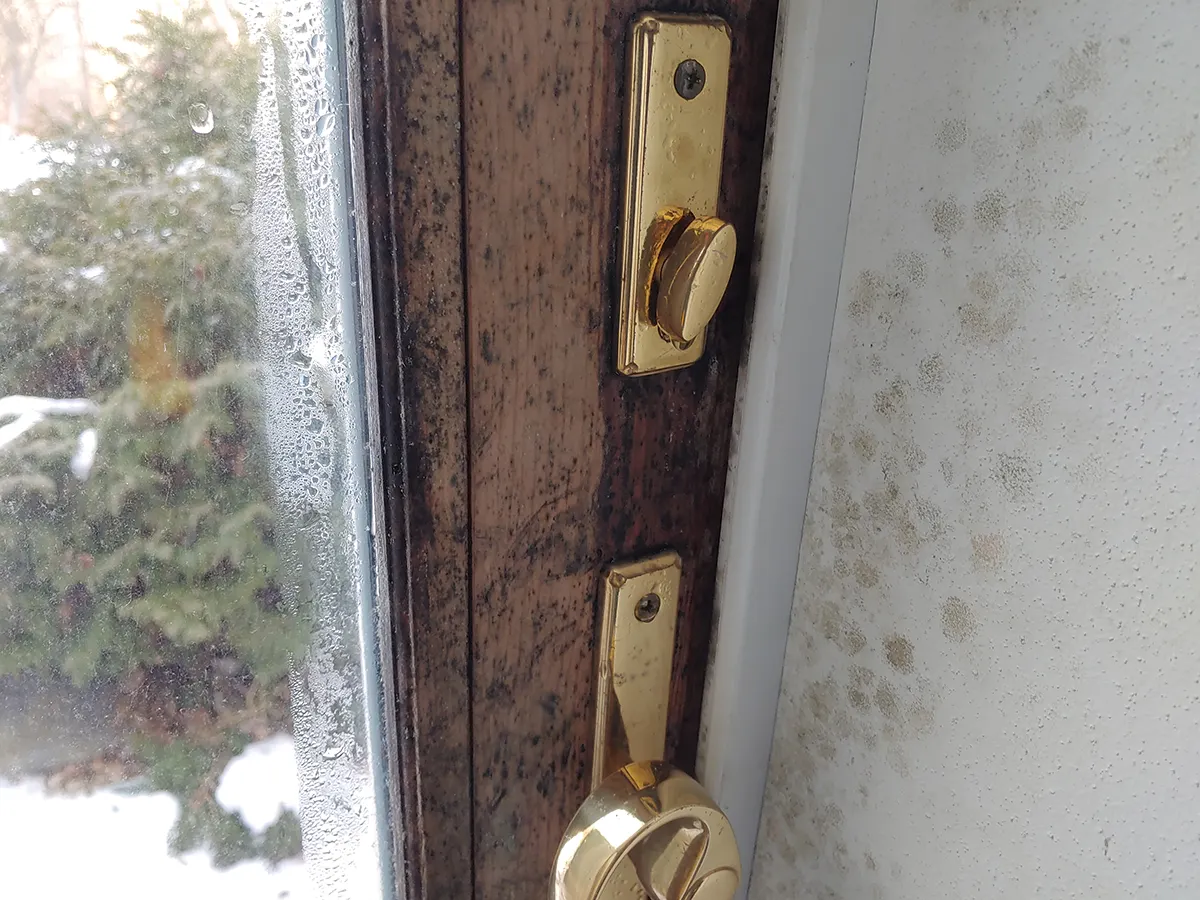
Recurrence tells you whether you fixed the source or only changed the appearance. A surface issue should not return once you clean it and control humidity. When a stain comes back in the same place, the same source feeds it again.
Use recurrence as a decision trigger. If a stain returns after you clean or paint it, stop treating the surface. The system that feeds it still operates. Continued surface work will not solve it.
You must read all three factors together. A stain on drywall might look minor, but porous material, active moisture, and repeated appearances point to a structural problem. That combination rules out mildew and simple staining.
When you align surface type, moisture status, and recurrence, you remove guesswork. You stop labeling stains by appearance and start diagnosing them by behavior. That shift changes the outcome. You either confirm a surface condition and move on, or you identify a structural issue and address it correctly.
Moisture in Charlotte homes does not stay in one place. Air and vapor move through crawlspaces, attics, and HVAC systems before you see any sign. The location of a stain rarely matches the location of the source.
A common pattern starts in the crawlspace. A damaged or incomplete vapor barrier allows humidity to build below the home. That moisture moves upward into the subfloor and framing. Over time, the materials absorb enough moisture to support growth. Eventually, discoloration appears in the living space.
Follow the sequence, and you understand why cleaning fails. The stain marks the end of the process, not the beginning.
Draw a hard line between when you should clean and when you should investigate. Do not base that decision on how the stain looks. Base it on the material and the behavior.
Respect this boundary. If you cross it, you will repeat the same result and allow the condition to expand.
Once you confirm porous material, active moisture, or recurrence, you move past identification and into scope. At that point, you need to know how far the condition extends and where it originates. That is when Mold Testing Charlotte NC becomes necessary.
Testing does not answer what the stain looks like. It answers what the structure is doing. That distinction matters because hidden moisture is the real risk driver.
A stain in a Charlotte home falls into one of two categories. It either stays on the surface and resolves, or it signals an active moisture system inside the structure. Surface type, moisture status, and recurrence determine which category applies. Appearance does not.
If the surface stays non-porous and the issue resolves, treat it as a surface condition. If the material absorbs moisture or the stain returns, treat it as a structural problem and investigate the source. Stop guessing and read the condition correctly.