
![[HERO] Pipe Bursts and Flash Floods: A Cornelius, NC Resident's Guide to Immediate Water Extraction](https://cdn.marblism.com/NaFzsUWXJZr.webp)
Walking into a room and hearing the sound of rushing water when nobody is running a faucet is a bad feeling. Whether it’s a pipe that finally gave up under a sink in Cornelius or a heavy North Carolina storm that sent flash flood water creeping under your back door in Huntersville, the situation is the same: you have a mess on your hands, and the clock is ticking.
Water doesn't just sit there. It travels. It finds its way into your floorboards, behind your baseboards, and up into your drywall. If you live in the Charlotte area, you know how fast the humidity can turn a wet room into a breeding ground for mold. Getting that water out immediately isn't just about saving the carpet; it’s about protecting the structural integrity of your home.
If a pipe bursts, your priority is the main water shut-off valve. Most people in the Charlotte, NC area have their shut-off in the garage, a crawlspace, or out by the street in a plastic box. If you don't know where yours is, find it today. Every second that water sprays is another gallon you have to extract later.
For flash flooding, the source isn't something you can just turn off. In places like Pineville or Cornelius, heavy rains can overwhelm local drainage systems quickly. If water is coming in from the outside, shut off the electricity to the affected rooms at the breaker box. Standing water and live outlets are a lethal combination. Once the power is safe, you can start assessing the damage.
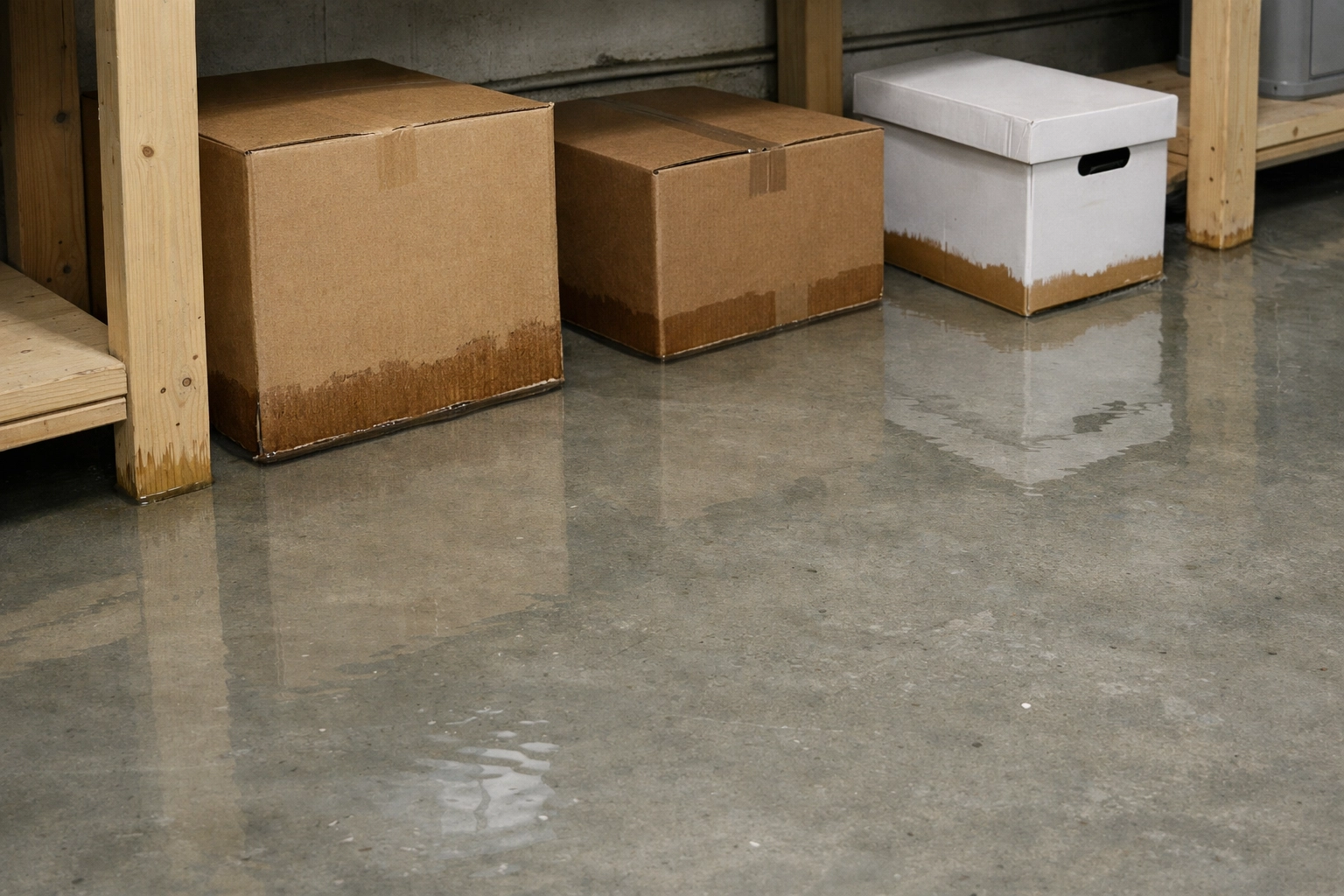
(Image Prompt: A regular, non-dramatic photo of a residential basement floor covered in about an inch of standing water. The lighting is flat, like a standard overhead bulb. You can see the legs of a wooden table sitting in the water and some cardboard boxes starting to soak up moisture at the bottom.)
A lot of homeowners grab a few towels and a shop vac and figure they can handle it themselves. While a shop vac is great for getting the bulk water off the surface, it does nothing for the moisture trapped inside the materials.
Concrete slabs, common in many Charlotte homes, are porous. They soak up water like a sponge. Wood studs and subfloors do the same. If you don't use professional-grade water damage restoration techniques, that moisture stays trapped. Within 24 to 48 hours, that trapped moisture starts breaking down glue in floorboards and providing the perfect environment for mold.
Structural damage from water isn't always as obvious as a collapsed ceiling. Sometimes it’s subtle. You need to look at your walls. When drywall gets wet, it sucks water upward through capillary action. This creates what we call "tide lines."
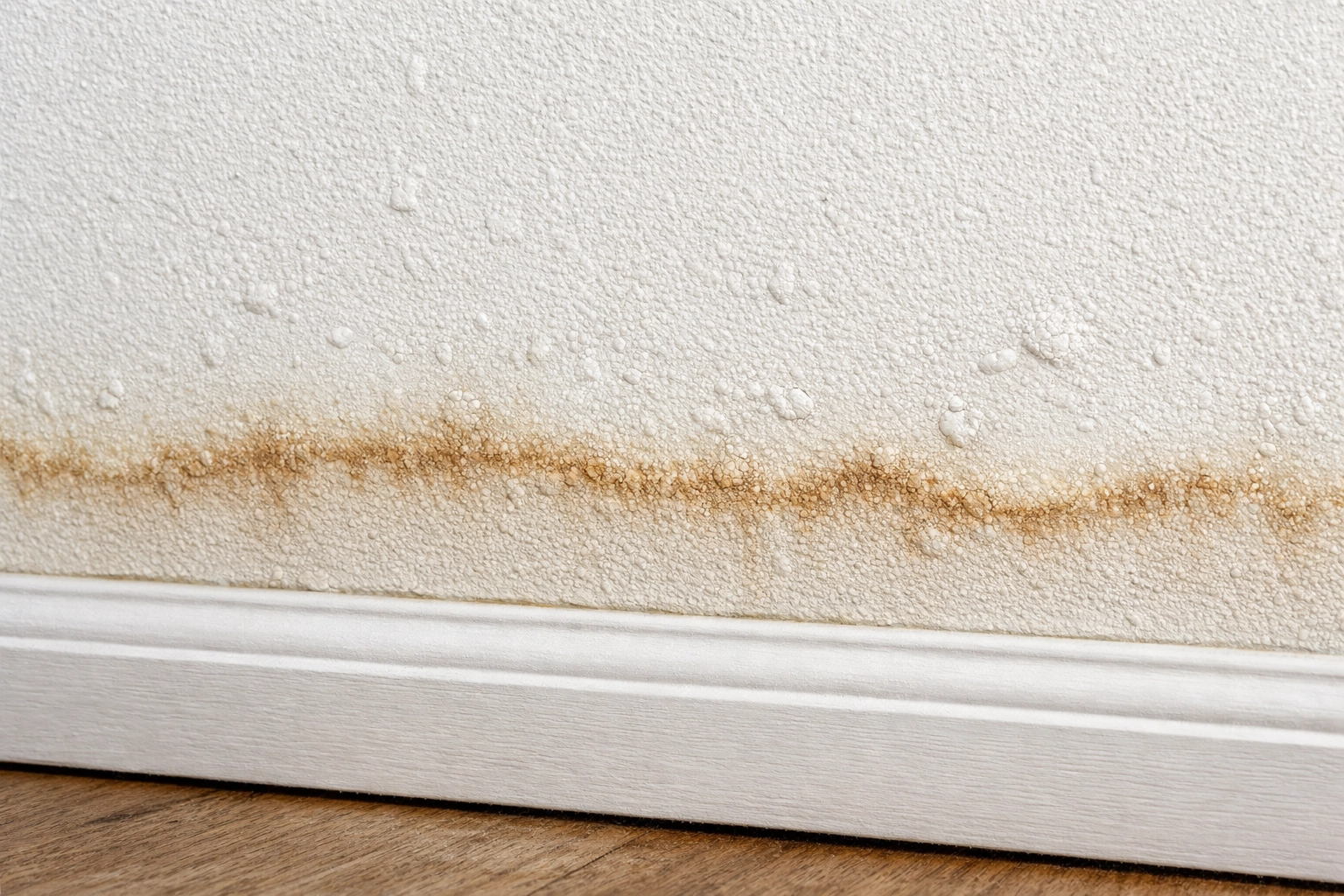
(Image Prompt: A close-up, realistic photo of the bottom of a white drywall wall where it meets the floor. There is a faint, brownish, irregular horizontal line about six inches up from the floor, showing where water soaked into the material. The paint is slightly bubbled but not dramatically peeling.)
These tide lines are a clear indicator that the interior of the wall: including the insulation and the wooden studs: is saturated. Even if the surface feels dry to the touch a day later, the "insides" are likely still rotting. This is where a mold inspection becomes necessary if the drying process wasn't handled correctly from the start.
In Cornelius and the surrounding areas, professional extraction involves more than just a big vacuum. It’s a science. Technicians use moisture meters to find exactly where the water traveled. Water follows the path of least resistance, which means it might have started in your kitchen but ended up underneath the hardwood in the dining room.
Using a moisture meter is the only way to be sure a room is actually dry. If you’re curious about what a professional looks for, you can check out this guide on what a mold inspection includes, as the tools and processes for finding hidden moisture are very similar.
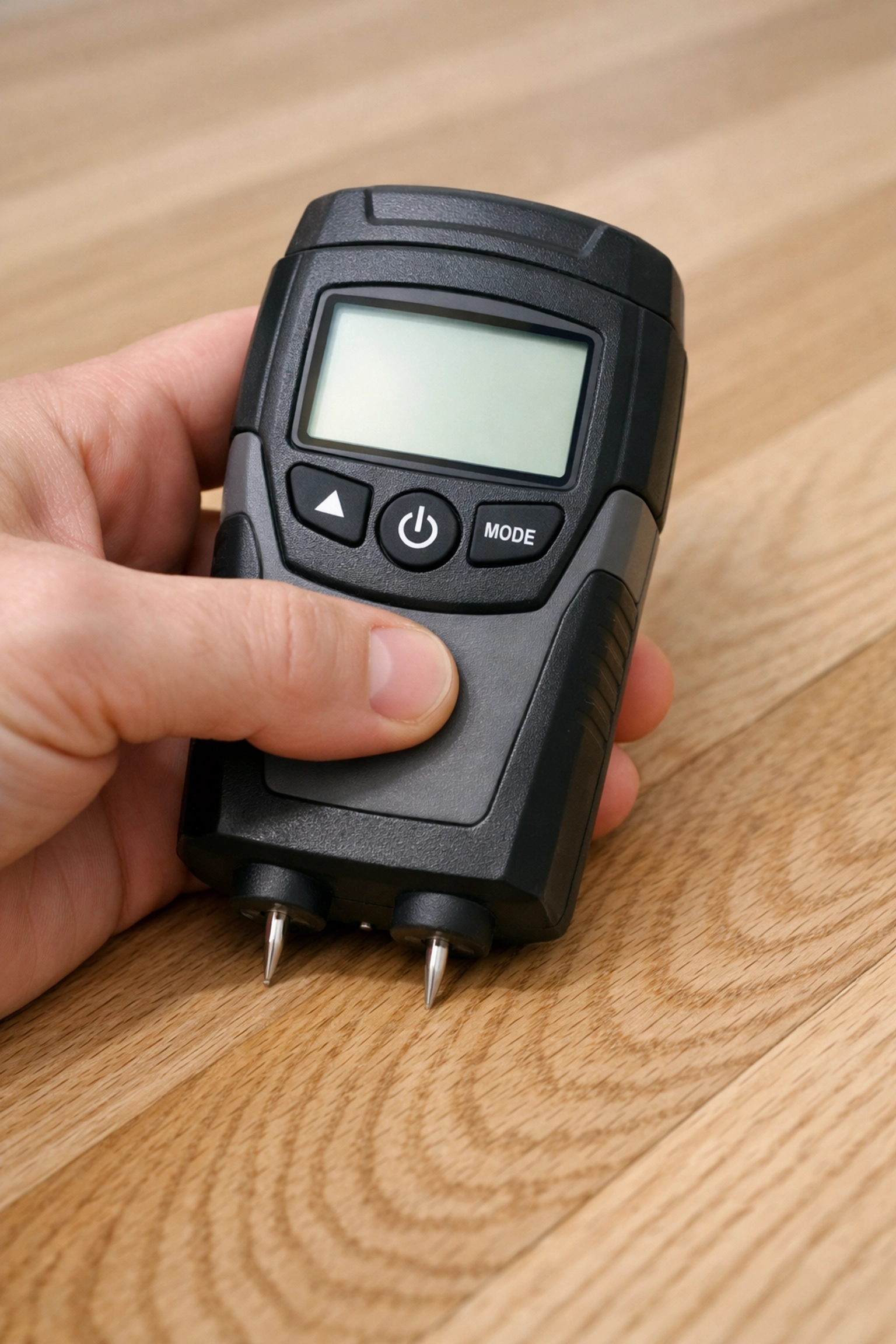
(Image Prompt: A Mastertech Environmental technician in a standard uniform holding a digital moisture meter against a section of wood flooring. The screen on the meter shows a numerical reading. The photo is taken from a natural angle, looking like a snapshot from a job site.)
If the water extraction wasn't immediate, mold is the next logical step. It doesn't take much. A little bit of leftover dampness behind a baseboard in a Pineville home is plenty for a colony to start.
It is important to know what real mold looks like. It isn't always a thick, black carpet. Often, it starts as irregular, fuzzy splotches. It might look like a bit of dirt or a smudge that won't wipe away. It follows the moisture pattern, so you’ll often see it clustered along those tide lines on the drywall or in the corners of a crawlspace.
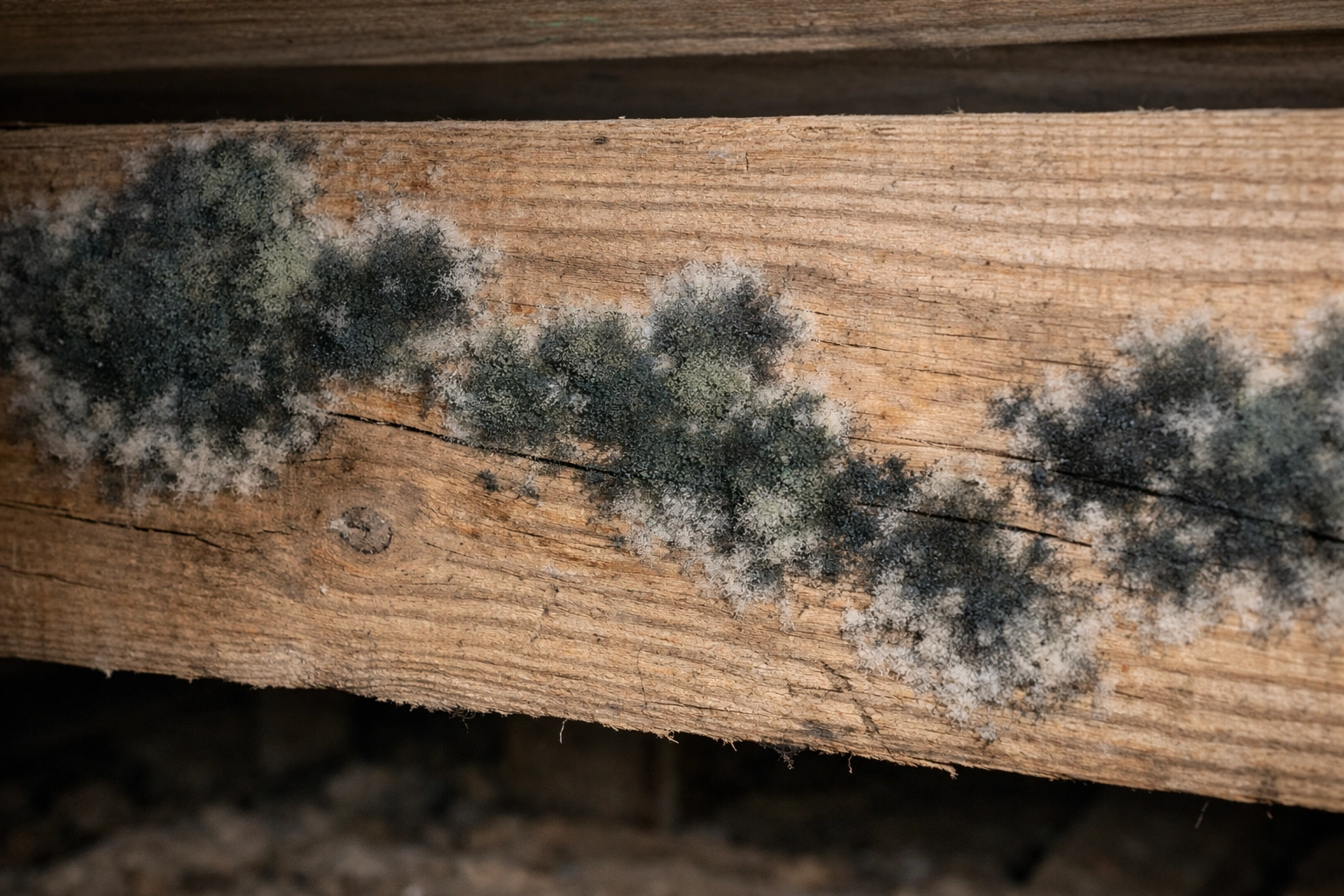
(Image Prompt: A realistic photo of mold growth on a piece of plywood in a damp crawlspace. The mold is not perfectly circular; it consists of asymmetrical, fuzzy splotches in shades of grey and dark green with irregular, feathery borders. It looks like it is growing out of the wood grain.)
If you find yourself in this position, you need mold remediation to ensure the spores are actually removed and not just bleached over. Bleach doesn't kill mold on porous surfaces; it just removes the color while the roots keep growing.
Each area around Charlotte has its own quirks when it comes to water damage.
Regardless of where you are, if you've had a pipe burst or a flood, the process is the same: extract, dry, and verify. If you also happen to be dealing with the fallout of a fire, the water used to put out the flames causes its own set of problems, which we cover in our fire damage restoration section.
Once the water is out and the area is dry, the restoration begins. This might mean replacing the bottom two feet of drywall or installing new flooring. But before you put the house back together, you have to address why the water got in.
If it was a pipe burst, was it due to freezing? Even in the Carolinas, we get those occasional snaps that can freeze a line in an exterior wall. Insulation is key. If it was a flash flood, do you need better grading around your foundation or a sump pump in the crawlspace?

(Image Prompt: Two Mastertech Environmental technicians in branded uniforms standing on the front porch of a suburban home in Cornelius. One is holding a tablet, and they are discussing the restoration plan with a homeowner who looks concerned. A branded service truck is visible in the driveway.)
For those in York County who need testing rather than full-scale restoration, Tom at Mastertech York handles mold testing and inspections in Red Lion, PA and the surrounding areas. However, for the heavy lifting of extraction and restoration in the Charlotte metro, the team at Mastertech Charlotte is the one to call.
If you are standing in water while reading this, here is your checklist:
Don't wait for the "musty smell" to start. By the time you smell it, the damage is already done. Whether it’s a small leak or a major flood, treating it like an emergency now will save you thousands of dollars in structural repairs and mold cleanup later.
For more tips on maintaining a healthy, dry home, feel free to browse our blog for local advice tailored to the North Carolina climate. If you're unsure if a spot on your wall is mold or just a stain, learning about understanding mold test results can give you some peace of mind. Stay dry, Cornelius.