
Finding mold in your house does not automatically mean you need to leave. It also does not automatically mean the problem is minor. The correct answer depends on what is happening inside the structure, not just what you can see on the surface. That is where Mold Inspection Charlotte NC becomes important, because a real answer comes from understanding the condition inside the home, not from guessing based on a stain or odor.
Most homeowners make the same mistake at this point. They try to answer the question based on appearance. If it looks small, they assume it is safe. If it looks dark or aggressive, they assume it is dangerous. Neither approach works because mold does not behave based on its appearance. It behaves based on where it is, whether moisture is still present, how air moves through the house, and who lives in the home. Those are the factors that determine whether staying in the house makes sense.
You cannot answer this question with a single rule. Mold inside a house is not one condition. It is a range of conditions that behave differently depending on the building and the environment. The most reliable way to think about it is to separate the situation into four variables:
These variables matter because they separate a contained building issue from an active exposure problem. A contained issue may allow the home to remain occupied during investigation and repair. An exposure problem changes that decision because the condition is no longer confined to a single location.
Location is the first filter because it determines whether the problem can be separated from the rest of the house. Mold in an isolated space behaves differently from mold in a central living area. A sealed utility room, attic corner, or limited crawlspace section can often be physically separated from the areas where people spend time. A main hallway, bedroom ceiling, or open living space cannot.
This is not about how severe the mold looks. It is about how the space functions. If the affected area is in a part of the house that people use constantly, separation becomes difficult or impossible without disrupting daily life. If the area sits off to the side and can be isolated, then the rest of the house may remain usable while the issue is addressed.
The answers to those questions will tell you more than the stain’s size or color.
Mold cannot grow or continue developing without moisture. That makes moisture status one of the most important variables in the entire decision. A dry, stable stain from a past issue does not behave like an actively wet material that is still feeding growth.
The Environmental Protection Agency keeps this simple. Moisture drives mold growth, so wet materials should be dried quickly to prevent it. If a leak is addressed and materials are dried within a short window, mold often does not form. When moisture remains in place for longer periods, conditions change, and growth can develop.
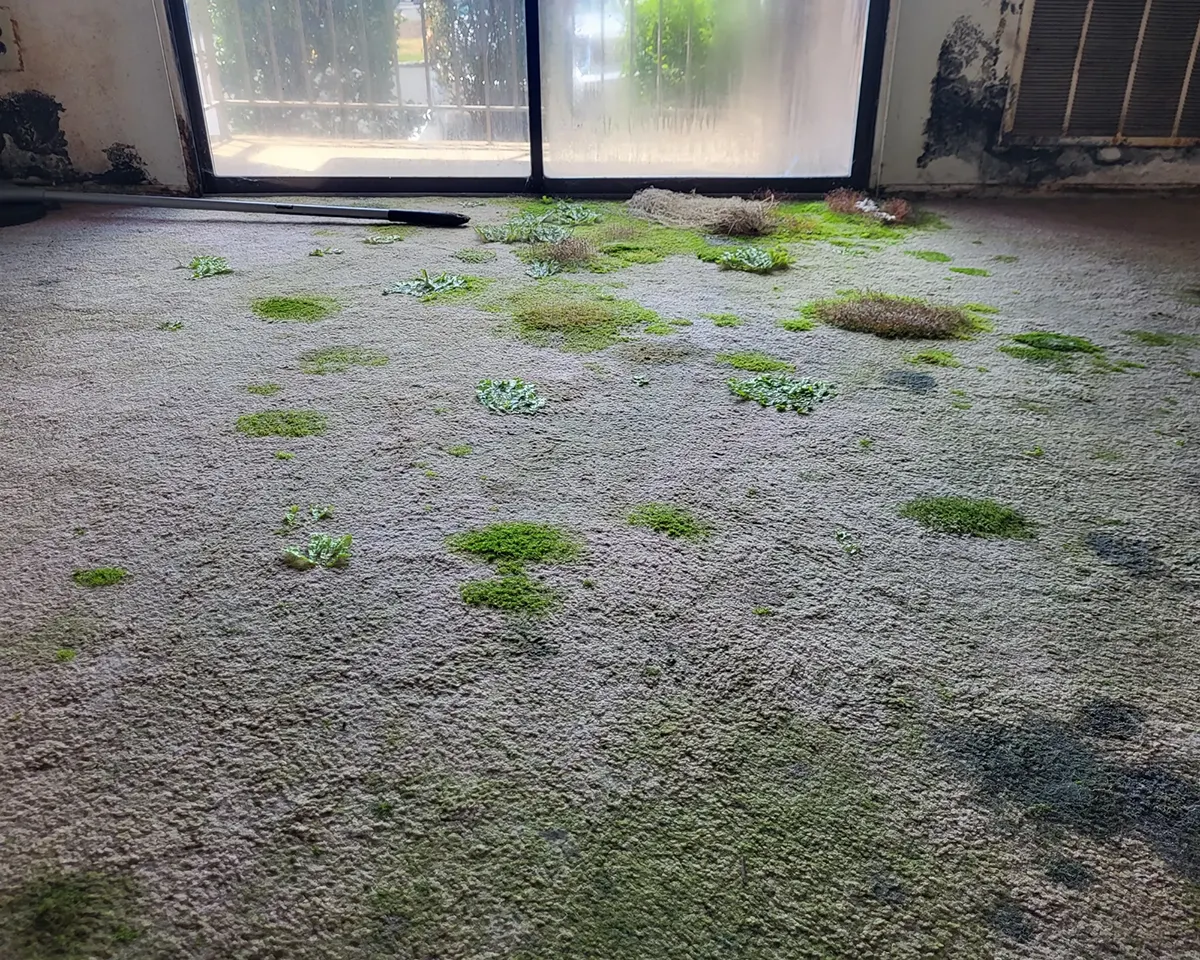
The problem for homeowners is that moisture is often not visible. A ceiling can look normal while remaining damp above the surface. A wall can show a faint stain while the cavity behind it stays wet. In Charlotte homes, crawlspace humidity and hidden condensation frequently create this exact situation.
When those conditions show up, the issue is active. That means the source is still feeding the problem, and the situation remains unstable.
Mold does not affect a house simply by existing. It affects a house when air moves particles from one place to another. That movement depends on airflow pathways and pressure differences inside the building.
The National Institute for Occupational Safety and Health emphasizes that mold assessment should focus on physical conditions such as dampness, visible damage, and musty odor, rather than relying only on short-term air sampling. This matters because airflow varies from day to day, and a single test may not accurately reflect how air actually moves through a house.
Charlotte homes make this more complicated because of how they are built. Many rely on crawlspaces, and warm air inside the house naturally rises. As it rises, it pulls air from below the structure upward. If the crawlspace is damp, that air can carry moisture and contaminants into the living space. This is a normal building physics effect, not a rare condition.
HVAC systems can also change the situation. If mold sits near a return duct or inside a system that moves air through the house, it no longer stays in one place. It becomes part of the air that the house circulates. At that point, the issue is no longer local, even if the visible growth looks small.
The same environment does not affect every person the same way. A healthy adult and a person with severe asthma do not respond to the same exposure in the same way. This is why public health guidance from the Centers for Disease Control and Prevention clearly distinguishes between general occupants and higher-risk groups.
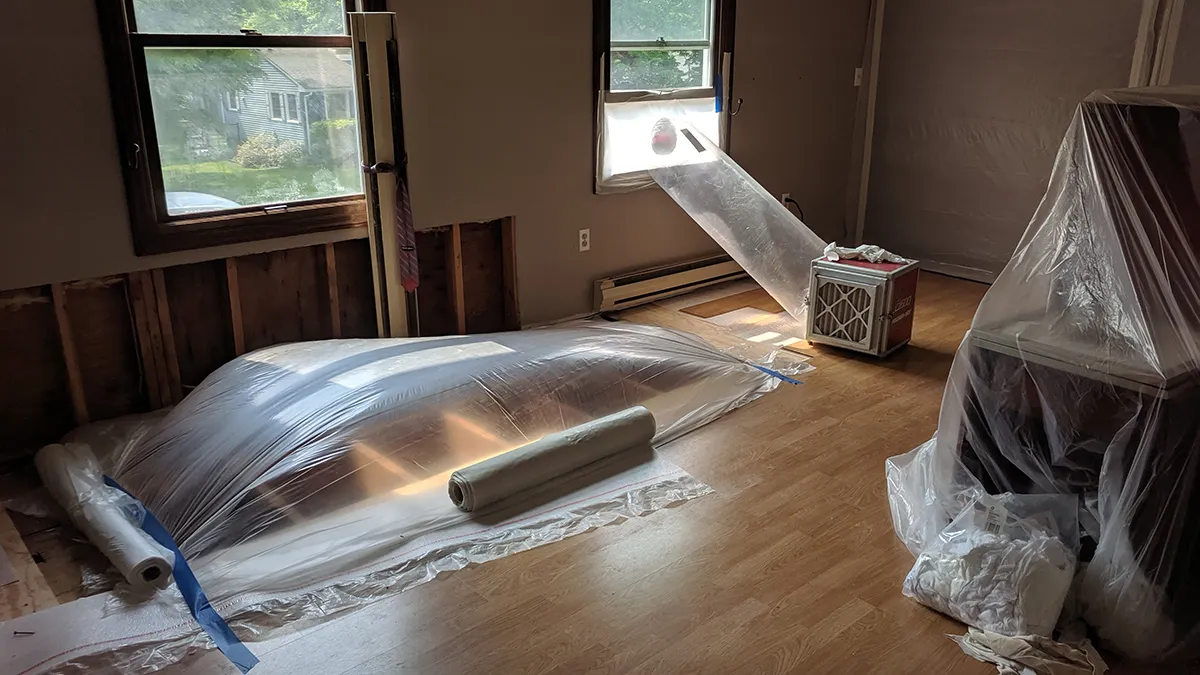
People with asthma, chronic lung conditions, weakened immune systems, or other sensitivities may need a more conservative approach. Infants and elderly individuals also fall into this category. For these groups, even a smaller or more contained issue may justify stronger precautions during cleanup or investigation.
This does not mean every mold issue requires leaving the house. It means the threshold for what is acceptable changes depending on who has to live there. A condition that a healthy adult might tolerate temporarily may not be appropriate for someone with a lower tolerance for exposure.
You do not answer this question by asking whether mold exists. You answer it by asking what the building is doing. Where is the problem located? Is it still wet? Is air moving into the living space? Who has to live with it?
Those answers determine whether staying in the house makes sense. That is what a proper inspection is designed to figure out.