
A persistent musty smell in a home usually indicates moisture is present where it shouldn’t be. When building materials remain damp long enough, microbial growth can begin, producing gases that create the familiar musty odor. The smell itself is not the problem; it is a signal that moisture is entering the structure or is not drying properly. Building science guidance consistently frames odor problems in terms of moisture control because damp materials support growth, while materials that dry quickly usually do not.
At MasterTech Environmental, our team addresses musty odor complaints in a specific sequence: identify the smell’s pattern, inspect the areas most likely to contain moisture based on that pattern, then correct the moisture condition and verify drying. Homeowners often start looking for mold removal companies in Charlotte, NC, when the smell becomes persistent. Still, the correct first step is confirming the moisture source rather than masking the odor.
A musty odor feels vague because it lacks a visible label. The fastest way to make it solvable is to convert it into a pattern of time, location, and triggers. That pattern usually indicates whether the issue is air being pulled from below the home, air being pulled through the HVAC return, humidity spikes that create condensation, or rain-related wetting that does not fully dry. NIOSH’s dampness assessment approach treats odor as a diagnostic input, including rating odor intensity when entering a room and using strong odor as a trigger to investigate hidden sources.
Run the pattern check when the smell is present, then repeat it when it is not. The comparison matters because it separates ongoing dampness from event-driven moisture.

North Carolina State Extension ties musty odors to moisture investigation and the sequence that prevents repeat problems: find the moisture source, fix it, remove contaminated items if needed, clean, then dry quickly. If the pattern points to a hidden moisture condition, that becomes the decision trigger to move into confirmation.
In residential inspections, certain odor patterns appear repeatedly. Over time, inspectors learn that specific smell behaviors often correspond to specific moisture conditions. Recognizing those relationships helps focus the inspection on the most likely areas instead of searching the entire structure.
When the smell is strongest near the floor or appears after rain, the crawl space is often involved. Crawl spaces contain exposed soil, insulation, and wood framing, which can hold humidity longer than other areas of the home. When moisture builds up there, odor can move upward through openings around plumbing pipes or duct penetrations.
If the smell appears when heating or air conditioning starts running, the HVAC return system may be pulling air from a damp area. Small gaps in return ducts or return cavities can allow air from crawl spaces, attics, or wall chases to enter the system. Once that air enters the ductwork, the system distributes the odor throughout the home.
An odor that increases after showers or cooking often points toward bathroom ventilation problems or plumbing leaks inside cabinets and wall cavities. Bathrooms generate high humidity loads, and when exhaust fans do not remove that moisture effectively, moisture can remain hidden behind finished surfaces.
When the smell is strongest upstairs or appears after storms, the attic becomes the most likely source. Roof leaks, condensation, or poor ventilation can keep insulation and wood framing damp long after rain has stopped.
| Pattern | Most Likely Source | Confirmation Focus |
| Odor strongest near floors or after rain | Crawl space moisture | Humidity levels, vapor barrier condition, wood moisture readings |
| Odor appears when HVAC runs | Return duct pulling damp air | Return cavity inspection and duct leakage |
| Odor increases after showers or cooking | Bathroom ventilation or plumbing moisture | Exhaust fan performance and cabinet or wall moisture |
| Odor strongest upstairs or after storms | Attic moisture or roof leaks | Insulation condition and roof decking moisture |
Recognizing these patterns does not solve the problem by itself, but it directs inspection toward the most likely moisture source.
Although moisture can occur in many places within a building, most musty odor complaints trace back to a small number of conditions. These areas repeatedly appear in residential inspections.
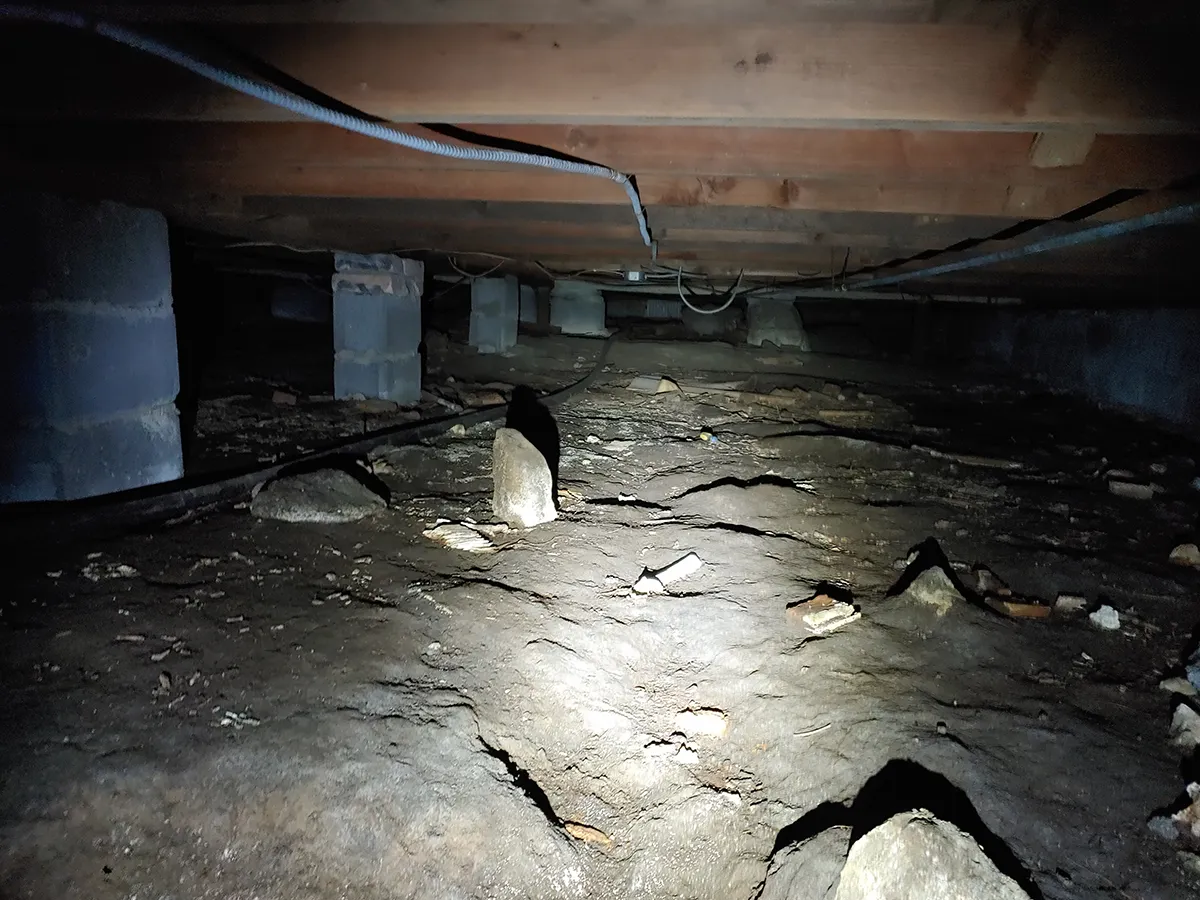
Crawl spaces are among the most common sources of musty odors because they are often the dampest parts of the building. Many crawl spaces contain exposed soil, wood framing, insulation, and plumbing lines. When moisture enters the space through groundwater, rain intrusion, or high humidity, those materials can remain damp for extended periods.
Once wood and other organic materials stay wet long enough, microbial growth begins and produces the gases responsible for musty odor. Because warm air rises, that odor can move upward through the structure. Small openings around plumbing pipes, duct penetrations, or electrical lines allow crawl space air to enter the living space.
One useful indicator is odor strongest along the floor or near stairwells. In these situations, the smell is not coming from the room itself but from air entering through the floor system. During inspection, professionals measure humidity levels in the crawl space and use moisture meters on floor joists and subfloor materials. They also examine the condition of the vapor barrier covering the soil, because missing or damaged barriers allow soil moisture to enter the air.
Standing water, wet insulation, or condensation on ductwork are additional signs that crawl space humidity is too high. When these conditions are confirmed, correcting drainage or humidity issues usually resolves the odor.
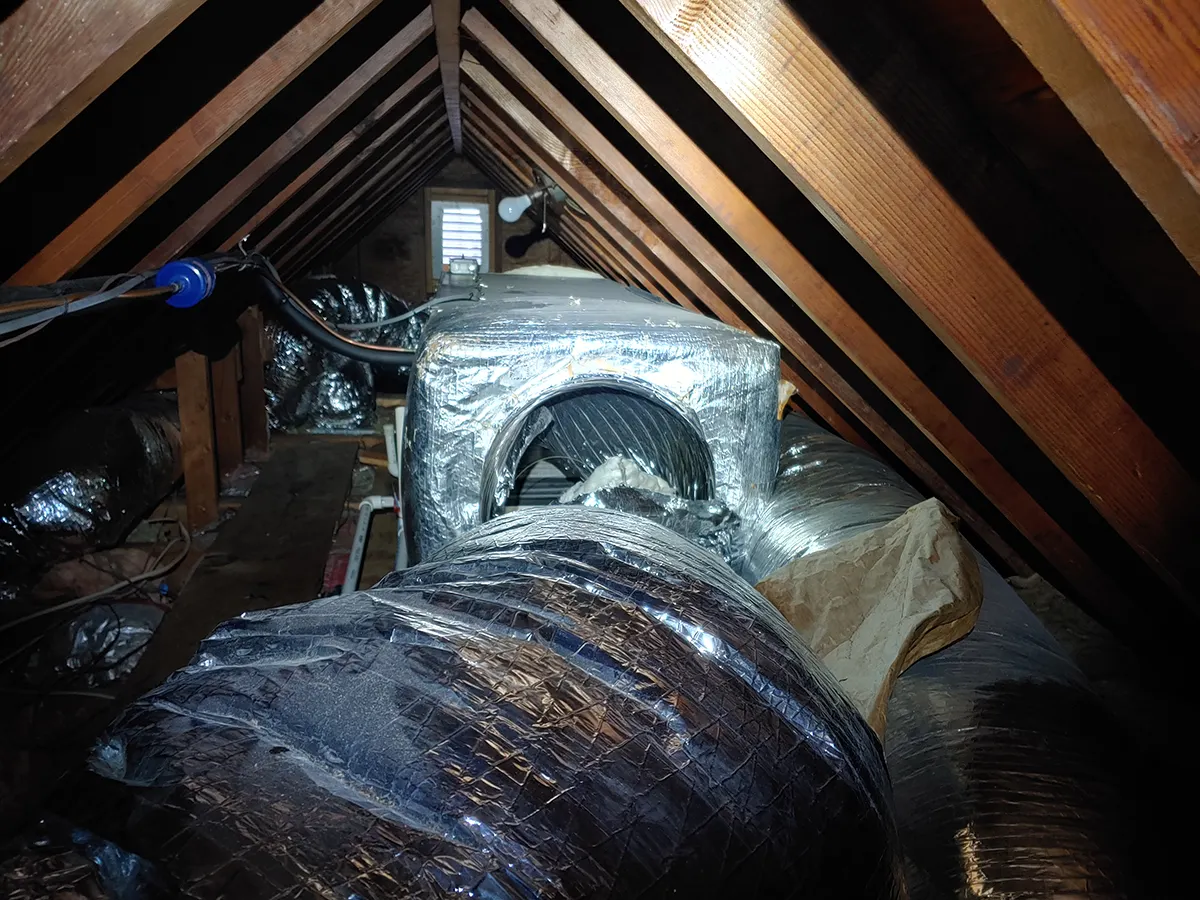
The HVAC system can distribute odor throughout the house even when the source is located elsewhere. The blower pulls air through return ducts and redistributes it through supply vents. If the return system has gaps or connections to areas outside the conditioned space, it may draw damp air from those locations.
This pattern often becomes noticeable when heating or cooling begins running. The smell may not be obvious when the system is off, but once the blower starts moving air, the odor becomes more apparent throughout the home.
Inspection typically begins at return grilles and duct connections. Technicians remove return covers and examine the cavity behind them to determine whether the return is sealed to the surrounding framing. If the cavity connects to a crawl space, attic, or wall chase, the HVAC system may be pulling air from that location.
Moisture meters can also be used to test surrounding materials. Damp insulation or framing near the return path often confirms that the odor originates from a moisture problem in that area. Sealing return leaks and correcting the moisture source usually stops the odor from spreading through the home.
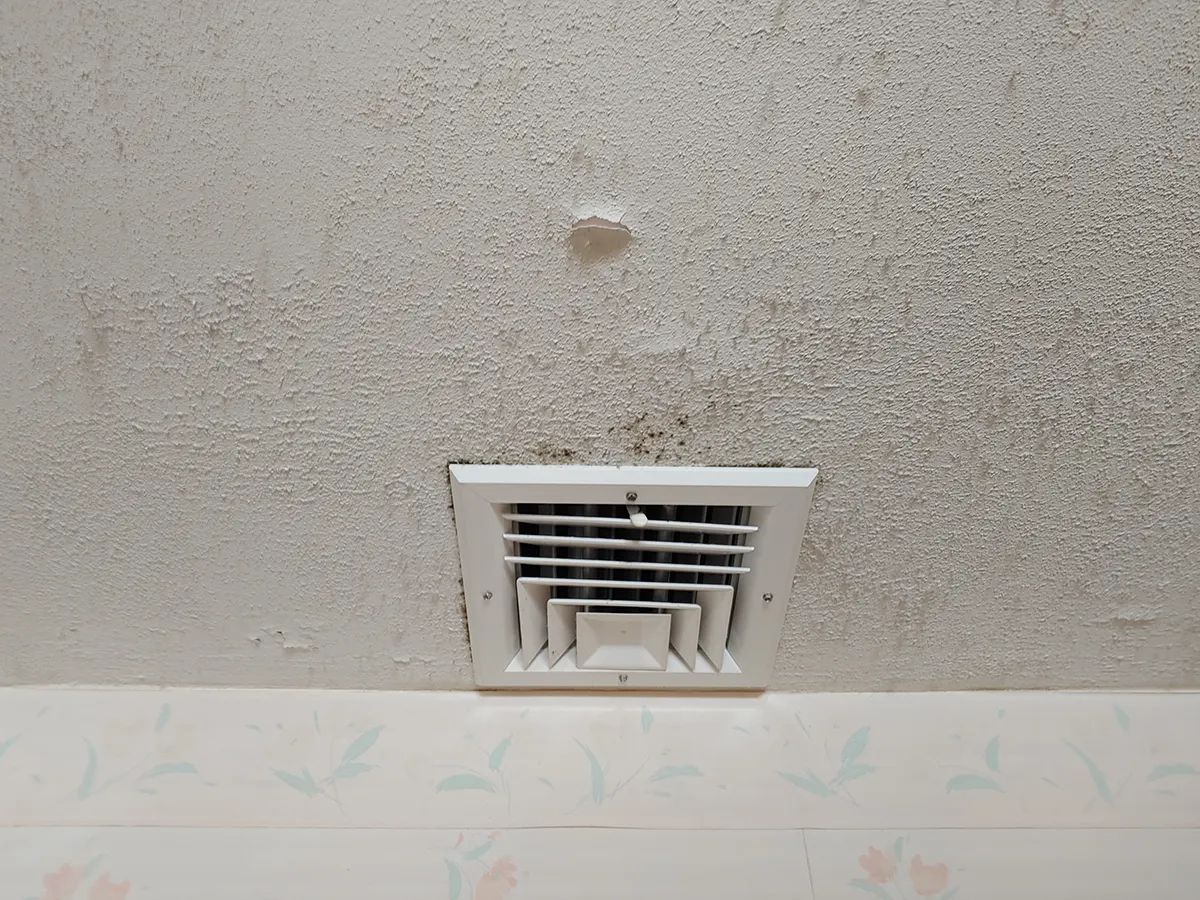
Bathrooms generate significant humidity during normal daily use. When exhaust fans do not remove that moisture effectively, it can accumulate inside walls, cabinets, and drywall cavities. Over time, damp materials can support microbial growth that produces odor even when visible mold is not present.
One clue pointing to this type of problem is an odor that becomes noticeable after showers or when cabinet doors are opened. In these situations, moisture may be trapped behind finished surfaces where air circulation is limited.
Inspection focuses on ventilation and plumbing conditions. Exhaust fans are tested to verify that they are actually moving air. Ducts are traced to ensure they terminate outside the building rather than inside the attic. Moisture meters are used to check cabinet floors, drywall edges, and framing near plumbing lines.
When ventilation is inadequate or plumbing leaks are present, correcting those issues and allowing the materials to dry typically resolves the odor.
Stop searching for” mold removal companies Charlotte NC” and give MasterTech Environmental a call.
A musty smell in a home rarely appears without a reason. In most cases, the odor is simply the first sign that moisture has been sitting somewhere inside the structure long enough for microbial growth to begin. By stepping back and looking at the pattern of the smell—when it appears, where it is strongest, and what conditions trigger it—the investigation quickly narrows to a few common locations. Crawl spaces, HVAC return pathways, bathroom wall cavities, and attic spaces appear repeatedly because they combine damp materials with airflow that carries odor into living areas.
Once those areas are inspected and moisture conditions are confirmed with measurements, the cause of the smell becomes much clearer. The odor stops being a mystery and becomes a specific building condition that can be corrected. In many homes, once the moisture source is addressed and the materials are allowed to dry, the musty smell fades on its own. The key is approaching the problem the right way from the beginning: treat the smell as evidence of moisture, trace where that moisture is coming from, and confirm it before deciding what work is actually needed.