
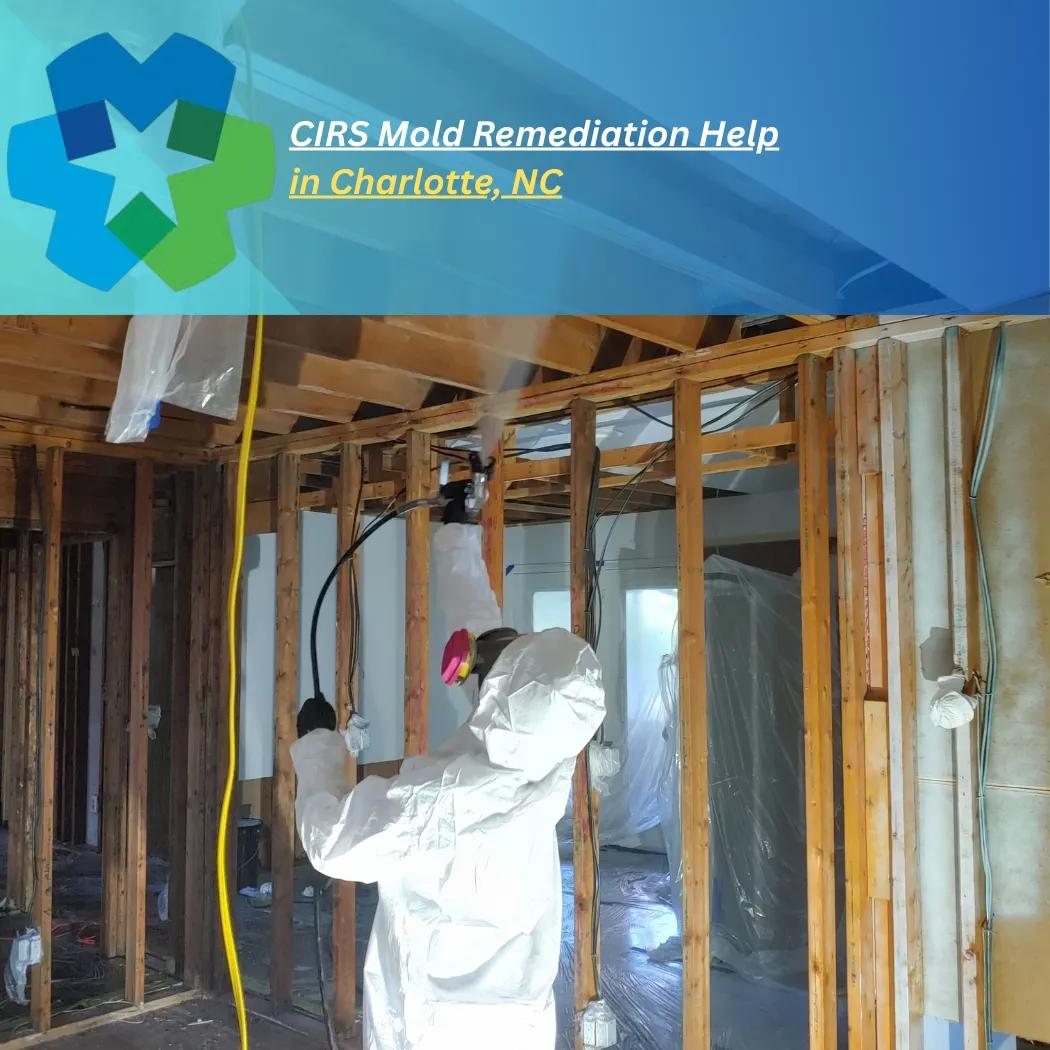
Many homeowners reach out to us after a frustrating experience with mold cleanup that looked successful but didn’t solve the problem. While visible mold is gone, symptoms often persist. In the world of functional medicine, this is frequently discussed in the context of Mycotoxicosis—a condition where the body reacts to the toxic byproducts of mold (mycotoxins) rather than just the spores themselves.
When concerns about Chronic Inflammatory Response Syndrome or mold sensitivity are involved, the standard for remediation must change. At MasterTech Environmental Charlotte, our focus is not on cosmetic cleanup. Our focus is on evaluating the home’s structure, identifying moisture conditions that allow contamination to persist, and performing remediation that directly addresses those pathways. This approach is what defines CIRS mold remediation Charlotte, where the success of the project depends on three things: strict scope control, strict containment during the work, and verification that the building conditions were corrected.
These elements define the difference between routine cleanup and remediation designed to address water-damaged building conditions.
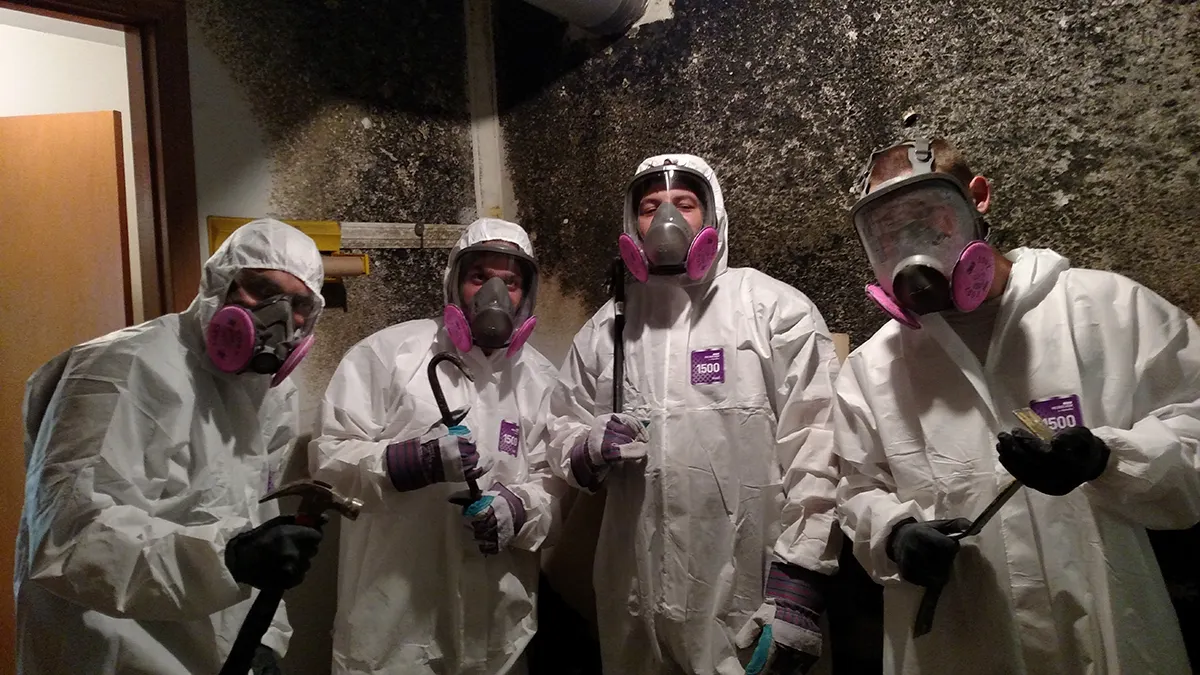
One of the most common problems we see is remediation that addresses the visible damage but does not address the pathway that allows contamination to spread through the structure.
Water intrusion rarely stays isolated to a single stud bay or ceiling section. Moisture can migrate along framing members, beneath subfloors, or through drywall cavities where it remains hidden. In Charlotte homes, this often involves crawl spaces, attics, and interior wall cavities where humidity or prior leaks allowed mold to develop.
During inspection, we evaluate those connected areas rather than focusing only on visible mold growth. That evaluation often includes crawlspace inspection, attic inspection, moisture mapping of wall assemblies, and evaluation of HVAC components that may circulate contaminated dust.
Mechanical systems can expand the scope of contamination. Return air pathways can pull particles into ductwork and redistribute them throughout the home. For that reason, vents within the affected area are often sealed during remediation planning to prevent demolition debris from spreading through the system.
The contents inside the home also influence the scope of work. Porous materials such as carpet, books, cardboard, and upholstered furniture can retain mold fragments deep within the material. When these items have been exposed to sustained moisture, cleaning may not be sufficient to remove contamination.
Without that level of clarity, contamination pathways can remain inside the structure.
Once the scope of work is established, the next priority is controlling how contamination behaves during remediation. Mold removal usually involves demolition of drywall, insulation, flooring, or cabinetry. When those materials are disturbed, mold fragments and dust become airborne. Containment is designed to keep those particles inside the work area.
At MasterTech Environmental Charlotte, remediation areas are isolated using containment barriers that separate the work zone from the rest of the home. Airflow inside the containment is controlled by negative air pressure, so that air moves into the work zone rather than out.
Most professional remediation standards maintain a pressure difference between roughly five and ten pascals between the containment area and the surrounding space. HEPA-filtered air filtration units maintain this pressure while capturing airborne particles generated during demolition and cleaning.
Containment also controls how workers and debris move through the structure. Our team establishes a staging area outside the containment, where protective equipment is donned before entering the work zone. Materials removed from the structure are sealed before leaving the containment area to prevent contaminated dust from being carried into other parts of the home.
Without containment and airflow control, the remediation process itself can distribute contamination into previously unaffected areas.
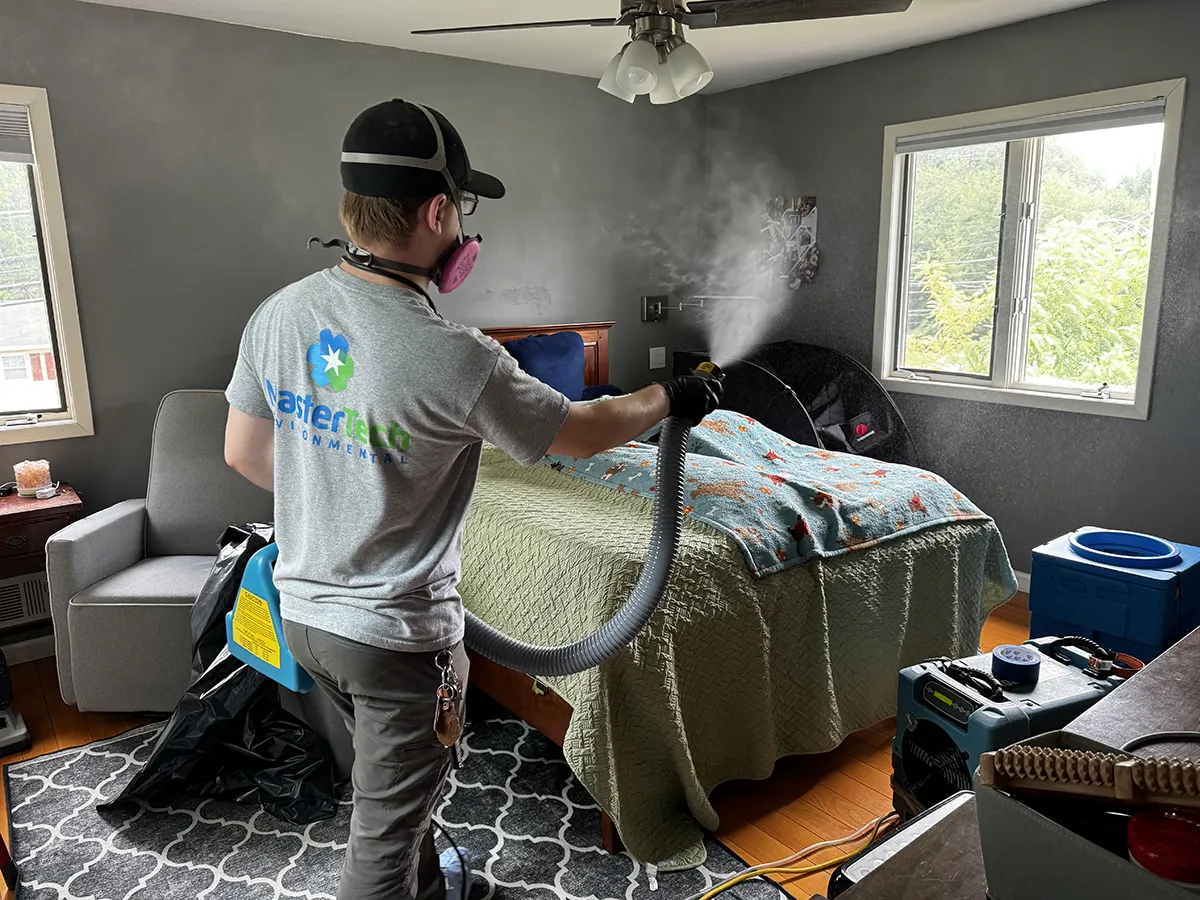
After remediation work is complete, the final step is to determine whether the structural conditions that allowed contamination to occur have been corrected. Verification provides that confirmation. Visual inspection is the first step. Structural surfaces inside the work area must be free of visible mold growth and settled dust.
Surface sampling may be used to confirm that fungal structures are no longer present on cleaned materials. Environmental sampling may also be used to compare air conditions inside the work area with outdoor or baseline conditions to determine whether fungal concentrations remain elevated. Verification confirms whether the remediation addressed the contamination pathway identified during the inspection.
It is important to understand what verification can and cannot determine. Environmental testing evaluates building conditions. It does not diagnose medical conditions or predict individual health outcomes.
Some homeowners ask about ERMI testing when evaluating contamination. The Environmental Protection Agency explains that the Environmental Relative Moldiness Index was developed as a research tool to estimate mold contamination levels. It has been peer reviewed for research purposes but has not been validated for diagnostic use in individual homes.
For this reason, our remediation process focuses on moisture control, source removal, and measurable clearance criteria rather than relying on a single testing method.
When concerns about mold sensitivity or CIRS are involved, the remediation standard must be higher than cosmetic cleanup. If you need help with CIRS mold remediation Charlotte, you should give our team a call.
The building must be evaluated for hidden moisture pathways. The work must be contained so that contamination does not spread during demolition. The results must be verified so homeowners understand whether the structural conditions that allowed contamination to exist have been corrected.
That approach requires careful inspection, controlled remediation practices, and measurable verification standards. When those elements are in place, homeowners can make informed decisions about the building’s condition and the work performed.