
![[HERO] Hidden Damage: Why Fire Damage Restoration in Pineville Requires More Than Just a Scrub](https://cdn.marblism.com/bXL78rMgU74.webp)
Fire cleanup gets misunderstood a lot around Pineville. People see a little soot on the walls, smell smoke, and think the solution is basically: wipe it down, run an ozone machine, repaint, and move on.
That can work for a very minor incident, like a small scorched pan that smoked up the kitchen for 10 minutes. But once you’re dealing with actual fire damage (even a “small” room fire), you’re usually dealing with hidden fire damage: smoke infiltration into wall cavities, acidic soot eating away at materials, water damage from the fire department, and a real risk of mold if drying is skipped or rushed.
This post is a straight explanation of what gets missed and why fire damage restoration in Pineville, NC takes more than elbow grease. The same rules apply in Charlotte, Huntersville, and Cornelius, because the building materials and the climate don’t change just because you crossed a town line.
If you want the “big picture” service side, here’s the main page: Fire Damage Restoration. This post is more about what’s going on behind the scenes and what “done right” looks like.
Smoke doesn’t politely stay in the room where the fire started. It behaves like what it is: a hot mix of gases and microscopic particles. It expands, pressurizes the house, and looks for any path it can find.
That includes:
So even if the visible soot is limited, you can still get smoke odor and residue behind trim, inside wall cavities, and in insulation. This is why “scrub and paint” often fails. You didn’t remove the source, you just cleaned what you could see.
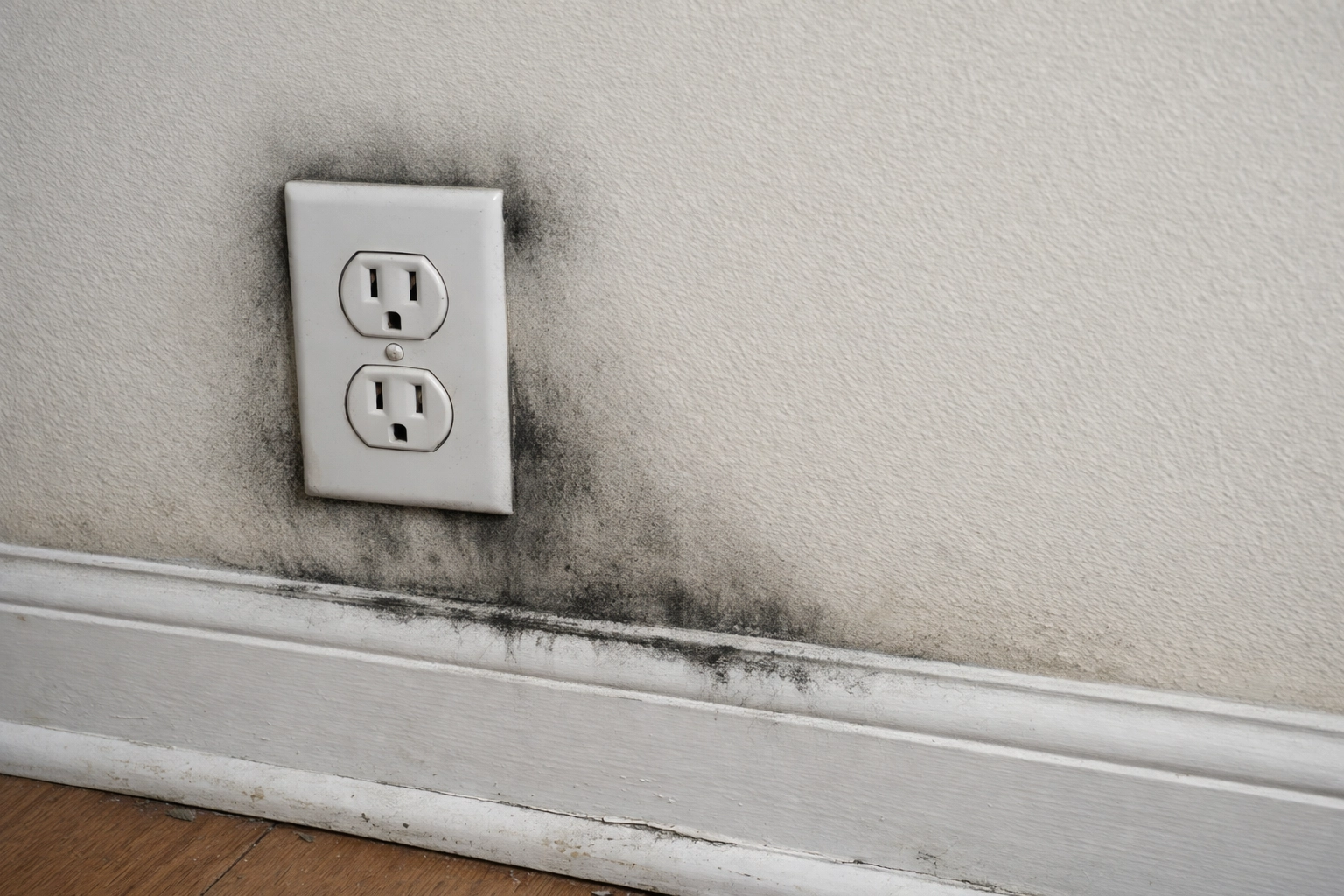
Soot is more than black dust. Depending on what burned (plastics, wiring, synthetic fabrics, treated wood), soot residue can be chemically aggressive. That’s a clean way of saying: it can keep wrecking things after the fire is out.
Here are a few common “hidden” problems we see in the Charlotte area:
Appliances, electronics, door hardware, light fixtures, tools in the garage, soot can speed up corrosion. Sometimes it’s obvious. Sometimes it looks fine for a few weeks, then you start seeing pitting, discoloration, or parts failing.
Windows, mirrors, picture frames, soot can bond to surfaces, and if it sits long enough it can permanently haze or etch. That’s one reason restoration companies push for quick action.
If soot residue is still there and you prime over it, you can end up with adhesion issues, stains bleeding through, or odors coming right back when the house warms up in summer.
If you’re dealing with soot cleanup services after a fire in Pineville or south Charlotte, the order matters: assessment → removal → cleaning → sealing (if needed) → rebuild. Skipping steps is where people waste money.
Smoke odor removal in Charlotte homes is one of those things that sounds simple until you’ve lived through it. The smell isn’t just in the air. It’s in porous materials:
And the smell can come and go depending on humidity and temperature. That’s why you’ll hear people say, “It was fine for a month, then the smell came back.” Warm weather and humidity can re-activate odors trapped in materials.
A legit approach usually includes some mix of:
If you want to explore service options: Fire Damage Restoration is the overview, and the blog archive is here: MasterTech Charlotte Blog.
Here’s a simple mental picture: your house is not a sealed box. It’s full of little air highways.
Smoke travels those highways and leaves residue where airflow changes, edges, corners, pressure points, and penetrations. This is why you can wipe down a wall and still have a smoky smell coming from:
Insulation is a big one. If smoke contamination gets into insulation, cleaning the room surfaces may not solve the odor. In some jobs, insulation removal and replacement becomes part of “done right.”
That isn’t always required, but it is one of the reasons fire restoration isn’t a quick weekend project.
In Pineville, Charlotte, Huntersville, Cornelius, anywhere around here, water damage after a fire can turn into the next headache.
Fire hoses and sprinkler systems don’t deliver “a little damp.” They can dump a lot of water fast, and it ends up in places you can’t see:
If you don’t handle the water damage correctly, you can end up with warped floors, swollen baseboards, and, yes: mold.
This is where fire restoration and water restoration overlap. If you want the water side explained, here’s the service page: Water Damage Restoration.
You don’t need to panic: just don’t ignore moisture because you’re focused on soot.
Real mold on drywall usually isn’t a perfect circle. It’s irregular. It can look like fuzzy splotches, scattered clusters, or smudgy patches. If water wicked up the wall, you’ll often see a tide line where the water sat or where the drywall paper stayed damp longest.
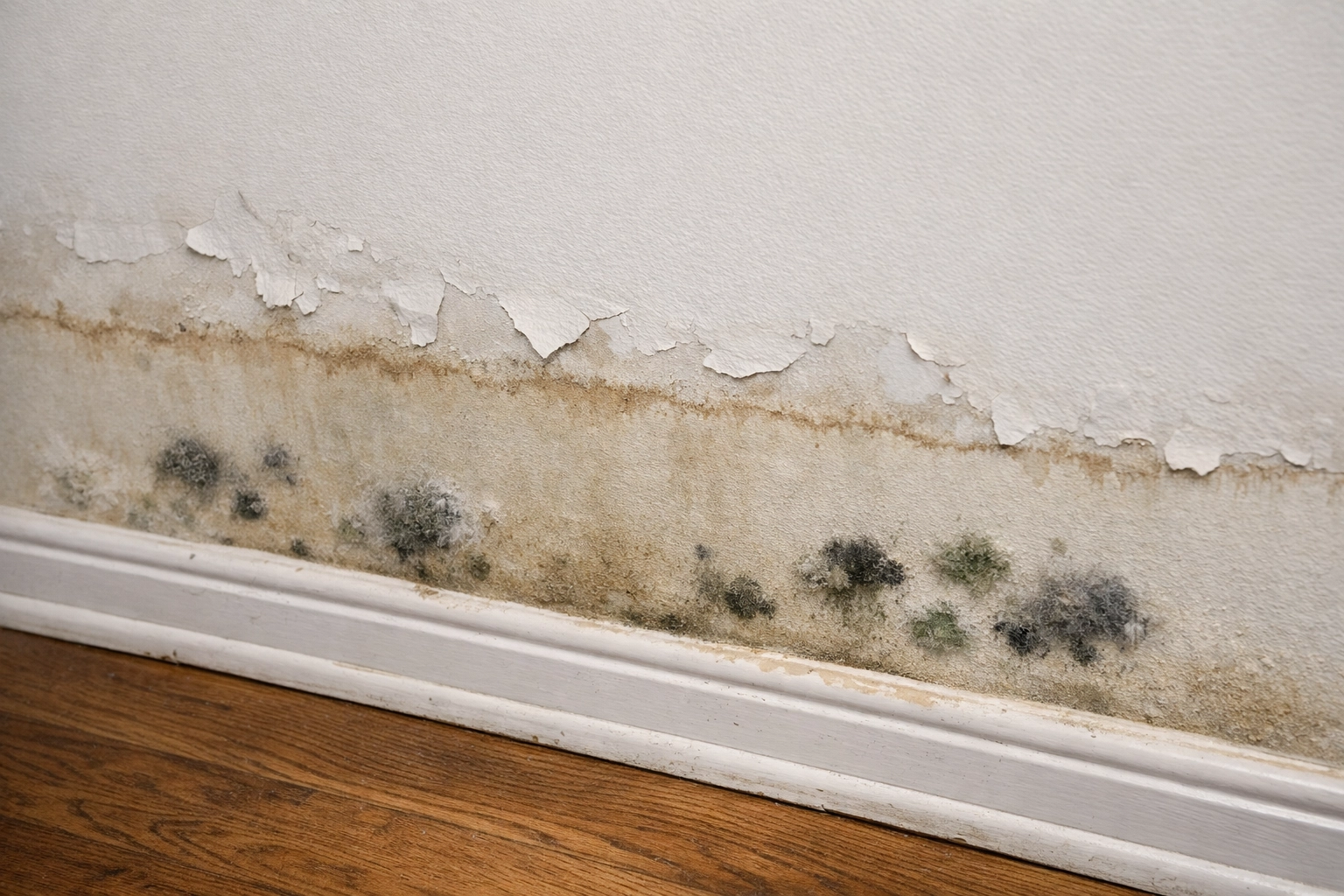
If you suspect that’s happening, the right move is to get guidance early instead of guessing. MasterTech Charlotte has pages for both the cleanup side and the testing side:
A fire doesn’t have to burn the house down to weaken parts of it. Heat can:
Sometimes the problem is obvious. Sometimes it’s subtle until you start pulling materials off and realize the framing is charred behind “okay-looking” drywall.
If you’re in Pineville and dealing with a kitchen fire, garage fire, or an attic incident, it’s normal for the visible damage to under-represent what’s actually going on.
If the HVAC was running during a fire: or gets turned on too soon afterward: smoke and soot can be pulled into returns and redistributed.
Common results:
This doesn’t automatically mean you need full duct replacement. But it does mean the HVAC system needs to be assessed as part of the overall plan. Cleaning only the room of origin while ignoring the air pathways is a common reason odor removal fails.
Every fire is different. A small contained fire in Pineville is not the same as a multi-room fire in north Charlotte. But a thorough restoration process usually follows a consistent logic:
A proper assessment looks beyond “what’s black.” It includes checking adjacent rooms, attics, crawlspaces, HVAC pathways, and moisture mapping if water was used.
If soot is loose, you don’t want it migrating through the house while you clean. Containment, negative air (as needed), and careful demo practices keep the clean areas clean.
This is the step that prevents a second disaster. Water from firefighting efforts can take time to dry properly: especially in winter when people keep the house closed up.
A HEPA vacuum is about capturing fine particles rather than redistributing them. Then comes proper cleaning agents for soot type and surface type (dry sponge, wet cleaning, etc.). The goal is actual removal, not just covering it up.
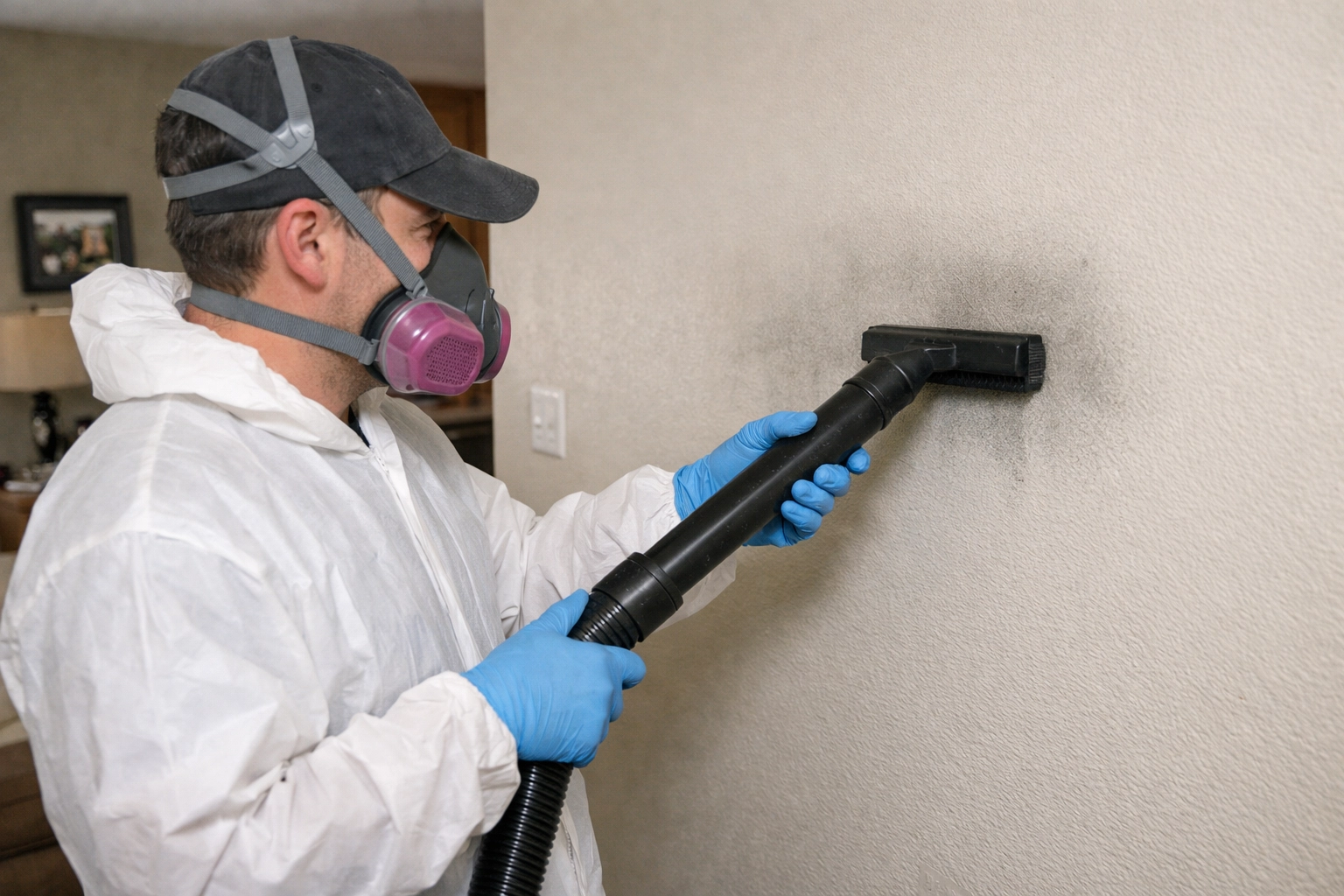
Odor control isn’t one-size-fits-all. Sometimes you need multiple methods. Sometimes you need selective removal of porous items. Sometimes sealing is part of the solution after cleaning is done.
Once contamination and moisture issues are handled, repairs can happen without trapping problems behind new drywall and paint.
If you want to talk through a situation or get an evaluation scheduled, here’s the direct link: Contact Us.
Pineville has a mix of older homes, newer builds, townhomes, and places with tighter lots. Two things come up a lot:
The fix is still the same: identify pathways, remove residue, and address odor at the source: not just the surface.
In Huntersville and Cornelius, we see a lot of garage-related incidents: electrical issues, battery charging setups, lawn equipment, or a project that got away from someone.
Garages create two extra issues:
If you’re noticing smoke smell in a closet or storage room weeks later, it might be coming from contaminated contents: not just the structure.
This isn’t a knock on DIY. Some homeowners are handy and careful. The problem is that fires create conditions that are easy to misread.
Some soot smears and stains badly when it gets wet. Wrong cleaner + wrong technique can lock it into paint and drywall paper.
It can spread contamination and make odor control harder.
Paint can hide stains but doesn’t reliably solve odor or contamination if the surface wasn’t properly cleaned and prepped.
Wet subfloors, damp insulation, and soaked drywall behind cabinets don’t dry because you opened a window. They dry with air movement, dehumidification, and time: sometimes with selective removal to expose wet materials.
Carpet pad, upholstered furniture, curtains, paper goods: these often hold odor. Sometimes you can clean them. Sometimes replacement is the smarter call. The right answer depends on severity and value.
Not every fire leads to mold. But mold becomes more likely when:
If you’re seeing staining, smelling a musty odor that wasn’t there before, or you’ve got allergy-type symptoms that started after the fire, a professional evaluation can help separate “normal post-fire smell” from moisture/mold problems.
This is where Mold Inspection & Testing fits in. If remediation is needed, that’s a different lane: Mold Remediation.
If you’re in Pineville (or Charlotte, Huntersville, or Cornelius) and you’re in that first 24–72 hour window:
If you want more reading on related issues (water damage, mold, indoor air quality), the main blog hub is here: https://mastertechcharlotte.com/mold-inspection-charlotte-nc-blog/.
Fire damage restoration in Pineville, NC isn’t about making the place “look clean.” It’s about making it actually clean and safe: meaning the smoke residue is removed, the soot isn’t continuing to corrode surfaces, the water damage is dried correctly, and you’re not setting yourself up for mold later.
If you’re dealing with lingering odors, recurring staining, or you’re just not convinced everything was addressed the first time, start with the basics and work outward: