
![[HERO] After the Fire: Dealing with Smoke Odor and Structural Damage in Huntersville, NC](https://cdn.marblism.com/WkfUUd7GxtA.webp)
When a fire happens, the immediate focus is naturally on the flames and getting everyone out safely. But once the fire trucks leave your driveway in Huntersville or Cornelius, you’re left with a house that looks: and smells: completely different. Most people expect the char and the burnt furniture, but they aren't always prepared for the way smoke hangs around or how the water used to put out the fire creates its own set of problems.
Dealing with the aftermath of a fire isn't just about throwing away burnt stuff. It’s a complex process involving chemistry, structural engineering, and moisture control. At MasterTech Environmental Charlotte, we see these situations often across the Charlotte, NC area, from Pineville up to the lake. The goal is always the same: get the property safe, clean, and livable again without leaving hidden hazards behind.
Smoke isn't just a smell; it’s a collection of tiny particles, many of which are acidic and toxic. When things burn: plastics, wood, fabrics, insulation: they release different types of soot and gases. These particles are incredibly small, which means they can drift into places the fire never even touched.
If you’ve had a fire in your kitchen in Huntersville, you might find soot inside your bedroom closets on the second floor. That’s because heat rises and carries those particles through HVAC vents and even through small gaps in the floorboards.
Professional fire damage restoration is necessary because you can't just "air out" smoke. Smoke is "driven" into porous materials by the heat of the fire. As the air expands, it pushes those odors into the pores of your drywall, wood studs, and upholstery. Once the air cools, those pores close back up, trapping the odor inside. On a humid Charlotte afternoon, those pores open slightly, and that’s when the smell comes back.
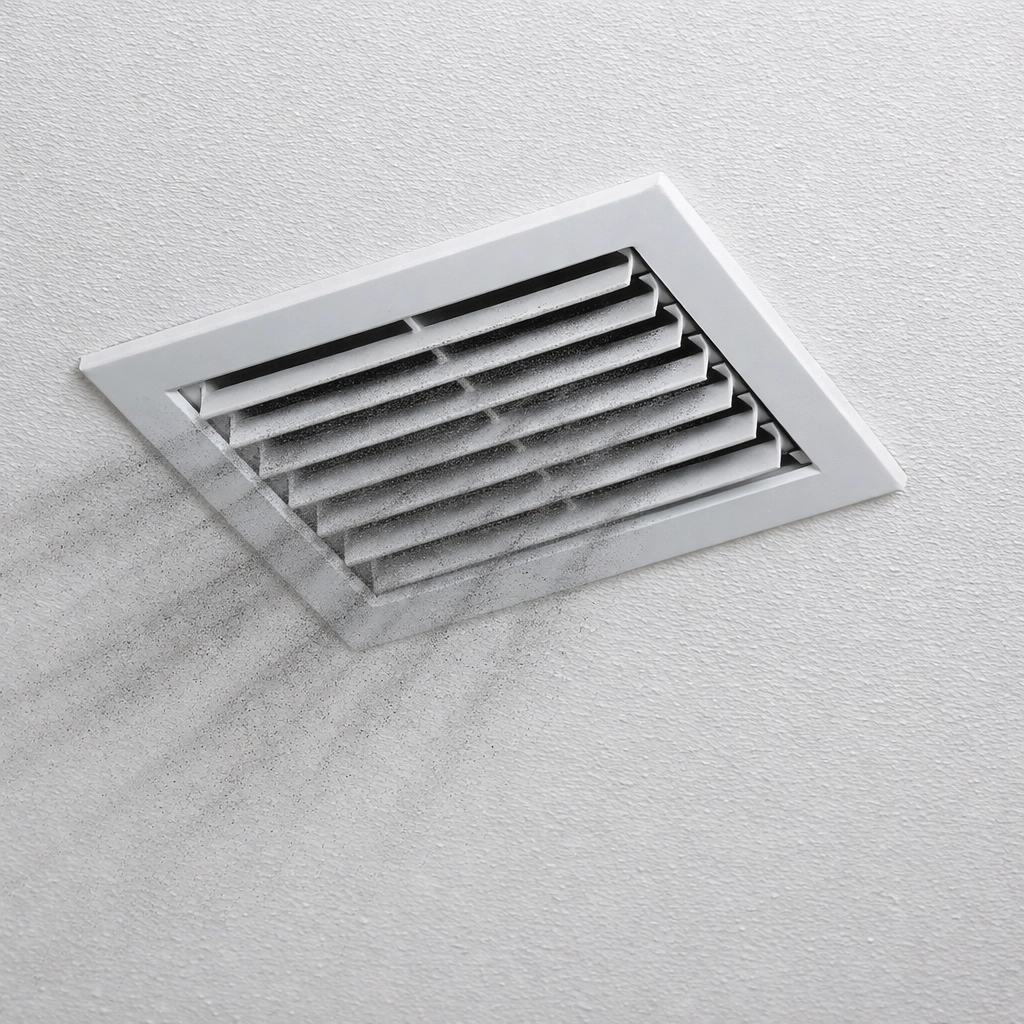
Caption: A close-up of soot streaks on a white painted wall near a ceiling vent. The soot appears as fine, dark grey dust rather than thick black paint, illustrating how smoke particles travel through a home's ventilation system.
Not all soot is created equal. The type of cleaning required depends on what burned:
When a fire gets hot enough, it changes the physical properties of your home’s building materials. You might see a charred beam and think it just needs a good cleaning, but if that beam has lost too much mass, it can no longer support the weight of the roof or the floor above it.
In Huntersville and Pineville homes, we often see "alligatoring" on wood. This is when the wood chars into a pattern that looks like reptile skin. If the charring is deep, that wood is structurally compromised. Beyond the wood, the heat can also warp metal supports, melt electrical wiring hidden behind walls, and crack masonry in chimneys or foundations.
Even if a room didn't burn, the heat can be intense enough to blister paint or melt vinyl window frames. Assessing this requires a careful eye to ensure the house is actually safe to occupy.
It’s an irony of fire restoration that the very thing used to save your house: water: often ends up causing the most long-term damage. Firefighters use thousands of gallons of water to knock down a blaze. In a two-story home in Cornelius or Charlotte, that water settles into the crawlspace, soaks into the subfloor, and gets trapped behind the drywall.
This leads directly to water damage restoration needs. If that water isn't extracted and the structure dried out within 24 to 48 hours, you are almost guaranteed to have a mold problem.
Forget what you see in the movies. Mold from water damage doesn't usually look like a glowing green slime. It’s more subtle and, frankly, more disgusting.
In a fire-damaged home that sat wet for a few days, you’ll likely see "tide lines" on the drywall: a yellowish or brown stain where the water wicked up from the floor. Along those lines, or in the corners where air doesn't move, you’ll see irregular clusters. It might look like a light grey fuzz, or dark, pepper-like spots scattered across the surface. Sometimes it’s a dull, olive green. It’s never a perfect circle; it grows in fuzzy, splotchy patches that follow the moisture.
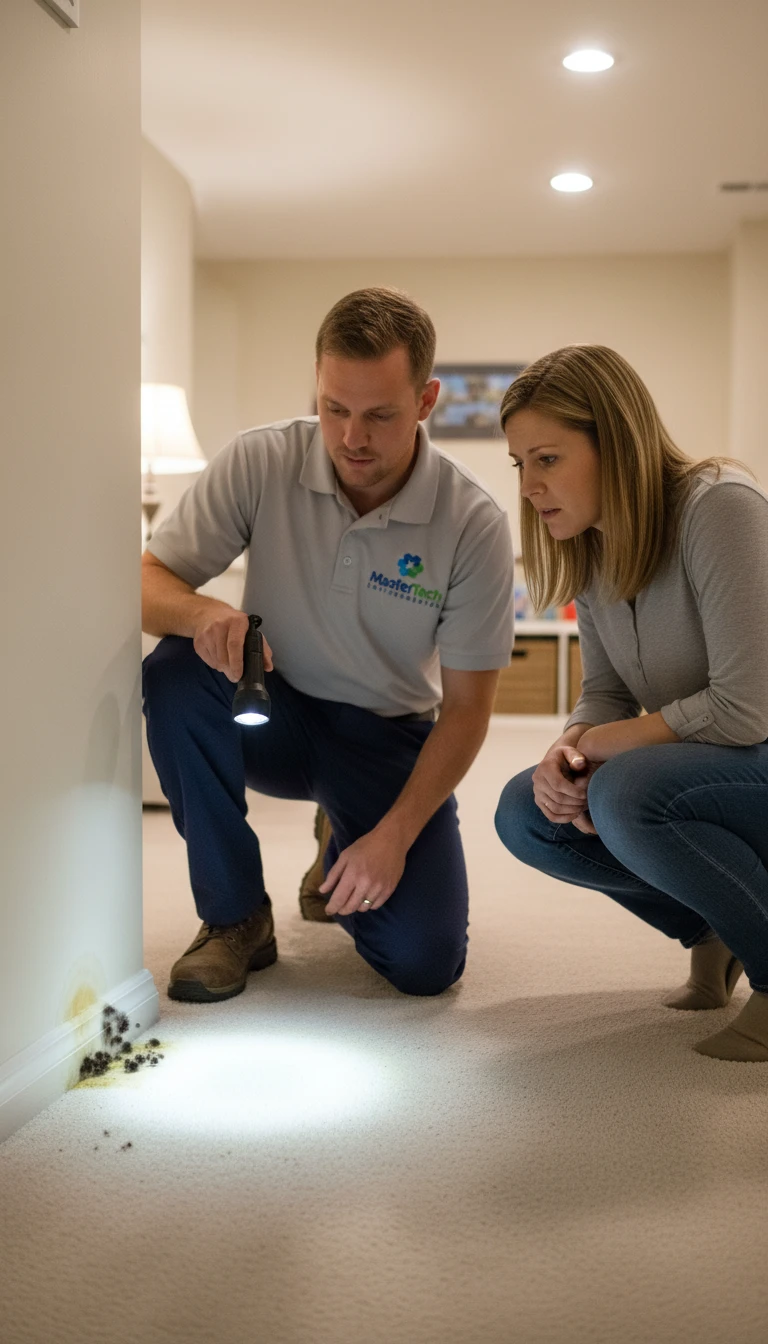
If you suspect mold has started to take hold after the fire department leaves, you need a professional mold inspection and testing to see how far the spores have spread. Cleaning soot is one thing, but mold remediation requires specialized containment to make sure you aren't just blowing spores around the house.
When we walk into a home in Huntersville or Pineville after a fire, we follow a specific sequence. You can't just start painting over soot; that’s a recipe for a house that smells like a campfire forever.
The first step is securing the building. If windows were broken or the roof was cut for ventilation, we have to get those holes covered to prevent rain and pests from getting in. This is a standard part of fire damage restoration.
We have to get the water out before we can effectively clean for smoke. This involves industrial-strength dehumidifiers and air movers. Because NC humidity can be high, we have to be aggressive with the drying process to prevent that secondary mold growth we talked about. For more on how we handle the "wet" side of things, check out our blog.
Anything that is "charred to the bone" has to go. This includes burnt furniture, carpets, and unsalvageable drywall. Once the debris is out, we start the "technical cleaning." This isn't just wiping surfaces. We use HEPA vacuums to pull soot off walls and specialized sponges that "lift" the dry soot without smearing it.
This is where the "science" part really kicks in. Since smoke particles are trapped in the pores of the wood and drywall, we often use thermal fogging or hydroxyl generators.
Once the house is clean and the smell is gone, the actual rebuilding begins. This is when the new drywall goes up, the electrical is replaced, and the home starts looking like a home again.
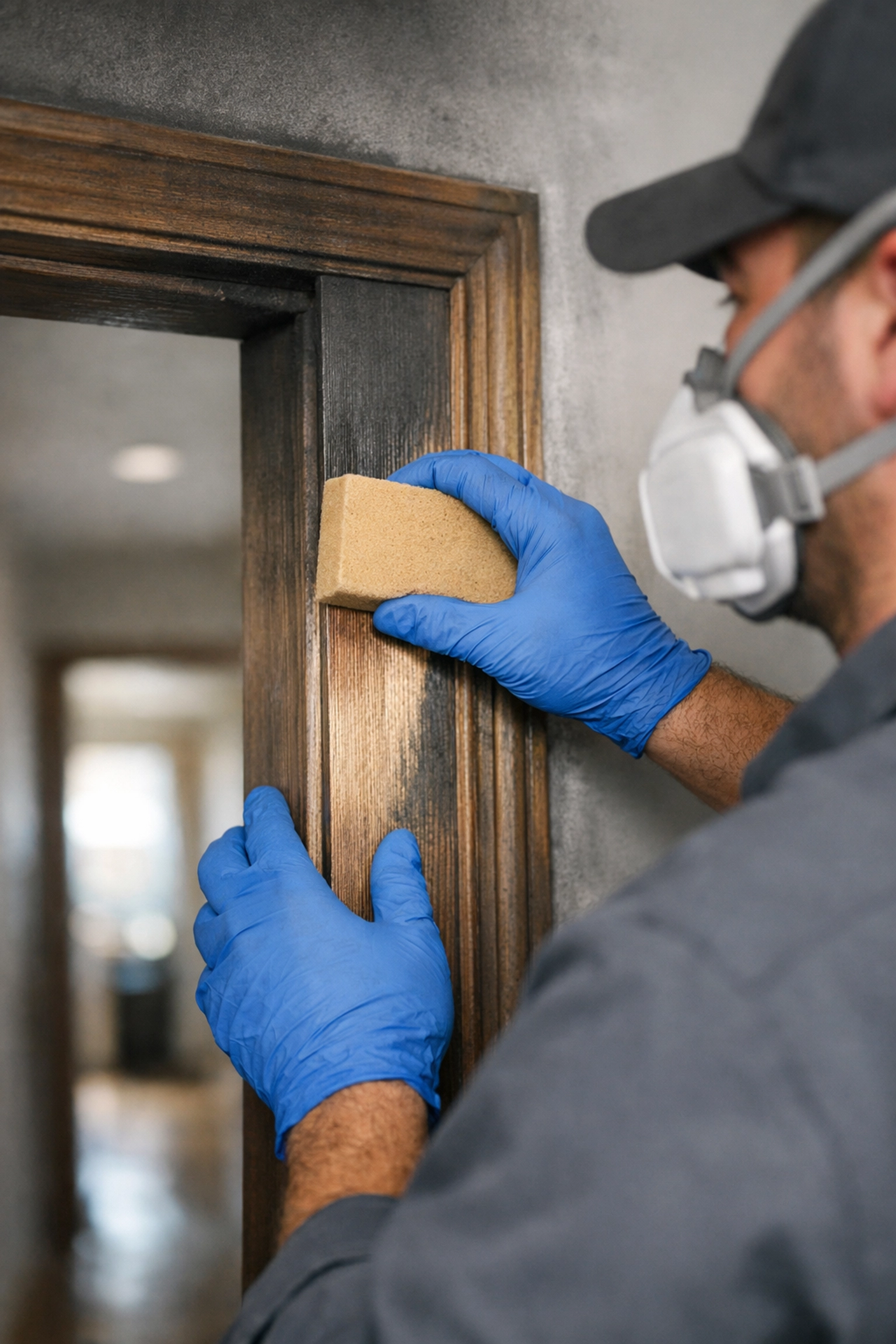
Caption: A MasterTech Environmental technician wearing a high-quality respirator and gloves, using a specialized dry chemical sponge to remove soot from a wooden door frame. The lighting is natural and flat, showing the real-world grit of a restoration job.
It’s tempting to try and handle the cleanup yourself to save money or get back to "normal" faster. But fire damage is different from a normal mess.
If you use the wrong cleaning agent on oily soot, you can permanently set the stain into the wall. If you don't address the water trapped in your wall cavities, you’ll end up with a massive mold problem that could have been avoided. Understanding what happens if mold is found in your home is important, because remediation after the fact is often more expensive than proper drying in the first place.
Furthermore, there’s the health aspect. Walking through a fire-damaged home without a proper respirator means you’re breathing in fine particulates and potentially VOCs (volatile organic compounds) from melted plastics. It’s not worth the risk.
If you’re in the Charlotte area: whether you’re in a historic home in Pineville or a newer build in Huntersville: you need a team that knows the local climate and building styles. MasterTech Environmental Charlotte brings a certified, methodical approach to every job. We don't just "mask" smells with perfumes; we remove the source of the odor.
We also understand the difference between different types of inspections. Sometimes people think a standard home inspection is enough after a fire, but you really need someone who understands home inspection vs. mold inspection and fire damage assessments.
A fire is a traumatic event. The cleanup doesn't have to be. By moving quickly to address the water and smoke, you can prevent a bad situation from getting worse. Don't let the "hidden" damage of a fire: the acidic soot and the moisture-driven mold: ruin your home's long-term value.
If you’ve experienced fire damage in Huntersville, Cornelius, Pineville, or anywhere in the Charlotte metro area, feel free to contact us. We can walk you through the process, help you understand the damage, and get your property back to its pre-fire condition.
For more information on dealing with property damage, mold, and environmental issues, you can browse our full range of resources. Stay safe, and remember that professional help is just a phone call away.